Glassware & Equipment / Lab Setup Logic
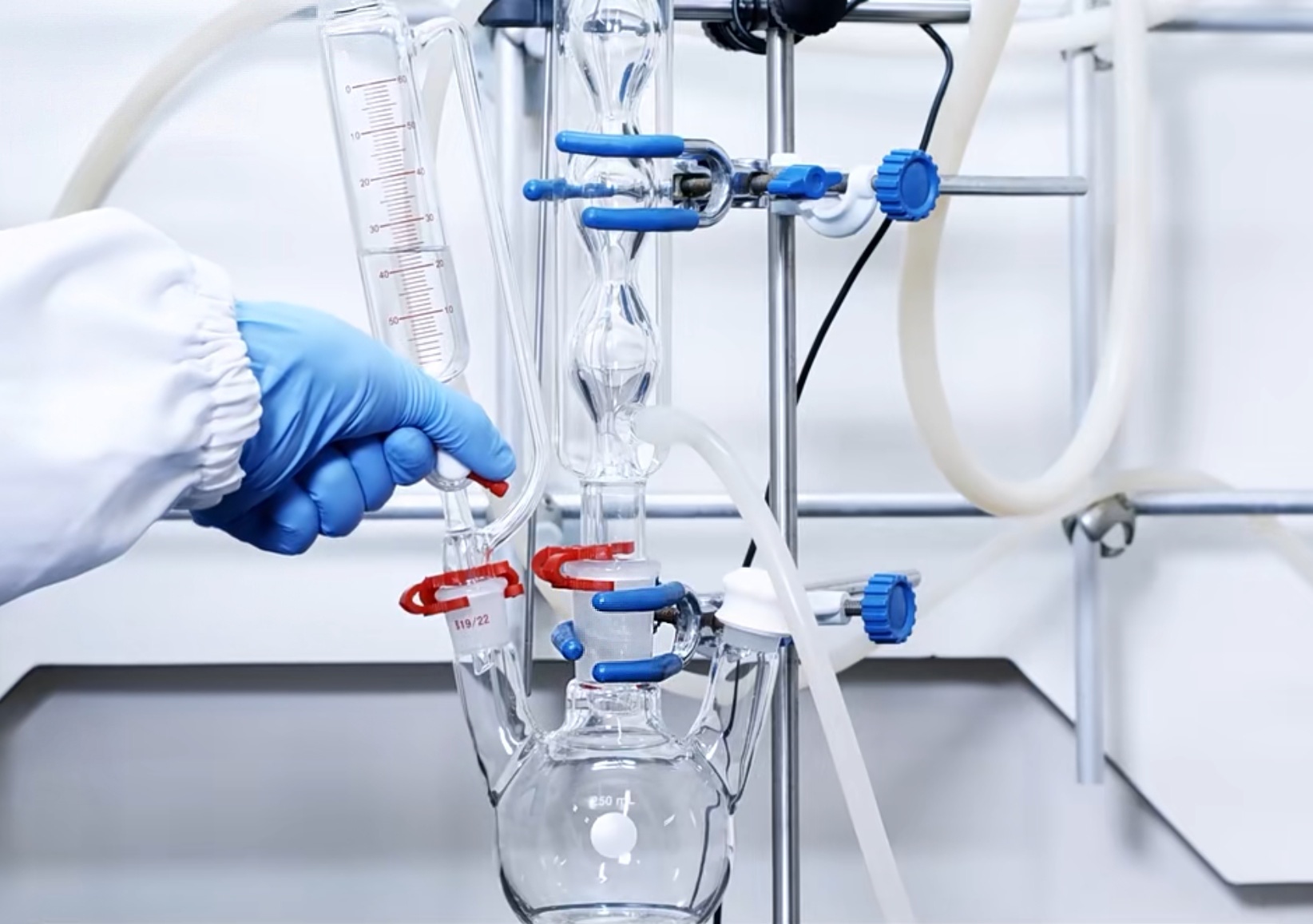
A multi-neck flask setup can look finished long before it is mechanically stable. Once a condenser, an addition funnel, and other attachments are added, the system becomes taller, heavier, and more sensitive to poor alignment. In practice, setup stability depends less on how “tight” everything feels and more on how weight, leverage, and support are managed across the whole assembly.
Why Multi-Neck Flask Setups Become Top-Heavy
Anyone who has assembled a three-neck reaction flask knows the feeling. You begin with a vessel that seems manageable, then add a condenser, a thermometer adapter, an addition funnel, or a gas inlet. By the end, the setup no longer feels like a simple flask. It feels tall, awkward, and slightly tense.
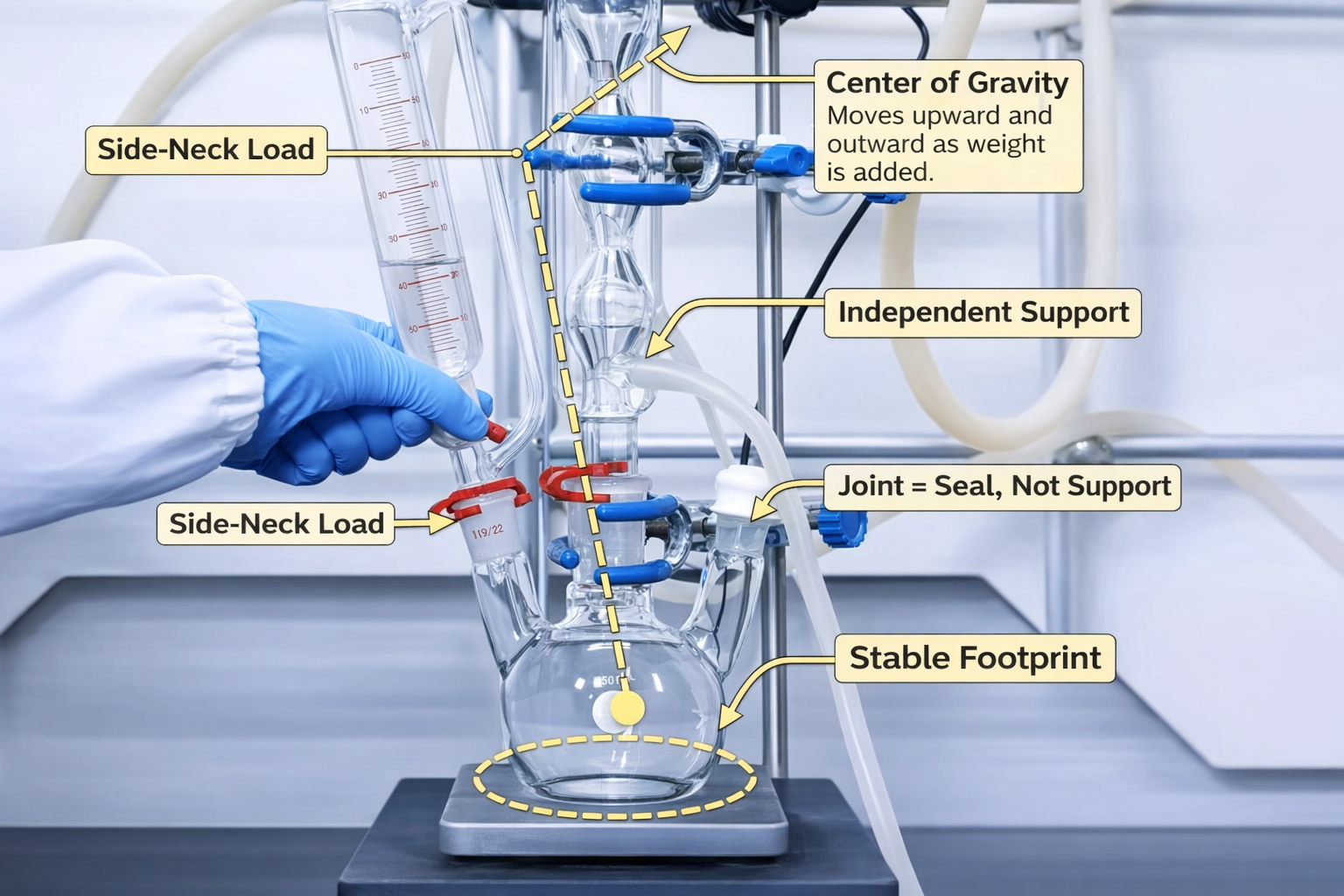
That tension is not just psychological. As attachments are added, the center of gravity of the system moves upward and outward. At the same time, the necks of the flask begin carrying not only sealing functions, but also bending loads. A setup that looks acceptable at a glance may already be under unnecessary mechanical stress.
This is why multi-neck systems should be treated as structures, not just pieces of glassware connected together. Good setup work is not only about making all the joints fit. It is about keeping weight centered, reducing leverage on the necks, and making sure support hardware is carrying mass rather than correcting poor geometry.
Why Side Necks Crack Under Load
One of the most common preventable glass failures in a complex apparatus happens at the base of a side neck. In many cases, the cause is not sudden thermal shock, but mechanical loading.
Glass joints are designed to seal and align connected parts. They are not ideal load-bearing members. When a heavy attachment hangs from a side neck without proper support, the neck experiences bending stress. The farther the mass sits from the flask body, the larger the lever arm becomes. Even when the joint appears to fit correctly, the glass at the neck root may already be under strain.
This is why a setup can look neat and still be mechanically poor. A polished joint may be sealed correctly while the neck itself is carrying weight it was never meant to support.
Common Sources of Mechanical Risk in a Multi-Neck Setup
| Setup component | Main mechanical risk | Better practice |
|---|---|---|
| Condenser | Tall mass creates leverage and lateral pull on the neck | Support it independently and keep it aligned as close to vertical as possible |
| Addition funnel | Weight changes as liquid is added or removed | Keep it centered when possible and support it if it becomes heavy |
| Thermometer adapter or gas inlet | Usually light, but still vulnerable to poor alignment | Use lighter functions on the side necks and avoid forcing joints |
| Side-neck attachment | The neck root may carry bending load | Let the clamp carry the mass; let the joint provide the seal |
| Flask base | Overall stability depends on vessel geometry and support method | Choose a vessel and support arrangement that fit the actual operation |
When a Flat Bottom Flask Can Help
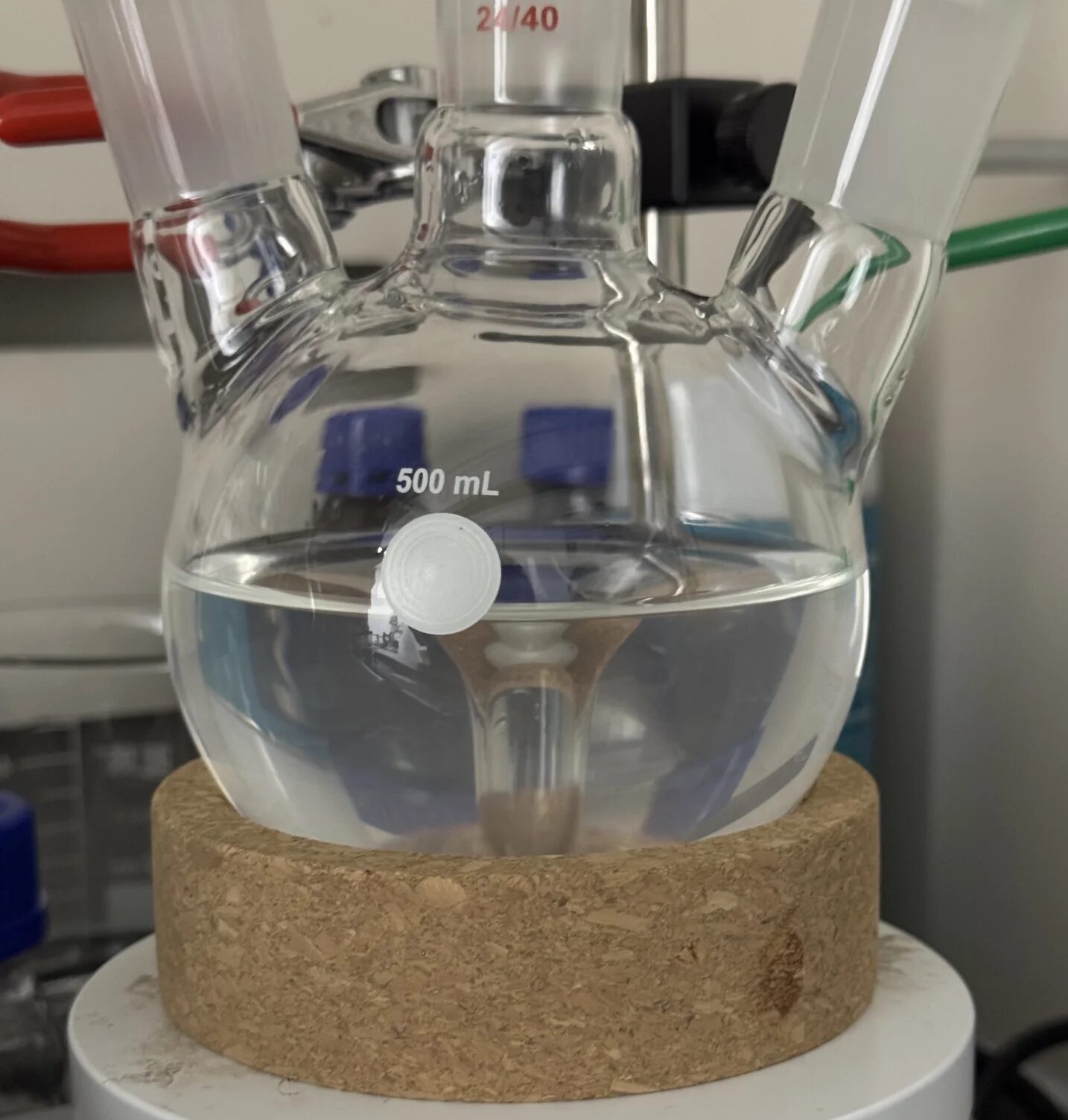
In some atmospheric-pressure or low-stress assemblies, a multi-neck flat bottom flask can make a setup easier to stabilize. A flat base provides a more predictable contact surface on a stir plate or bench, and the vessel is less likely to rotate or shift while clamps are being adjusted.
That can be genuinely useful in operations such as basic reflux, straightforward addition setups, or inert-gas work that does not require a more specialized round-bottom heating arrangement. In teaching situations, it can also make the system easier to build and easier to evaluate visually.
Round Bottom vs Flat Bottom: The Practical Question
A round-bottom flask does not stand on its own, so overall stability depends more heavily on how the vessel is seated, clamped, and aligned. This is not a defect. It is simply part of how round-bottom systems are designed to be used.
A flat bottom flask provides self-standing support, which can simplify some assemblies and make it easier to keep the setup in position while other components are added. But the real question is not which shape is universally better.
The better question is this:
The Three-Point Stability Approach
A useful way to think about multi-neck assemblies is to separate vessel support, attachment support, and stress control.
Anchor the vessel
The flask should be held in a way that establishes the basic position of the setup. This becomes the main reference point. Once the vessel is placed correctly, the rest of the assembly should be built around it rather than forcing the flask to adapt to the attachments.
Support heavy attachments independently
Any attachment that is tall, heavy, or capable of loading a neck under its own weight should have its own support. A condenser is the classic example. In a good setup, the joint seals the connection while the clamp carries the load.
Remove built-in stress
Clamps should hold components where they naturally sit, not pull them into place. If a clamp must drag a condenser or adapter into alignment, the setup is already storing mechanical stress in the glass.
Practical Layout Rules for Multi-Neck Systems
Keep the heaviest component near the center line
If one attachment is clearly the tallest or heaviest, placing it in the most mechanically favorable position usually improves the entire system. In many setups, that means keeping the condenser on or close to the center line of the flask instead of loading one side unnecessarily.
Use lighter functions on the side necks
Thermometers, gas adapters, septa, and simple inlets usually place less stress on the assembly. These are often better choices for side-neck positions than heavy condensers or fully charged addition funnels.
Do not use clamps to fix bad geometry
A clamp should meet the glass where the glass already wants to be. It should not twist, lift, or pull an attachment into place. If it has to do that, the stand height, rod position, or flask placement needs correction first.
Check the setup from the side, not just from the front
Many assemblies look aligned when viewed head-on but reveal obvious lean or torque from the side. A quick side view often catches problems before heating begins.
Before Heating: A Five-Point Stability Check
- Is the heaviest attachment independently supported?
- Are any joints being forced into alignment by clamp tension?
- Is the flask sitting or being held in a way that will remain stable if you make a small adjustment?
- Is the condenser or other tall attachment as close to vertical as the setup allows?
- If one clamp were loosened briefly for adjustment, would the rest of the assembly still remain controlled?
If the answer to any of these is no, the setup needs work before the reaction begins.
A Note on Lab Jacks and Support Under the Heating Setup
In taller assemblies, a lab jack under the heating or stirring platform can be useful, especially when heat may need to be removed quickly without disturbing the upper glassware. Used correctly, it helps manage the heat source rather than the glass structure itself.
That distinction matters. A lab jack is not a substitute for supporting the apparatus properly. It only makes the heating arrangement easier to control.
The Real Goal: A Setup That Stays Quiet
A good multi-neck setup should feel calm. The flask should not shift when a clamp is adjusted. The condenser should not tug at the neck. The assembly should not feel as though one small movement will throw the entire system off balance.
That kind of stability does not come from tightening everything harder. It comes from respecting center of gravity, minimizing leverage, supporting weight independently, and building the setup so that the glass is asked to seal rather than carry load.
In practice, that is what good apparatus work looks like: not just a setup that fits together, but a setup that stands securely, heats predictably, and stays mechanically relaxed throughout the experiment.
FAQ: Multi-Neck Flask Stability and Setup Support
No. A flat bottom flask can improve stability in some assemblies, especially when a predictable footprint is helpful, but it does not replace proper clamping, independent support, or good alignment. The safer choice depends on the operation, the heating method, and the overall structure of the setup.
In many multi-neck setups, yes. A condenser is often one of the tallest and most mechanically significant parts of the apparatus. Independent support helps prevent unnecessary leverage and bending load on the flask neck.
A joint can align and seal connected glassware, but it should not be treated as the main structural support for a heavy or tall component. When possible, the clamp should carry the mass and the joint should provide the seal.
Side necks often fail because of bending stress, poor alignment, or unsupported loads rather than because of a dramatic single event. A setup may look visually correct while still placing continuous mechanical strain at the neck root.
Support the heaviest attachment independently, check the alignment from the side, and make sure no clamp is being used to pull glassware into position. These three checks catch many of the most common stability problems before they become dangerous.