Troubleshooting Organic Lab Work
When your setup does not look right, start here. Identify common beginner mistakes, check your apparatus logic, and diagnose issues with reflux, distillation, filtration, and basic bench setup before they escalate.
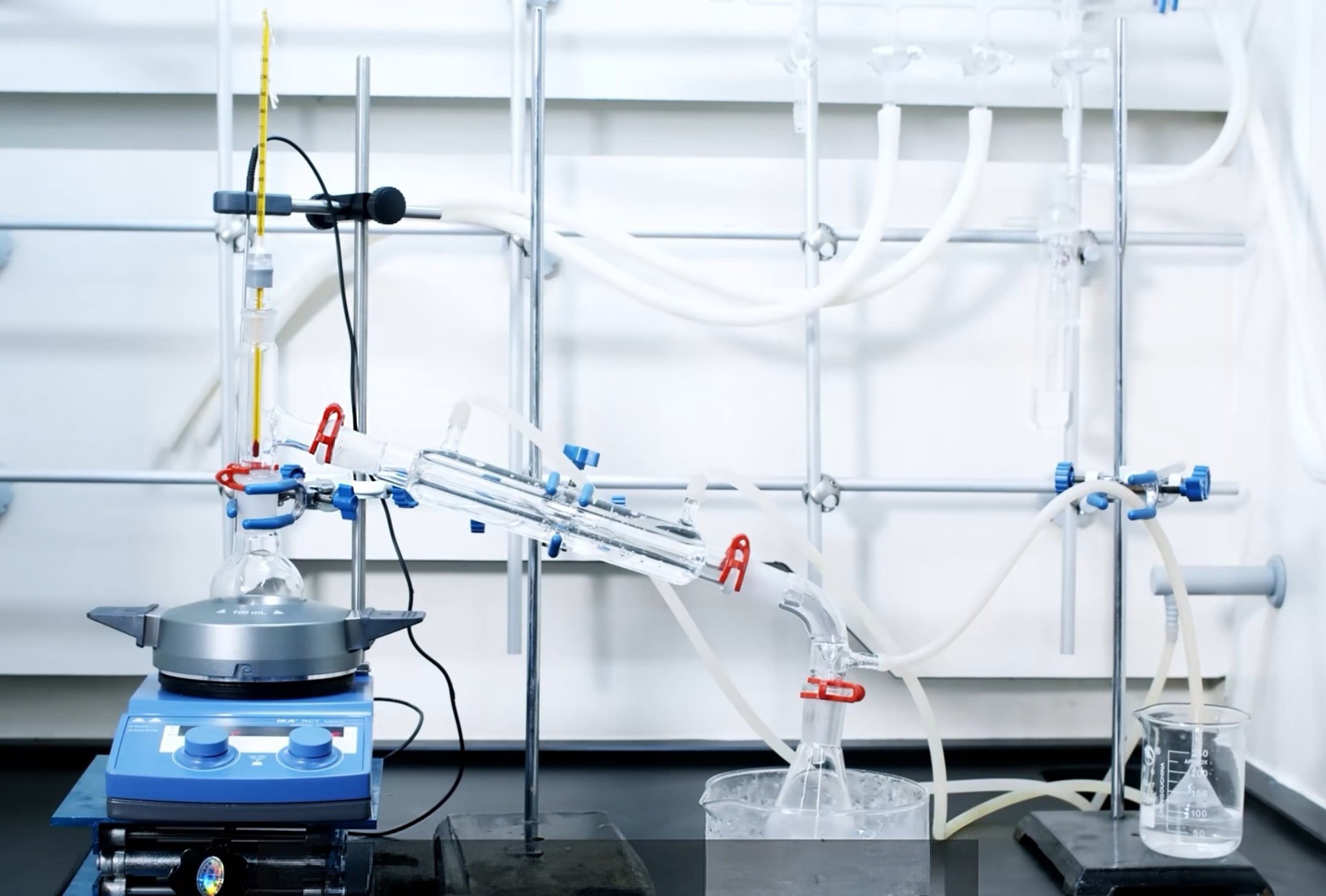
Start Here
Select the symptom you are observing right now.
Something is leaking or not pulling properly→
Vacuum loss, dripping joints, or pressure problems that make the setup feel unreliable.
Reflux or condensation does not look right→
Vapor escaping, poor return of condensate, or cooling that does not seem to be doing its job.
Distillation is unstable or not separating well→
Fluctuating temperatures, poor separation, or product not coming over as expected.
Filtration or phase separation is not working→
Slow filtration, cloudy filtrate, stubborn emulsions, or layers that do not separate cleanly.
The setup looks assembled, but I am not sure it is correct→
Do a quick visual check before applying heat or vacuum, especially if you are new to the setup.
First-Wave Troubleshooting Topics
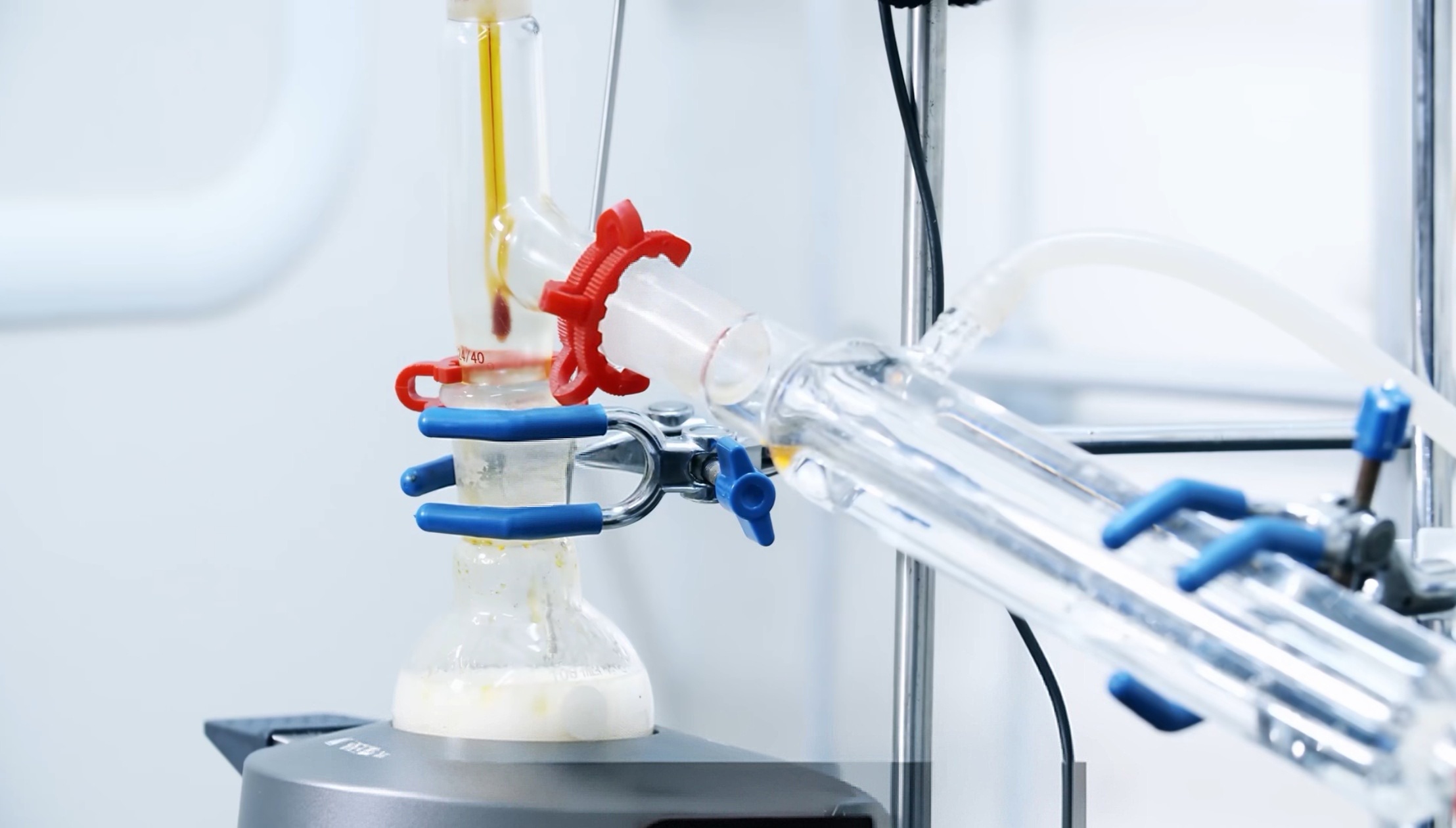
Common Beginner Setup Mistakes
Review the structural and handling errors beginners most often make before they even start the experiment.
- Clamping too tightly or at the wrong point
- Forgetting grease, or using too much grease
- Connecting tubing in the wrong direction
Leaks & Vacuum Issues
Systematic checks for when the setup will not pull, loses vacuum, or behaves as if air is entering the system.
- Identifying the most likely leak points
- Separating pump problems from setup problems
- Checking joints, valves, and hose connections
Reflux & Condensation Problems
Troubleshoot problems during heating, boiling, condensation, and returning solvent to the flask.
- Solvent escaping instead of returning
- Cooling water direction or flow issues
- Heating that is too aggressive for the setup
Distillation Problems
For unstable temperature, poor separation, product loss, or setups that look correct but behave badly.
- Thermometer placement issues
- Distillate not forming or not flowing properly
- Flask fill level affecting performance
Filtration & Separation Problems
Resolve problems when separating solids from liquids or isolating liquid phases during workup.
- Filter paper tearing, clogging, or leaking
- Slow vacuum filtration and cloudy filtrate
- Stubborn emulsions in a separatory funnel
What Troubleshooting Helps You Do
A useful troubleshooting page does more than name a problem. It helps you check the most likely causes first, connect what you see to setup logic, and move to the next page that is actually useful.
Check the likely causes first
Start with the failures you can actually observe. Check the most likely causes first before changing the whole setup or assuming the reaction itself is wrong.
Start with: joints, tubing direction, support points, fill level, and visible vapor behavior.
See Common Beginner Setup Mistakes →Connect symptoms to setup logic
Use the visible symptom to think backward. A leak, poor cooling, loose support, or the wrong thermometer position often changes how the entire setup behaves.
Typical examples: reflux problems, unstable distillation, cloudy filtrate, or poor phase separation.
Browse Core Troubleshooting Topics →Move to the next useful page
Once you have a likely direction, continue to the specific troubleshooting page, related equipment guide, or printable quick check that helps you act on it.
Next step: a guide, a checklist, or a downloadable quick reference you can keep beside the bench.
Open Practical Resources →Practical Resources
Printable, glanceable decision tools to keep beside the bench. Use these reference sheets to check common mistakes and rule out simple problems before changing everything at once.
The essential pre-lab checks for a first setup.
Verify water flow, joint fit, support points, and heating logic.
Check thermometer placement, flask charge, and receiving setup.
A practical visual guide to sealing points and common beginner errors.
A compact reference for identifying common joint sizes and matching parts.
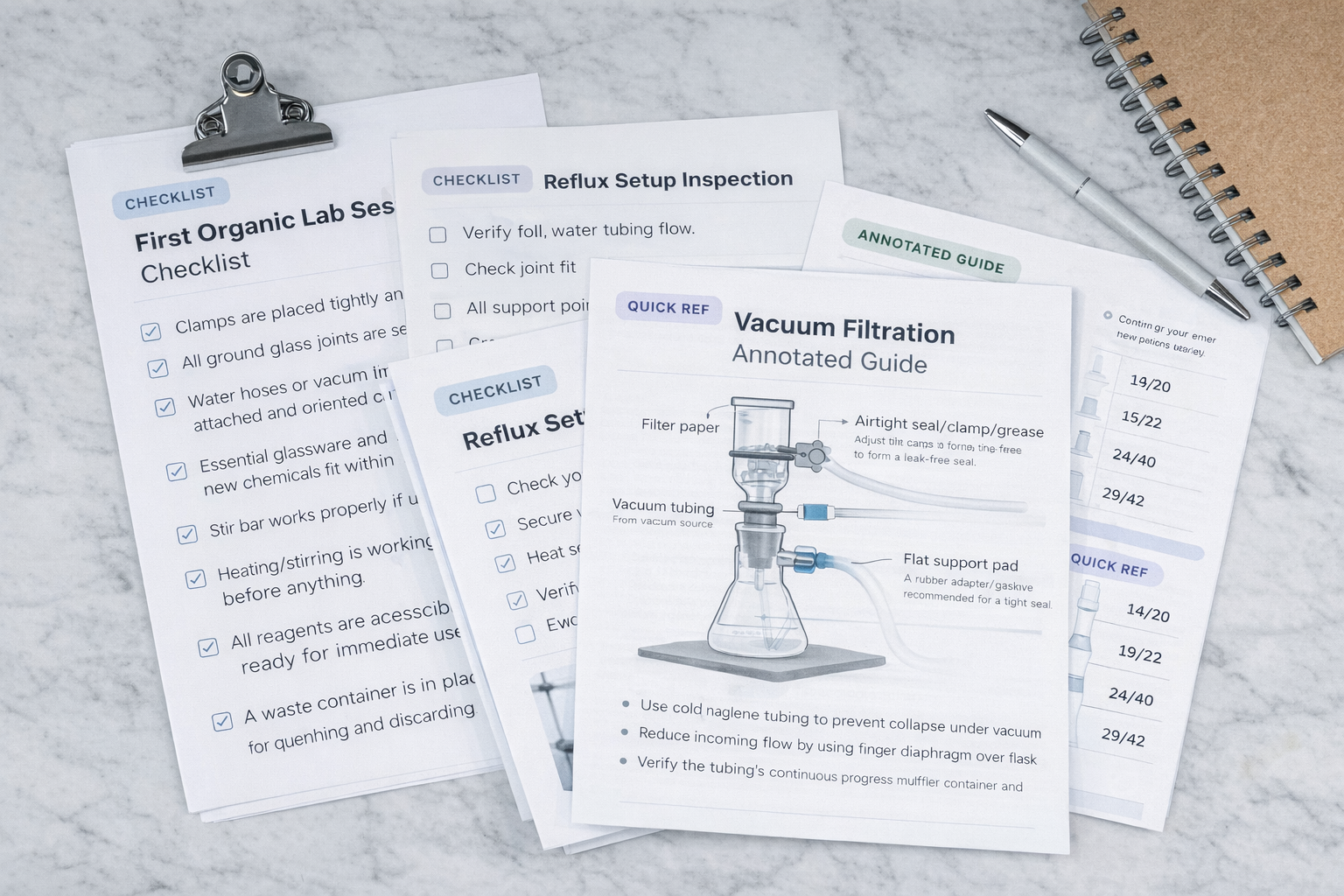
Illustrative mockup generated with AI for layout and presentation purposes.
Beyond Troubleshooting: The ChemNorth Ecosystem
Learning Paths
Use the Learning Paths when you want to understand a setup from the beginning, before the same problem happens again.
Go to Learning Paths →Equipment Wiki
Go to the Equipment Wiki when you need to identify an apparatus, compare similar pieces, or understand what each part is doing.
Open Equipment Wiki →Downloadables
Use Downloadables when you want a printable checklist, quick reference, annotated guide, or teaching aid to keep near the bench.
View Downloadables →Troubleshooting clusters
Explore troubleshooting clusters
These clusters group the kinds of problems that most often stall lab work, waste material, or make a setup feel unreliable. Start with the broad failure pattern, then move into the more specific troubleshooting pages underneath it.
Column & Chromatography Failures
When TLC looks promising but the column fails, bands smear or tail, silica cracks, or the sample will not load cleanly.
Workup & Phase-Separation Problems
When layers will not separate, pressure builds, the wrong layer seems to contain the product, or cleanup steps start losing material.
Distillation, Reflux & Vapor-Path Problems
When the temperature does not make sense, vapor is not behaving as expected, reflux return looks wrong, or the setup may be reading the wrong thing.
Vacuum, Filtration & Solvent-Removal Problems
When filtration slows down, vacuum does not hold, crystals clog the path, or a rotavap run starts bumping or carrying material over.
Setup, Sealing & Pressure-Control Mistakes
When the apparatus looks wrong, feels over-clamped, seems accidentally closed, or behaves like pressure or vacuum is being handled badly.