If you expect two clean liquid layers and instead get a cloudy middle band, a milky interface, or a thick “third layer” that refuses to clear, you are dealing with an emulsion. In routine extraction work, this is one of the most common reasons a simple workup starts to slow down.
The good news is that most emulsions do not need heroic measures. They need a calm, ordered response: let the funnel rest, disturb the interface gently, use brine when appropriate, and escalate only if the mixture clearly is not resolving on its own.
Fast answer
If a separatory funnel emulsion will not clear, do not shake harder. First let the funnel stand still for a few minutes. Then disturb the interface gently with a slow swirl or careful manipulation of the emulsion layer.
If the boundary stays cloudy, add saturated brine in small portions and mix gently. If the interface looks thick, dirty, or obviously full of fine solids, filtration through Celite is often the better next step.
Always vent carefully during extraction work, point the funnel away from people, and make sure you actually have an emulsion rather than simply slow separation or uncertainty about which layer is which.
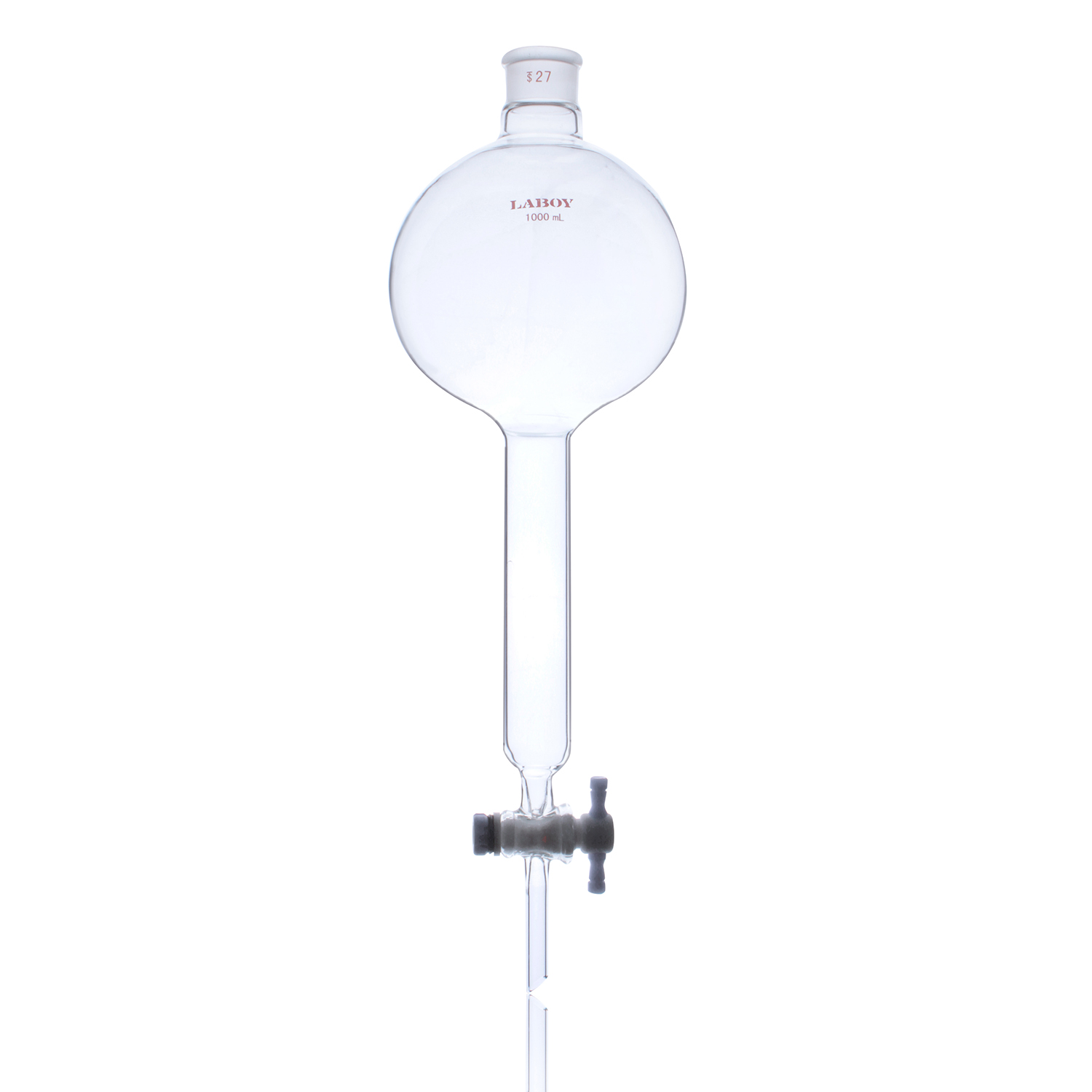
What you are actually looking at
An emulsion forms when one liquid phase is dispersed into very small droplets inside the other. Those droplets are slow to combine, so instead of a sharp boundary you see a cloudy or persistent interfacial zone. In practice, not every messy-looking funnel needs the same fix, so it helps to distinguish the most common patterns before you act.
| What you see | What it often means | Best first move |
|---|---|---|
| Milky or cloudy interface | Very small droplets are suspended and not combining quickly. | Let it rest, then add brine if needed. |
| Thick rag layer | Fine solids or dirty carryover may be helping stabilize the interface. | Consider Celite filtration. |
| Slow but still improving separation | The system may simply need more time. | Wait before escalating. |
| Unclear which layer is organic | You may have a layer-identification problem, not a true emulsion problem. | Test the layers before changing the system. |
A practical escalation order that works at the bench
The most useful way to handle an emulsion is to move from the least disruptive intervention to the most disruptive one. Many students get into trouble because they jump straight to aggressive mixing, random solvent additions, or repeated transfers before they have learned what kind of problem they are actually seeing.
Use this order
- Wait and disturb the interface gently.
- Add saturated brine in small portions.
- Adjust the phase balance if the system is still too sluggish.
- Filter a dirty or solid-stabilized rag layer.
Step 1: Let the funnel settle, then disturb the interface gently
If the emulsion appeared immediately after mixing, the first response is often the simplest: set the separatory funnel down securely and leave it alone for a few minutes. A surprising number of “stubborn” emulsions are really just slow to clear.
If the boundary still looks cloudy, try a gentle swirl or careful manipulation of the interfacial zone. The point is not to remix the funnel. The point is to encourage the small droplets to run into each other and combine into larger droplets that can separate more easily.
Signs this step is working: the milky band gets thinner, the edges start to clear, or one layer begins to sharpen visibly. If you see no improvement after a reasonable wait and a gentle nudge, move on instead of repeating the same weak intervention over and over.
Step 2: Add brine when the problem is a cloudy liquid-liquid emulsion
Brine is often the most effective next move when you have a persistent cloudy interface but do not see obvious solids. Saturated sodium chloride solution increases the ionic strength of the aqueous phase, which makes it less hospitable to suspended organic droplets. In practical bench terms, it often helps the organic material leave the water phase and re-form a cleaner boundary.
Add brine in small portions rather than dumping in a large amount all at once. After each addition, mix gently and let the funnel stand again. You are looking for the point where the interface becomes sharper and the cloudy band begins to collapse.
Use brine when: the mixture looks milky, the interface is liquid-like rather than dirty or muddy, and the system seems to need help separating rather than mechanical cleanup.
Step 3: Rebalance the system if the layers are still reluctant to separate
Sometimes the problem is not just that the droplets are small. Sometimes the overall phase balance is poor, the system is too concentrated, or the solvent combination is simply giving you slow separation. In that situation, careful dilution or rebalancing can help.
This step depends on the actual workup, so it should be done thoughtfully rather than automatically. The core idea is simple: give the droplets more favorable conditions to coalesce and reduce the likelihood that they remain suspended in a crowded interfacial region.
At the bench, this may mean adding a suitable extraction solvent in a measured way and then allowing the system to settle again. It does not mean random solvent swapping in the middle of a workup without a clear reason.
Step 4: If the interface is dirty or muddy, think solids and filter it
If the interfacial layer looks thick, muddy, or visibly contaminated, fine solids may be helping to hold the emulsion together. This often happens after carryover from drying agents, salts, silica, metal residues, or other particulate material that should not still be sitting in the funnel.
In that case, filtration is often more useful than adding more brine. A Celite pad can remove the fine particulate material that is helping stabilize the boundary. Once the mixture is cleaner, the liquid phases often separate much more normally in a clean vessel.
This is the step to consider when the interface does not just look cloudy, but looks physically dirty.
What not to do
- Do not shake harder. Hard shaking usually creates more fine droplets and makes the emulsion worse.
- Do not keep changing variables at random. If you add salt, solvent, and filtration all at once, you will not know what actually helped.
- Do not assume every slow boundary is a true emulsion. Some systems simply need more settling time.
- Do not ignore safety. During extraction work, vent carefully and keep the funnel pointed away from yourself and others.
Why these fixes work
An emulsion persists because the droplets are small and slow to rejoin. The successful fixes all do one of two things: they help the droplets collide and merge, or they remove the conditions that are keeping them suspended. Gentle interfacial disturbance helps droplets find each other. Brine changes the aqueous phase so suspended organic droplets are less stable there. Filtration removes fine solids that can physically support a stubborn rag layer.
You do not need to turn this into a theory exercise at the bench. You just need to remember that the job is to restore a clean phase boundary by helping the system simplify itself.
How to prevent emulsions next time
- Mix more gently during extraction. Overly aggressive shaking is a common way to generate fine droplets.
- Keep solids out of the funnel when possible. Dirty transfers often create harder-to-clear interfaces.
- Pay attention to the condition of the aqueous layer. Strongly acidic, basic, or impurity-heavy mixtures are more likely to behave badly during workup.
- Do not rush the separation step. A little patience early on often avoids bigger cleanup later.
FAQ
What causes an emulsion in a separatory funnel?
Usually, one phase has been broken into very small droplets that are slow to recombine. Fine solids, surface-active impurities, and overly vigorous mixing all make this more likely.
Does brine always fix the problem?
No. Brine often helps with a cloudy liquid-liquid emulsion, but if fine solids are stabilizing the interface, filtration may work better.
When should I use Celite?
Use Celite when the interface looks dirty, muddy, or thick rather than simply cloudy. That appearance often points to a solid-stabilized boundary.
Should I just wait longer?
Sometimes yes. Not every slow separation is a true stubborn emulsion. If the boundary is gradually improving, more settling time may be all you need.
A stubborn emulsion feels messy in the moment, but the solution is usually straightforward once you stop treating every case as the same problem. Identify what the interface is doing, escalate in a controlled order, and aim to restore a clean boundary rather than overpower the funnel.