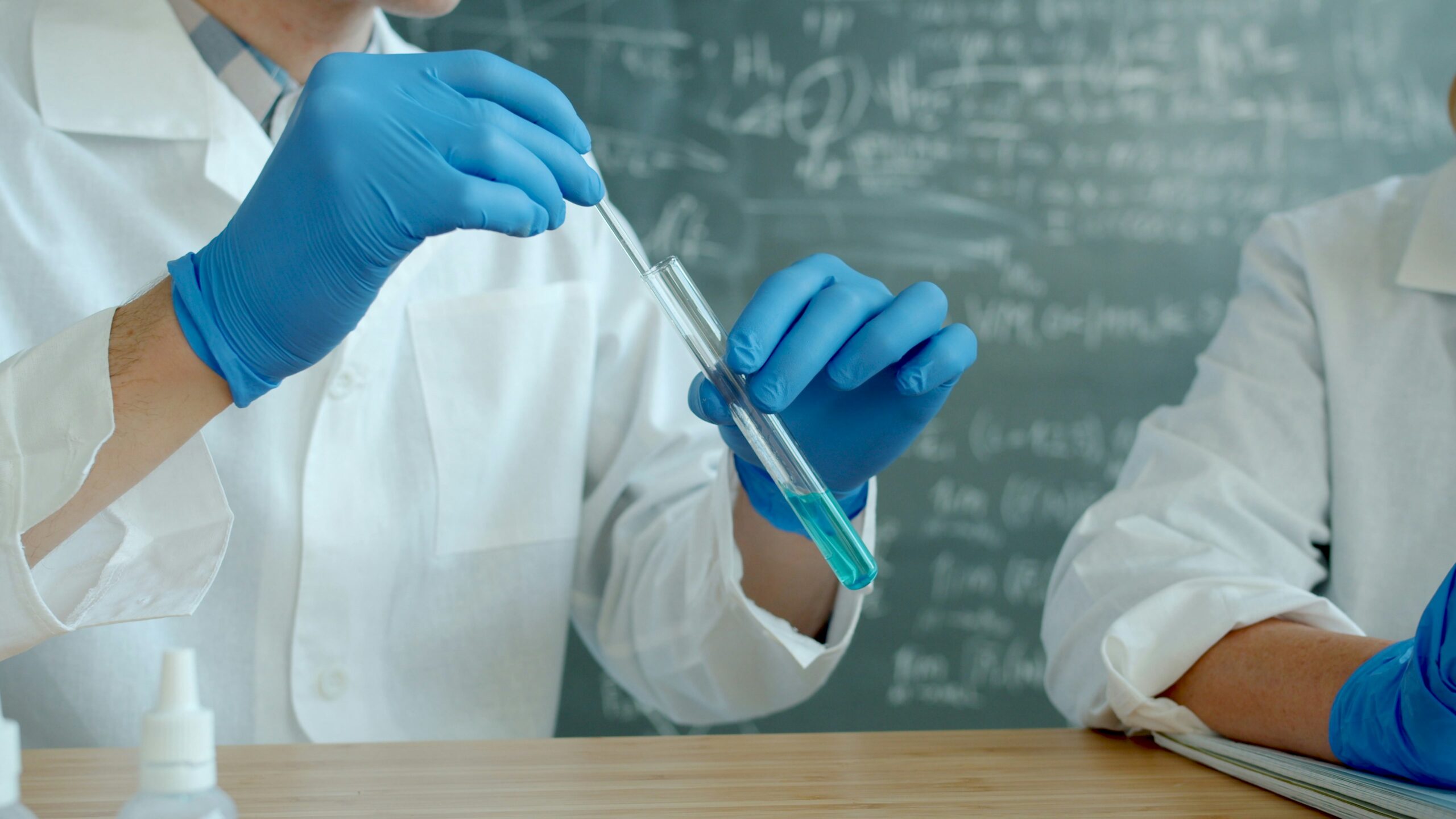
In organic synthesis, knowing how to protect your skin from chemicals is as critical as your choice of glassware. From my 20 years at the glassblowing bench, I’ve seen how a single drop of the wrong solvent can bypass a “safe-looking” glove in seconds. To truly protect your skin from chemicals, you must understand that no glove is an absolute barrier; every material has a “breakthrough time.”
This breakthrough time is the silent countdown that begins the moment a reagent touches your glove. Because different polymers react uniquely to the molecular structure of your solvents, choosing the right material is your first—and most vital—line of defense. For instance, while Nitrile is our daily workhorse for incidental splashes of Ethanol or Hexane, it fails catastrophically when faced with more aggressive halogenated compounds.
| Glove Material | Best For (Application) | Avoid Using With… |
|---|---|---|
| Nitrile (Disposable) | Incidental splashes, solid weighing, Aliphatic solvents. | DCM, Chloroform, Ketones, Strong Acids. |
| Latex (Natural Rubber) | Aqueous solutions, biological work, handling salts. | Most organic solvents (permeates instantly). |
| Butyl Rubber | Extended contact with Ketones (Acetone) and Esters. | Halogenated hydrocarbons, Aliphatic solvents. |
| Viton® / Laminate | Highly toxic reagents, aromatics (Benzene), and DCM. | Specific ketones (for some Viton grades). |
The most deceptive threat in the lab is the “DCM Challenge.” Dichloromethane (DCM) and Chloroform are notorious “glove killers.” While they may not visibly melt a 4-mil nitrile glove, they permeate the polymer matrix at a molecular level in less than 60 seconds. This is a “Silent Failure”—you won’t feel the cold wetness until the toxin is already trapped against your skin, as shown in the breakthrough reference data below:
| Chemical | Nitrile (4 mil) Breakthrough | Butyl Rubber Breakthrough |
|---|---|---|
| Acetone | < 5 mins (Poor) | > 480 mins (Excellent) |
| Chloroform | < 1 min (Dangerous) | < 10 mins (Poor) |
| Toluene | < 15 mins (Fair) | < 30 mins (Fair) |
⚠️ Pro Tip: If you spill a chlorinated solvent on your glove, do not wait to finish your pipetting. Change your gloves immediately. The skin absorption rate increases significantly when the solvent is trapped under a glove membrane.
When the stakes are even higher—such as during high-risk procedures involving organometallics like Butyl Lithium—simply choosing the right material isn’t enough; you need the professional strategy of Double Gloving. By wearing a thin, tight-fitting Nitrile glove under a heavier Laminate glove, you aren’t just adding thickness. You are creating a tactile feedback system. The inner layer provides that critical cooling sensation the moment the outer barrier is breached, giving you the extra seconds needed to reach the safety shower safely.
However, the level of protection you need also depends on the nature of your contact. For incidental contact—brief splashes or handling closed containers—standard disposable nitrile is the industry norm. But for extended contact, such as cleaning glassware in a solvent bath or managing reactive drips, you must switch to thicker, reusable gloves designed for full immersion. Ignoring this distinction is how most long-term skin sensitization begins.
The Anatomy of a Safe Removal: The “Beak” Technique
Even with the perfect glove, the most dangerous moment is the removal. I’ve seen countless students choose the right PPE only to contaminate their wrists during cleanup. To prevent this, always use the Beak Method: pinch the palm of one gloved hand and peel it off inside-out, then slide two bare fingers under the remaining cuff to roll the second glove over the first. This creates a sealed “capsule” of waste that never touches your skin.
Finally, we must look beyond the glove box. Effective skin protection is a mindset that involves the entire lab environment. From ensuring your cuffs overlap with your lab coat to eliminate “sleeve-gap” exposure, to a strict “No Phones” policy while gloved, these small habits prevent the molecular-level cross-contamination that leads to accidental ingestion. Remember: gloves are semi-permeable membranes. No matter how high-tech the material, always wash your hands with soap and water immediately after removal to ensure a clean exit from the bench.