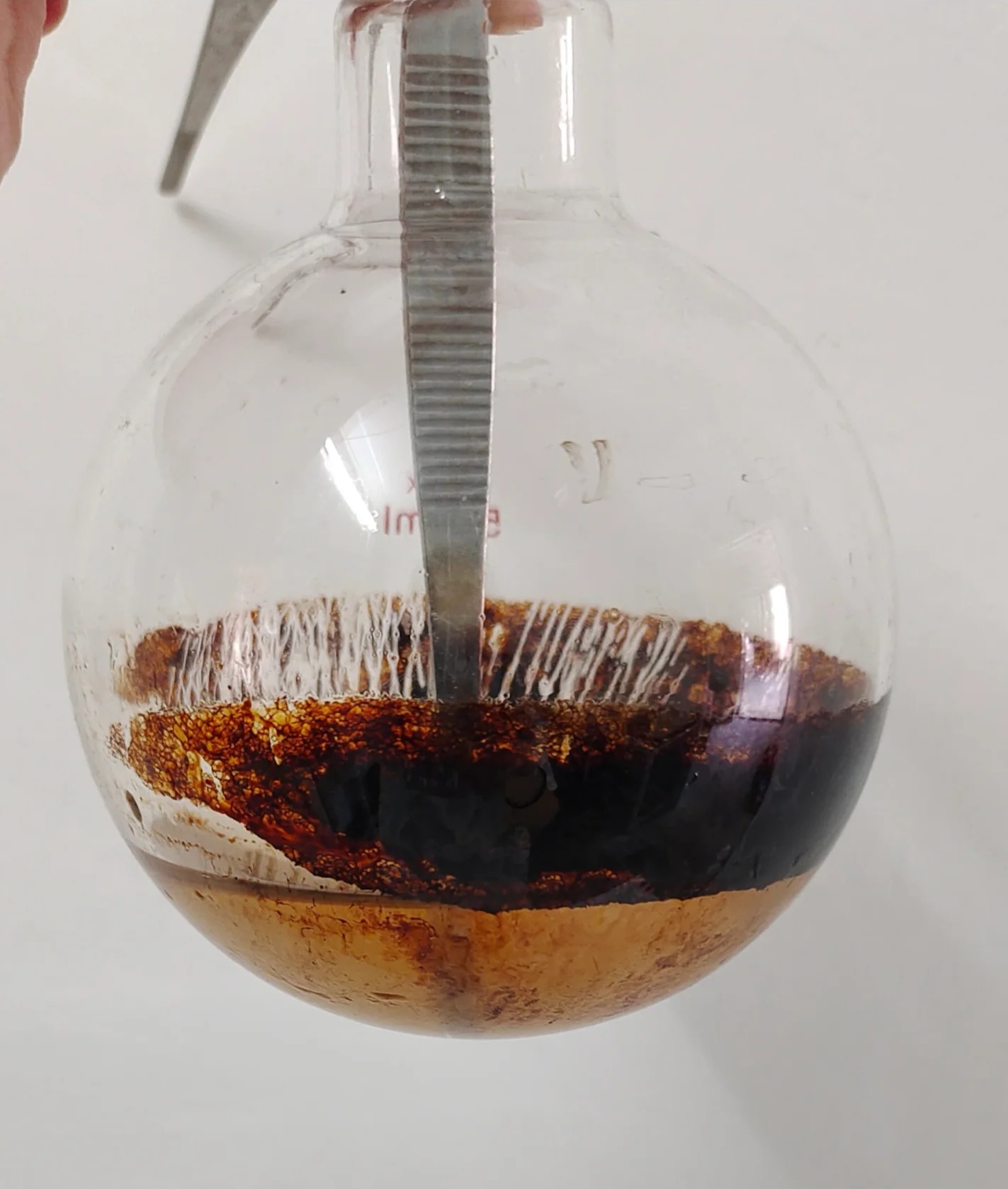
You’re standing in front of your fume hood, staring at a flask full of black tar, or perhaps squinting at an NMR spectrum that looks like a barcode of random impurities. Your first instinct is probably to curse the supplier for sending impure reagents, or to blame the steric hindrance of your substrate.
As someone who has been running columns and setting up Schlenk manifolds for over a decade, let me give you a harsh reality check: nine times out of ten, your chemistry is perfectly fine.
Organic synthesis isn’t just a paper exercise in pushing electrons. At the bench, it is a brutal game of thermodynamics and fluid mechanics under extreme conditions. When you drop a delicately designed catalytic cycle into a glass vessel with completely uncontrolled physical parameters, failure isn’t just a possibility—it’s an inevitability. Today, we’re skipping the reaction mechanisms. We’re going to talk about the physical “hardware” killers you’ve been ignoring.
1. The Flooded Vigreux Column (and ruined gas-liquid equilibrium)
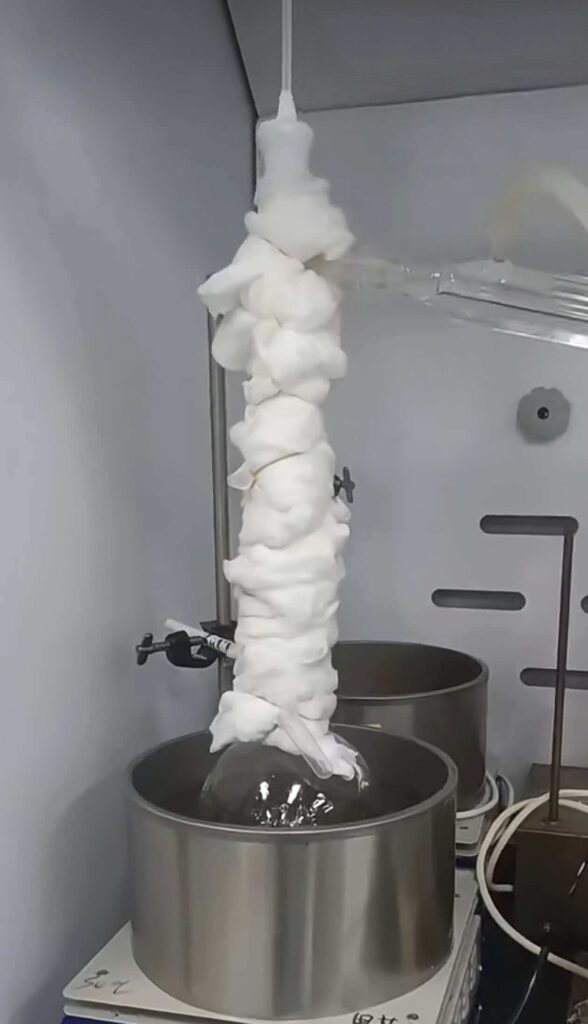
Let’s start with distillation. You notice the liquid suddenly stalling in the upper half of your Vigreux column, boiling violently but refusing to climb further or drop back down cleanly. You’re forced to kill the heat, and your separation efficiency drops to zero.
I’ve actually had first-year grad students tell me the glass indentations (“teeth”) in a Vigreux are just there to “increase surface area.” That is a ridiculously superficial understanding of gas-liquid equilibrium. The entire point of fractional distillation is the continuous mass and heat exchange between the rising vapor and the descending condensate.
If you leave a naked Vigreux column exposed to room-temperature ambient air, the radial heat loss (dtdQ) massively outpaces the heat provided by the vapor. The vapor condenses prematurely, forming a thick, impenetrable liquid wall. The high-pressure vapor surging from below physically crashes into this liquid film, choking the column. That’s flooding.
How to fix it: Stop doing naked distillations. Wrap the damn column. Use fiberglass insulating tape tightly coiled around the glass, followed by an outer layer of aluminum foil to reflect radiant heat. You only get your theoretical plates when you eliminate chaotic heat exchange with the room.
2. The Micro-Leaking PTFE Stopcock (The Catalyst Murderer)
You’re running a highly sensitive cross-coupling reaction. You followed the Schlenk line protocol religiously, cycling vacuum and argon flawlessly. Yet, your palladium catalyst still crashes out as palladium black, or your Grignard reagent inexplicably dies.
Go check the polytetrafluoroethylene (PTFE) stopcocks on your dropping funnel or manifold. Yes, Teflon is chemically inert, but it suffers from a fatal physical flaw: irreversible “cold flow” deformation. After a few dozen cycles of oven-drying and mechanical overtightening, the micro-geometry of that plug is no longer a perfect cone.
When you pull your manifold down to 10−3 Torr, the atmospheric pressure outside will exploit this microscopic geometric mismatch. Driven by Fick’s First Law of Diffusion (J=−Ddxdc), trace amounts of O2 will steadily bleed into your system. Even parts-per-million levels of oxygen are enough to trigger radical chain terminations and quietly murder your transition metals.
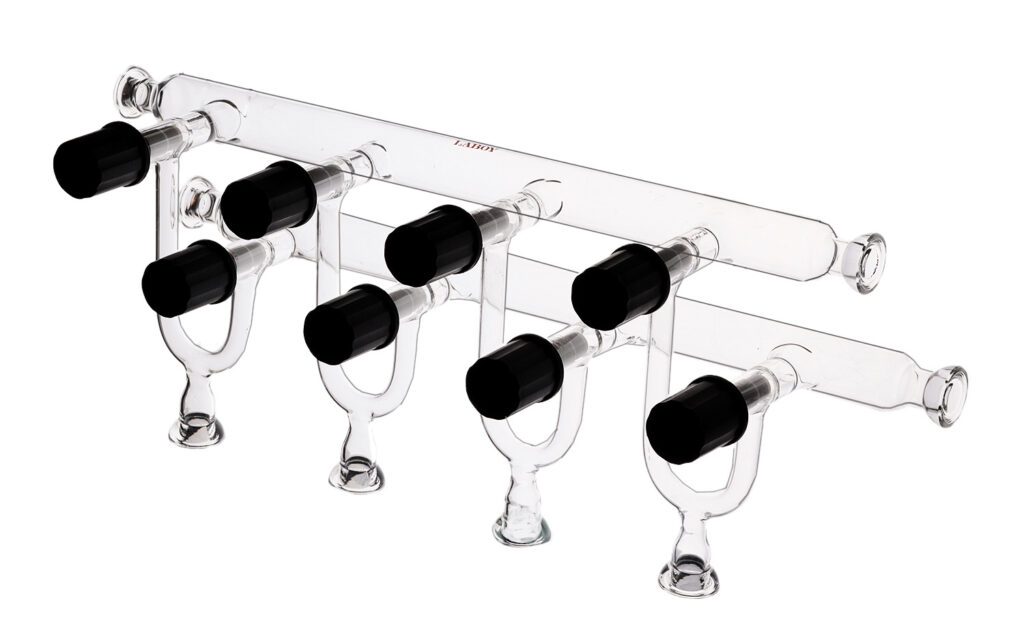
How to fix it: For hypersensitive chemistry, ditch standard Teflon stopcocks entirely. Either upgrade to high-precision glass stopcocks (properly greased with high-vacuum silicone), or bite the bullet and buy a manifold equipped with high-vacuum valves (like grease-free J. Young’s taps). The vertical mechanical compression of a face-sealing O-ring is the only absolute barricade against oxygen molecules.
3. Asymmetrical Stirring Vortices and Local Thermal Runaway
Your overall bath temperature is strictly controlled below the solvent’s boiling point, but somehow the bottom of your round-bottom flask (RBF) is severely caramelized. Your yield is effectively destroyed.
This is a classic heat transfer collapse. You likely dropped a flat-bottomed, cylindrical magnetic stir bar into a perfectly spherical RBF.
Because the geometry of a cylindrical bar cannot conform to the curvature of the flask, it creates a fluid dynamic “dead zone” at the very bottom center. Within this boundary layer, convective heat transfer drops to near zero; the system has to rely entirely on the solvent’s inherently poor thermal conductivity.
According to Fourier’s Law of Thermal Conduction (q=−k∇T), when the heat transfer coefficient at the bottom plummets, the local temperature at the exact point of contact with the heating mantle spikes instantly—creating a massive “hot spot” far exceeding the macroscopic temperature on your thermocouple. Your substrate is literally being scorched into tar in this microscopic purgatory.
How to fix it: Geometry matters. Round-bottom flasks mandate oval or octagonal stir bars. Ensure the fluid shear force sweeps across every single millimeter of the heated surface.
4. The Misplaced Thermometer Bulb
You collected the fraction at exactly the right boiling point according to your thermometer, but your NMR shows a mess of peaks that clearly don’t belong to your product.
The sidearm of a distillation head is a highly sensitive physical threshold. At this “Y-junction”, only the vapor in a state of true liquid-vapor coexistence represents the actual boiling point of the molecule you want to collect.
If your thermometer bulb sits even one centimeter too low, you are measuring superheated vapor rising from the pot that hasn’t reached thermodynamic equilibrium. If it’s one centimeter too high, you are measuring vapor that has already been artificially cooled by ambient air. A mere 2∘C reading error is all it takes to unknowingly collect an azeotrope instead of a pure compound.
How to fix it: This is an unbreakable golden rule. The top edge of the thermometer’s mercury bulb must align perfectly with the bottom edge of the distillation head’s sidearm. Period.
5. Poor Joint Tolerances and the Silicone Grease Avalanche
You set up an overnight reflux, only to find half your solvent missing the next morning. Or, perhaps more frustratingly, you have an unexplainable, massive singlet hovering around 0.07 ppm in your 1H NMR spectrum.
Welcome to the final lesson in glassware precision. Standard taper joints (like 24/40) require an absolute 1:10 taper ratio. Cheap, low-quality glassware from discount suppliers might look frosted, but under a microscope, the surface is deeply grooved and the taper is uneven.
To seal these massive gaps, students instinctively over-apply vacuum grease. When the system heats up, the grease’s viscosity drops. Driven by capillary action along those rough, mismatched grinding lines, the liquefied grease creeps straight down the inner wall and dissolves into your reaction mixture. Worse, if the gap is too large, the capillary seal fails completely, and your low-boiling solvent quietly escapes while you sleep.
How to fix it: Stop letting cheap glass ruin expensive reagents. When building complex setups, invest in heavy-wall, precision-milled joints. The Laboy Glass apparatus available through ScienMart, for example, adheres to strict machining tolerances. A few micrometers tighter on the joint means a lot less hair pulled out when interpreting your spectra.
| Invisible Hardware Killer | Clinical Symptoms | Physical Diagnosis | Hardware Solution |
|---|---|---|---|
| 1. Flooded Vigreux Column | Liquid stalls in the upper half of the column, boiling violently but refusing to drop. Separation efficiency drops to zero. | Excessive radial heat loss causes premature condensation. Rising high-pressure vapor crashes into the thick liquid film, destroying gas-liquid equilibrium. | Apply Adiabatic Wrapping: Wrap tightly with fiberglass insulating tape and an outer layer of aluminum foil to reflect radiant heat. |
| 2. Deformed PTFE Stopcock | Strict Schlenk air-free techniques followed, yet sensitive cross-coupling reactions turn black or get quenched. | PTFE suffers from “cold flow” deformation under pressure. Under high vacuum, trace O2 bleeds through micro-gaps, terminating catalytic cycles. | Upgrade to high-vacuum glass stopcocks, or use grease-free manifolds with face-sealing O-ring valves (e.g., Young’s Taps). |
| 3. Asymmetrical Stirring | System is below boiling point, but severe caramelization (tar formation) occurs at the dead center of the round-bottom flask. | A cylindrical stir bar in a spherical flask creates a fluid dynamic “dead zone.” Convective heat transfer fails, causing massive local thermal runaway. | Ditch cylindrical bars. Strictly use oval or octagonal magnetic stir bars to ensure fluid shear force sweeps the entire heated surface. |
| 4. Misplaced Thermometer | Fraction collected at the “correct” temperature, but NMR shows massive impurities and mismatched starting shifts. | Placed too low = measuring superheated vapor; too high = measuring air-cooled vapor. You miss the true thermodynamic equilibrium at the Y-junction. | Golden Rule: The top edge of the mercury bulb must align perfectly with the bottom edge of the distillation head’s sidearm. |
| 5. Poor Joint Tolerances | Unable to hold vacuum, overnight reflux solvent escapes, or a massive 0.07 ppm singlet appears on the 1H NMR. | Cheap joints have uneven tapers. Over-applied grease liquefies and creeps into the reaction via capillary action along mismatched grinding lines. | Refuse cheap glass. Upgrade to precision-milled, heavy-wall glassware (e.g., Laboy Glass) that adheres to the strict 1:10 taper ratio. |
The gap between a struggling grad student and a master synthetic chemist rarely comes down to who has memorized more named reactions. It usually comes down to who actually respects the physical boundaries of their hardware.
Over to you: What’s the most baffling “hardware failure” you’ve ever encountered at the bench? A flask that imploded for no reason? A solvent you just couldn’t pull dry? Drop your lab nightmares in the comments, and I’ll help you diagnose the invisible physics behind the crime scene.
Troubleshooting at the Bench
There is nothing wrong with your mantle; your column is “flooding” due to a lack of insulation. When a bare Vigreux column is exposed to room-temperature air, the rapid heat loss causes vapor to condense prematurely. The rising vapor then collides with this descending liquid wall, physically choking the column.
👉 The Fix: Wrap the column tightly with fiberglass tape and aluminum foil. You must maintain adiabatic conditions to establish a proper gas-liquid equilibrium.
Stop doubting your reaction mechanism and look at your joints. That peak is the classic signature of high-vacuum silicone grease. If you’re using cheap joints with poor tolerances, you likely over-greased them to get a seal. Upon heating, the grease liquefied and crept down into your flask via capillary action.
👉 The Fix: Only apply grease to the top two-thirds of precision-milled joints (like Laboy Glass), leaving the bottom third bare as a physical barrier.
If your solvent is dry, the culprit is likely your PTFE (Teflon) stopcocks. PTFE suffers from irreversible “cold flow” deformation after repeated mechanical tightening. Under high vacuum, this creates microscopic geometric mismatches where trace oxygen bleeds in, quietly terminating your catalytic cycle.
👉 The Fix: Upgrade to high-vacuum glass stopcocks or manifolds equipped with face-sealing O-ring valves (e.g., grease-free Young’s taps).
You probably dropped a flat-bottomed, cylindrical stir bar into a spherical flask. This geometric mismatch creates a fluid dynamic “dead zone” at the bottom center. With convective heat transfer dropping to near zero in that spot, the local temperature spikes instantly, scorching your substrate.
👉 The Fix: Geometry matters. Always pair round-bottom flasks with oval or octagonal magnetic stir bars to ensure fluid shear sweeps the entire heated surface.
A: The literature is fine; your thermometer placement is wrong. If the mercury bulb is sitting even one centimeter too low in the distillation head, you are measuring superheated vapor. One centimeter too high, and you are measuring air-cooled vapor.
👉 The Fix: The golden rule of distillation: The top edge of your thermometer’s bulb must align perfectly with the bottom edge of the distillation head’s sidearm to measure the true thermodynamic equilibrium.