1. Quick Definition
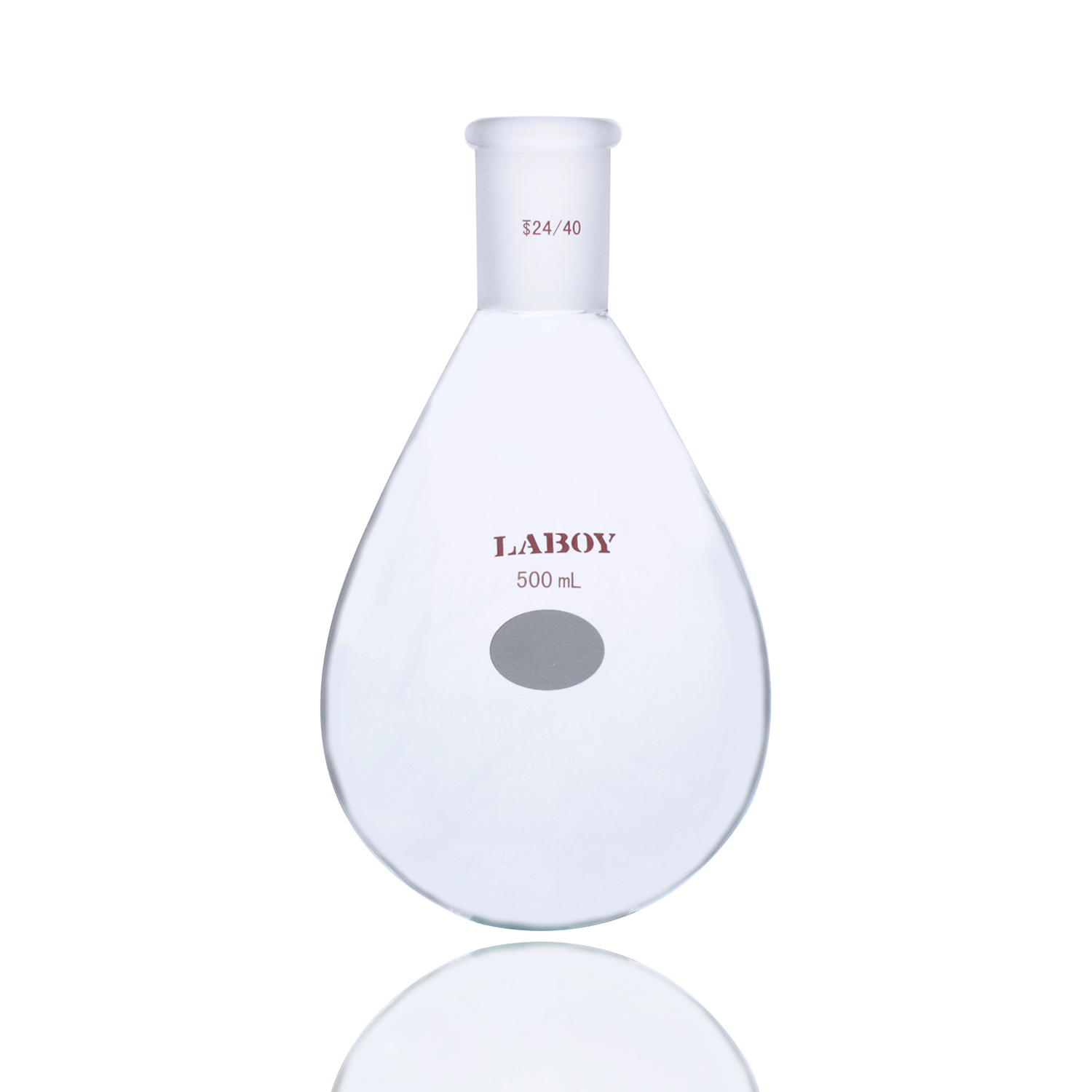
A Recovery Flask is a pear-shaped or heart-shaped vessel featuring a tapered “V-bottom” design. It is primarily used as the terminal collection flask on a rotary evaporator, specifically engineered for the high-yield recovery of small or viscous samples.
2. Core Physical Logic
The physical logic of the recovery flask is based on centralized pooling. The steep angles of the tapering walls force concentrated liquids and residues to collect at the absolute lowest point of the flask. This minimizes “smearing” across a wide surface area (as seen in round-bottom flasks) and allows for near-quantitative retrieval via pipette or syringe. To learn more about how this geometry handles vacuum stress, see The Physics of Glassware.
Zoe W.’s Glassblower Note:
“Recovery flasks are all about the finish. If you’re working with a product that costs a fortune per milligram, you don’t want it spread all over a 500mL round bottom. The ‘V’ bottom is your best friend for microscale work. Just be careful with magnetic stir bars—the narrow tip isn’t designed for them and they will jump around, potentially damaging the glass.”
3. Technical Specifications
[Dr. Vance’s Lab Protocol]
“Recovery flasks are generally unsuitable for synthetic reactions requiring vigorous stirring. The tapered bottom disrupts magnetic flux, leading to erratic stirring. For quantitative transfer, tilt the flask slightly after evaporation to ensure all solvent pools at the lowest point, then use a long-needle syringe for extraction. Always check for residues at the very tip, as crystallization often occurs there first.”
4. Lab Survival Guide
- Rotary Evaporation: This is the ideal terminal flask for rotovap applications where final product concentration occurs at the tip.
- Quantitative Transfer: When transferring the final drops, tilt the flask and use a long needle or capillary to reach the absolute lowest point.
- Cleaning Caution: The tapered tip can be difficult to reach. Use a long, thin brush or ultrasonic cleaning to prevent residue buildup.
- Alternative Use: Excellent for receiving fractions from column chromatography when immediate concentration is required.