In the world of organic synthesis, temperature is the ultimate “dead line.” A reading of 80°C might yield beautiful crystals, while 85°C delivers a flask of scorched black tar. We’ve all been there—staring at the thermometer, following the literature to the letter, yet the reaction still crashes. Often, the culprit isn’t your chemistry, but a faulty seal or poor positioning caused by an outdated PTFE thermometer adapter. If your probe isn’t secured and insulated correctly, you aren’t measuring your reaction—you’re just guessing.
As a glassblower who has spent twenty years refining the geometry of laboratory apparatus, I’ve seen this “ghost” reading ruin countless syntheses. The culprit isn’t usually your solvent or your stirring; it is that inconspicuous thermometer adapter and the few millimeters of error in your probe’s position. It is time to treat your temperature setup as a precision thermal engine, not just a plug in a hole.
| Lab Pain Point | Root Cause (The “Internal Spy”) | Artisan Solution |
|---|---|---|
| Reflux starts at “impossible” temps | The bulb is touching the glass wall, measuring the thermal flux of the heating mantle rather than the liquid. | Ensure “Bulk Area” immersion using a non-slip PTFE adapter. |
| Thermometer “slipping” mid-reaction | Rubber adapters swelling from solvent vapor, losing their mechanical grip. | Switch to PTFE Compression Adapters (HMA0121). |
| Consistently low distillation BP | Bulb positioned too high; measuring cooled vapor near the neck. | Align bulb top with the side-arm lower junction. |
Why Your Thermometer Might Be Lying
You’ve seen the weirdness: the literature says 78°C for reflux, but your thermometer reads 85°C and the liquid is dead quiet. Or you think you’re at 70°C, safely below the decomposition point, yet the flask is already bumping violently. This is a classic Thermal Information Gap.
The most common “spy” in your setup is the aged rubber adapter. Over time, it loses elasticity or deforms due to solvent saturation. When it fails, the thermometer bulb—that tiny red or silver sphere of data—slides down and rests against the internal glass surface. You are no longer measuring the liquid; you are measuring the “micro-hell” of the glass being roasted by the heating mantle. Dropping the heat to match the literature in this state means your actual reaction temperature is far below the activation energy, wasting your entire day.
The Physics of the “Last Few Millimeters”: Why Your Reading is a Lie
Physics doesn’t care about your project deadline; it only cares about heat transfer. Most people treat a thermometer like a “set-and-forget” tool, but in a glass setup, your reading can be a total lie based on just a few millimeters of error. Here’s what’s actually happening inside your flask:
-
The “Micro-Hell” Effect: Glass is a notorious thermal insulator. The area of the flask touching the heating mantle is often 20-40°C hotter than the liquid in the center. If your probe is sagging against the glass wall, you aren’t measuring your reaction—you’re measuring the “micro-hell” of the overheated glass. I’ve seen students kill a three-month synthesis just because they were too lazy to center the bulb.
-
The Invisible Heat Bridge: A loose or degraded rubber adapter is basically a thermal leak. It allows heat to “climb” up the thermometer stem and escape into the lab air. This causes your probe to consistently under-read the internal energy, leading you to crank up the heat until the reaction literally scorches.
-
Vapor Ghosts in the Neck: In a distillation head, vapors are hierarchical—they cool down fast as they rise. If your bulb is even half an inch too high, it captures “ghost” readings of vapor that has already begun to cool. You’ll end up with a messy, wide boiling range instead of the sharp fraction you were looking for.
The Artisan’s SOP for Temperature Precision
Stop Guessing: The “Blank Run” Strategy
The best synthesis experts I know never trust the textbook on day one. They perform a “blank run” using a pure solvent (like ethanol or re-distilled water) with the exact glassware setup they plan to use. Record the BP on your thermometer, at your elevation, in your specific flask. This number is your “true north”—it is more valuable than any printed value because it accounts for the heat transfer lag of your specific hardware.
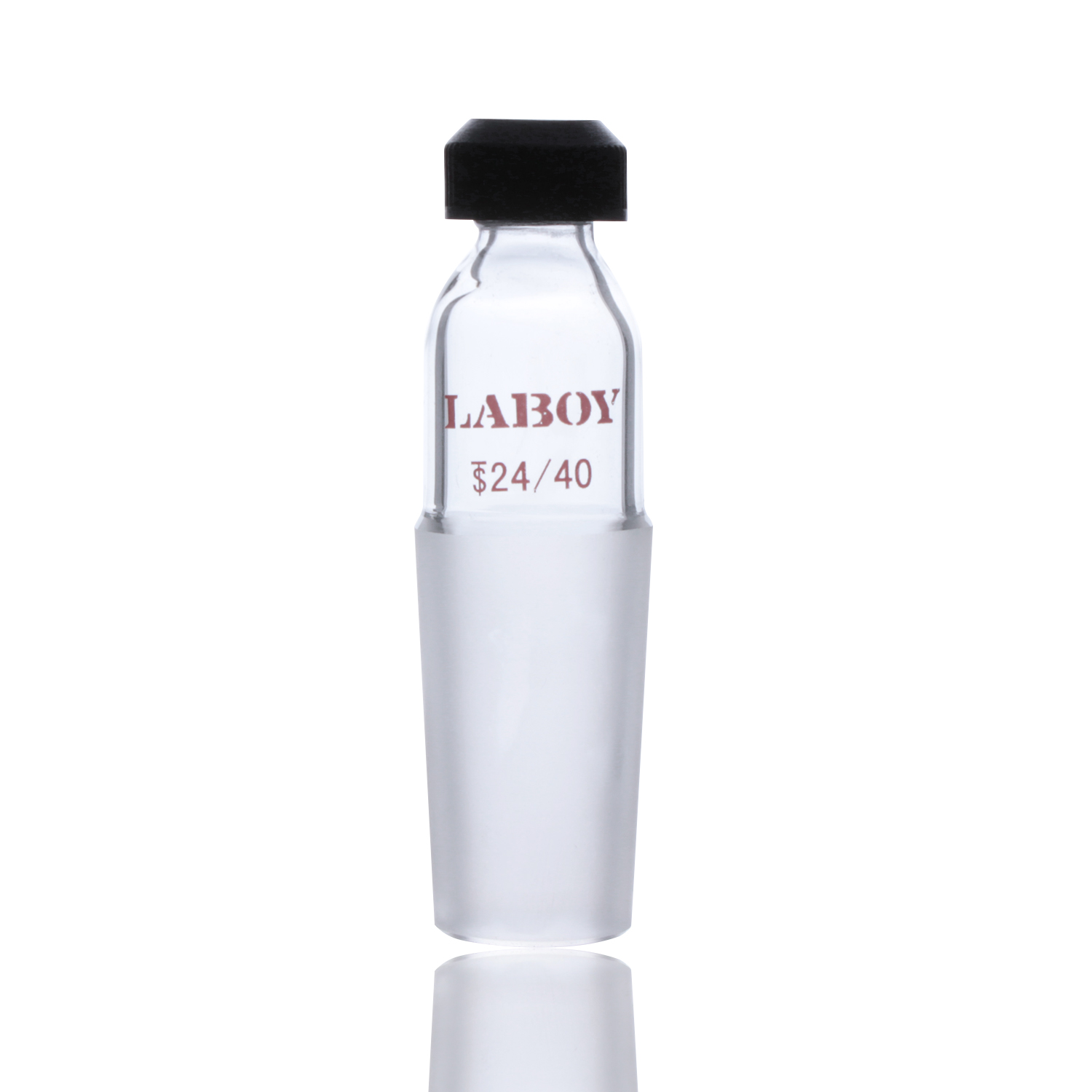
A precision PTFE thermometer adapter like the Laboy HMA0121 ensures your probe stays exactly where you set it, regardless of solvent fumes.
Final Thoughts: Respect the Decimal Point
In organic chemistry, your dignity often hides in the decimal point. You can spend thousands of dollars on high-purity reagents and hundreds of hours on literature review, but if you’re using a five-dollar, degraded rubber stopper to hold your thermometer, you’re building your house on sand.
Don’t let a simple piece of hardware become the “internal spy” that sabotages your hard work. Respect your tools, take the extra thirty seconds to center that PTFE thermometer adapter, and your experimental data will finally start to respect you back.
💬 ChemNorth Community Interaction
Have you ever had a “metaphysical” moment where the temperature was right, but the reaction was wrong? Or do you have a specific beef with a piece of temperature hardware? Let’s talk about it in the comments.
“The 1L to 20L Survival Line: Why Heating Mantles ‘Lose Their Temper’ in Scale-Up” — We will explore how thermal inertia destroys precision reactions when you aren’t looking.