Heart-Shaped Flasks
Heart-shaped flasks are not general-purpose reaction vessels. They are most useful when the scale is small enough that residual liquid, hold-up, and recovery start to matter more than broad flexibility.
That is the real reason to choose one. A heart-shaped flask is not better than a round-bottom flask in general. It is better for a narrower group of small-scale jobs where vessel shape helps you keep more of the liquid where you want it.
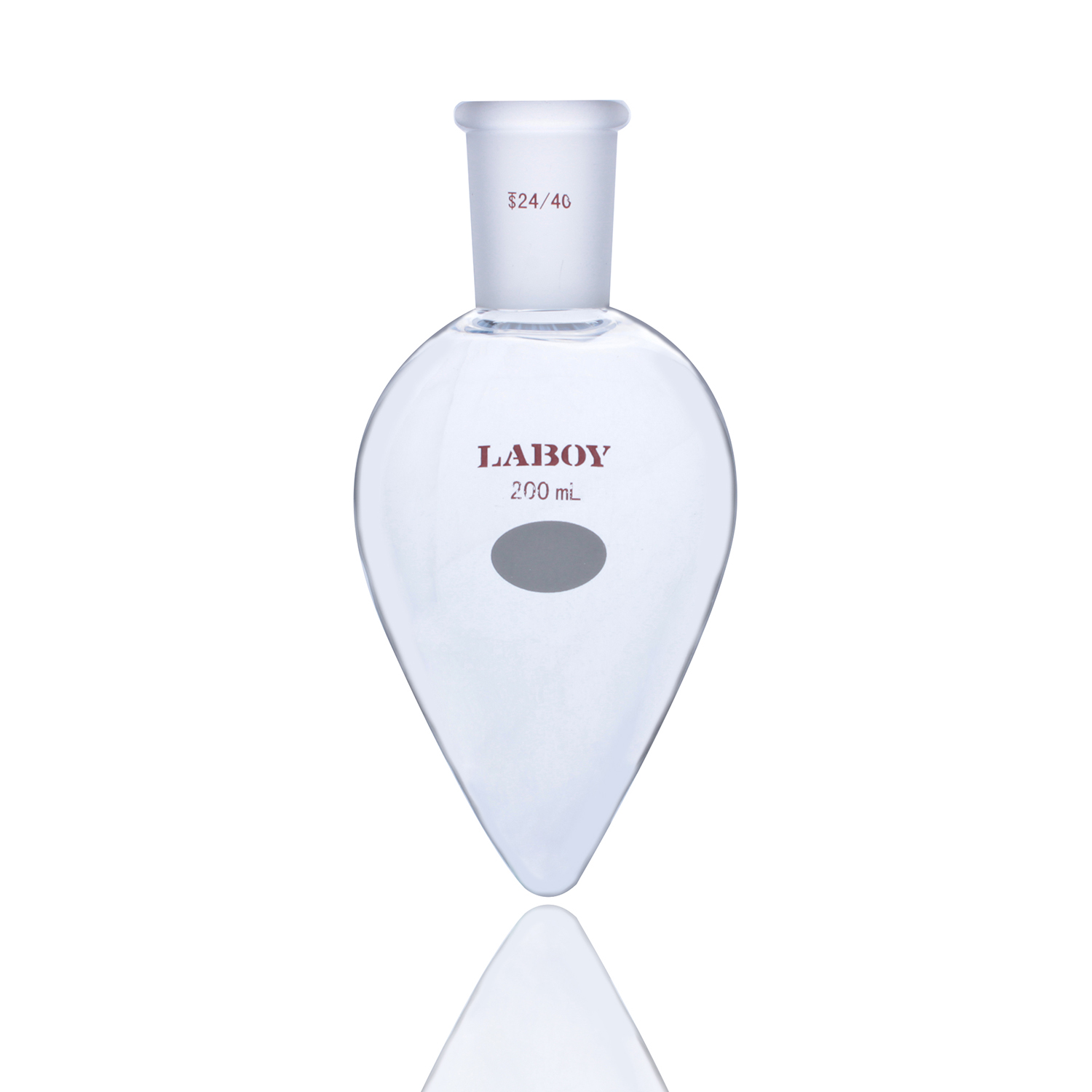
Fast answer: Choose a heart-shaped flask when the work is very small-scale and recovery matters enough that a tighter, more strongly tapered flask body may help. Do not choose it just because it looks specialized. It solves a narrower problem than a round-bottom flask does.
How to Recognize It
A heart-shaped flask has a more strongly tapered lower body than a standard round-bottom flask. The bottom narrows more aggressively, which gives the vessel a more pointed, more compact liquid-holding region. That shape is what makes the flask worth discussing at all.
What It Does at the Bench
At the bench, a heart-shaped flask is usually doing one of these jobs:
- supporting very small-scale boiling or distillation work
- reducing residual liquid compared with a larger, more general flask body
- making a small amount of liquid feel better matched to the vessel
- serving as a more recovery-sensitive alternative to a standard round-bottom flask
- helping when the main question is no longer “what flask can do everything?” but “what flask wastes less at this scale?”
The point is not that the heart-shaped flask can do everything. It is that it can sometimes do a small, recovery-sensitive job better. That is especially relevant when the liquid volume is small enough that extra hold-up stops feeling trivial.
This is why heart-shaped flasks belong in a comparison with round-bottom and pear-shaped flasks, not because they are common, but because they help define the boundary between general-purpose flask choice and small-scale optimization.
When You Would Choose It, and When Not
Heart-shaped flasks make sense when the task is small enough, and the need to reduce hold-up is strong enough, that the body shape becomes part of the decision. If the work is ordinary-scale or if you mainly need a standard all-around setup vessel, a round-bottom flask usually makes more sense.
Situations where a heart-shaped flask is often the right choice
| Situation | Typical use case | Why a heart-shaped flask fits well |
|---|---|---|
| Very small-scale work | Distillation, evaporation, or synthesis at low volume | The more tapered body can help the flask feel better matched to very small liquid amounts. |
| Recovery-sensitive handling | Work where residual liquid matters more than usual | The tighter lower body may leave less liquid spread across a larger general-purpose flask shape. |
| Small-scale distillation | Separations where a compact flask body is useful | The vessel is more specialized toward scale-sensitive work than a standard round-bottom flask. |
| Work beyond what a pear-shaped flask already solves | Cases where even tighter scale matching or lower residual liquid is worth prioritizing | A heart-shaped flask often represents a more strongly optimized step in the same direction. |
Situations where it may not be the best first choice
- General heated work: A round-bottom flask is usually the more flexible default.
- Routine reflux setups: The shape advantage of a heart-shaped flask is usually not the main issue.
- Work that is small, but not especially recovery-sensitive: A pear-shaped flask may already be enough.
- Tasks where standing convenience matters more: A flat-bottom or Erlenmeyer flask may be easier to handle on the bench.
- Situations where the vessel shape is being chosen for appearance rather than function: This is a specialized vessel, not a general upgrade.
Quick decision guide: If the work is very small-scale and you care strongly about hold-up or recovery, a heart-shaped flask may be worth choosing. If the work mainly needs a standard heating, reflux, or distillation vessel, start by asking whether a round-bottom flask or pear-shaped flask already solves the real problem.
Boundaries, Variants, and Similar Tools
Common Heart-Shaped Flask Variants
Single-Neck Heart-Shaped Flask
This is the most straightforward version. It is best understood as a small-scale, recovery-sensitive flask with one main path and a more strongly tapered body than a round-bottom flask.
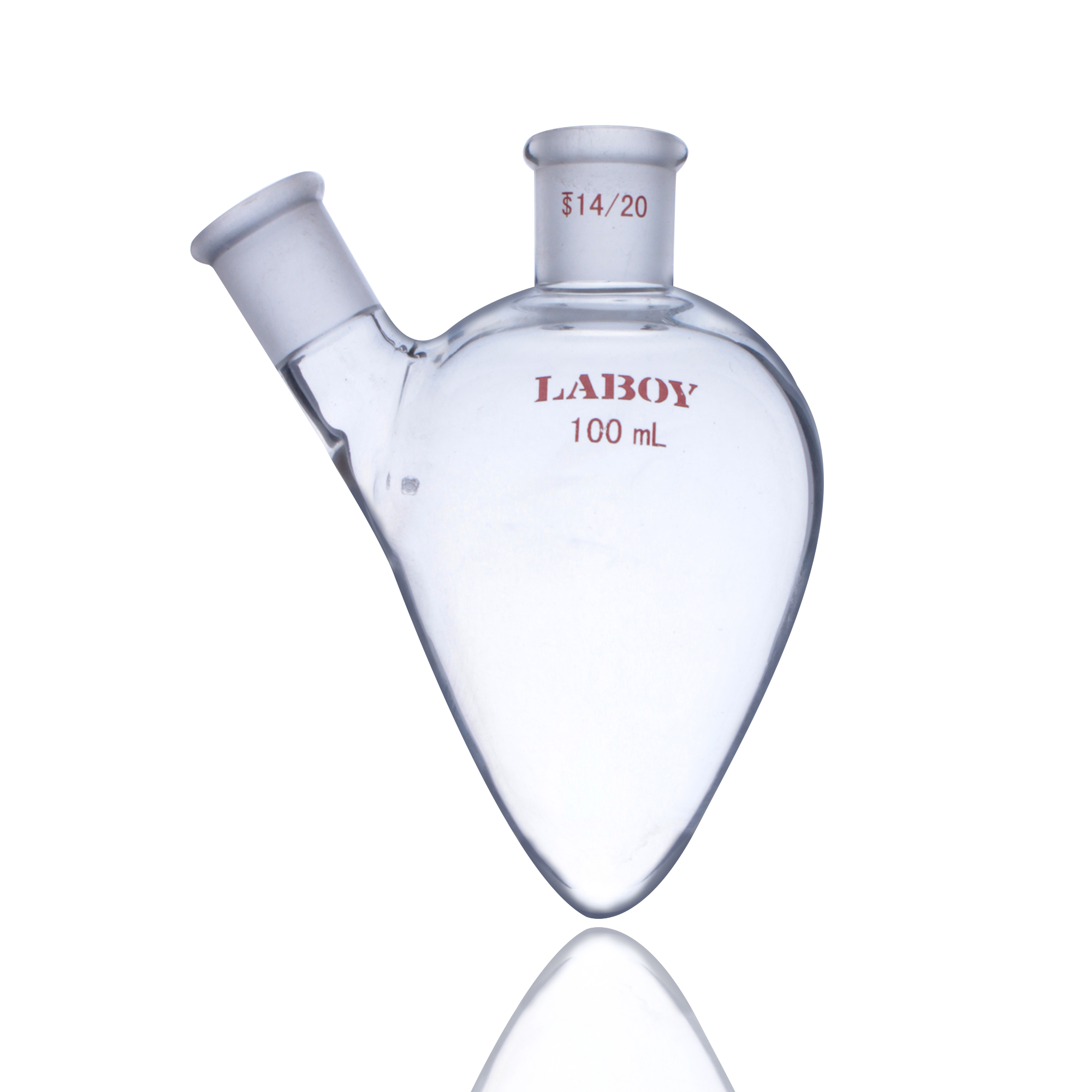
Two-Neck Heart-Shaped Flask
A two-neck version allows a more complex small-scale setup. One neck can handle the main path while the second supports addition, temperature monitoring, or another function. The added neck changes the layout possibilities, but the vessel is still defined by the same small-scale, recovery-sensitive logic.
Jointed Heart-Shaped Flask
A jointed version keeps the same vessel logic while adding a controlled glass-to-glass connection. The joint adds connection options, but it does not change the fact that this is still a specialized small-scale flask.
Heart-Shaped Boiling Flask
This name usually points toward one of the most common reasons to choose the vessel: small-scale boiling or distillation where a standard round-bottom flask feels more general than the task really needs.
Heart-Shaped Flask Variants at a Glance
| Variant | Best for | Main advantage | Main limitation | Common beginner mistake |
|---|---|---|---|---|
| Single-neck heart-shaped flask | Very small-scale, single-path work | More strongly optimized toward compact liquid handling | Less broadly useful than a round-bottom flask | Choosing it whenever the task is merely “small” without asking whether recovery really matters |
| Two-neck heart-shaped flask | Very small-scale work needing two paths | Added connection flexibility in a recovery-sensitive flask | Still much more specialized than a standard round-bottom flask | Assuming the extra neck turns it into a general-purpose setup vessel |
| Jointed heart-shaped flask | Small-scale work needing a fitted connection | More controlled connection in a recovery-sensitive flask | A joint does not make it general-purpose | Assuming the joint makes it interchangeable with standard setup vessels |
| Heart-shaped boiling flask | Very small-scale boiling or distillation | Shape may reduce unnecessary residual liquid | Its benefit narrows as the scale becomes less extreme | Treating it as a universally superior boiling flask |
Similar Tools and Key Boundaries
Heart-Shaped Flask vs Round-Bottom Flask
A round-bottom flask is the more general workhorse. A heart-shaped flask is more specialized. If the task is routine, broader, or setup-driven, round-bottom usually wins. If the task is very small-scale and recovery-sensitive, the heart-shaped flask starts to make more sense.
Heart-Shaped Flask vs Pear-Shaped Flask
This is the more useful comparison. A pear-shaped flask is often the first step away from a standard round-bottom flask when the scale gets smaller. A heart-shaped flask pushes further in that same direction. If a pear-shaped flask already solves the problem, a heart-shaped flask may not be necessary. If recovery and hold-up still matter more than that, the heart-shaped flask may justify itself.
Heart-Shaped Flask vs Flat-Bottom Flask
These vessels solve different problems. A flat-bottom flask is about standing convenience. A heart-shaped flask is about small-scale liquid geometry. If the bench needs a self-supporting flask, flat-bottom makes more sense. If the work needs tighter control of small amounts of liquid, heart-shaped is the better comparison.
Heart-Shaped Flask vs Erlenmeyer Flask
An Erlenmeyer flask is usually a standing bench vessel. A heart-shaped flask is a specialized small-scale setup vessel. They are not close substitutes for each other in ordinary use.
Heart-Shaped Flask vs Other Flask Types
| Vessel | Better for | Advantage over a heart-shaped flask | Limitation compared with a heart-shaped flask | When a heart-shaped flask is the better choice |
|---|---|---|---|---|
| Round-bottom flask | General reflux, distillation, and all-around apparatus work | Much more flexible as a standard setup vessel | Less optimized for very small, recovery-sensitive work | When the scale is so small that hold-up and residual liquid begin to dominate the vessel choice |
| Pear-shaped flask | Moderately small-scale work | Already solves many compact-geometry problems without going as specialized | May not push far enough when recovery and low residual liquid become more important | When the task is more extreme in scale or recovery sensitivity than a pear-shaped flask comfortably covers |
| Flat-bottom flask | Standing flask work | Much easier to set down and handle on the bench | Not aimed at the same small-scale liquid geometry problem | When the setup is small and specialized enough that bench-standing convenience is no longer the main issue |
| Erlenmeyer flask | Swirling, holding, routine bench work | Far easier as a standing bench vessel | Not a good answer to small-scale boiling or recovery-sensitive apparatus work | When the task is genuinely a small-scale heated or recovery-sensitive flask problem rather than ordinary handling |
Common Beginner Mistakes
1. Choosing a heart-shaped flask because it looks more advanced
Mistake: Treating the unusual shape as a sign that it must be better chemistry equipment.
Why it causes trouble: It is better only when the scale and recovery problem justify it.
A better approach: Choose it only when the shape solves a real small-scale problem.
2. Using it when a pear-shaped flask would already be enough
Mistake: Jumping to the most specialized vessel too early.
Why it causes trouble: Over-specialization can make vessel choice less clear rather than more useful.
A better approach: Ask whether the task really needs a more strongly optimized shape than a pear-shaped flask gives.
3. Assuming the extra neck makes the two-neck version broadly general-purpose
Mistake: Seeing a second neck and assuming the vessel now fills the same role as more standard multi-neck flasks.
Why it causes trouble: The added neck changes the setup options, but it does not change the basic reason this flask exists.
A better approach: Treat the second neck as added flexibility inside a specialized vessel category, not as a complete change of category.
4. Ignoring whether the setup still needs more general vessel flexibility
Mistake: Letting the specialized shape decide the whole vessel choice, even when the apparatus is becoming more general or more complex.
Why it causes trouble: Vessel geometry is only one part of the decision. A more standard round-bottom flask may still be easier to build around.
A better approach: Ask whether the shape is really helping the task, or whether you are now forcing the job into the vessel.
5. Overfilling a small heart-shaped flask
Mistake: Treating compact volume as if it leaves no need for headspace.
Why it causes trouble: Even very small flasks still need room for boiling, motion, and safe handling.
A better approach: Leave headspace appropriate to the task, not just to the total nominal volume.
6. Ignoring damage because the flask is used on a small scale
Mistake: Assuming small scale means lower consequences.
Why it causes trouble: Chips, cracks, scratches, and joint damage still matter in small-scale heated or connected work.
A better approach: Check the body and the joint before using it as a working vessel.
What to Check in Use
Before you start
- Check for chips, cracks, and scratches
- Make sure the flask size really matches the scale
- Ask whether a heart-shaped flask is solving a real recovery problem
- Check any jointed version for a clean, intact taper
During use
- Leave enough headspace for boiling and motion
- Watch whether the vessel still feels properly matched to the liquid volume
- Check whether the setup is becoming more general than the flask choice
- Do not let the specialized shape hide a poor apparatus match
When rethinking the vessel choice
- The task is no longer extremely small-scale
- The main issue is no longer hold-up or recovery
- A pear-shaped flask would probably already solve the problem
- You now need broader apparatus flexibility than the flask naturally supports
Related Pages
Learn the setup
- Understanding Core Setups
- Basic Setup Principles
- Simple Distillation Apparatus
Compare related tools
- Round-Bottom Flasks
- Pear-Shaped Flasks
- Flat-Bottom Flasks
- Erlenmeyer Flasks
Fix a related problem
- Common Beginner Setup Mistakes
- Why Your Vessel Choice Is Making the Setup Harder
- Why Your Small-Scale Setup Feels Off
Use a quick reference
- Flask Shape Comparison Sheet
- Small-Scale Vessel Selection Quick Guide
- Basic Glassware Inspection Checklist