Beginners often think heating is simple: put the flask on a heat source and wait. At the bench, the real question is usually different. Not can the system be heated, but how it should be heated so the flask stays stable, the temperature stays reasonable, and the setup does not become riskier than it needs to be.
A heating bath matters because it changes the way heat reaches the flask. Instead of driving heat straight into one contact point, it lets the flask sit in a controlled medium that spreads heat more evenly and more gently. That sounds like a small change, but in organic lab work it often makes the difference between a system that warms up in a controlled way and one that boils too hard, bumps, scorches, or becomes harder to trust.
What a heating bath is really doing
A heating bath is not just a way to make something hot. It is a way to slow heat down, spread it out, and put a buffer between the flask and the heat source.
What counts as a heating bath
A heating bath is a heating system, not a single piece of equipment. In practice it usually includes a hot plate or other heat source, a bath vessel, the bath medium, and the reaction or sample container sitting in that medium.
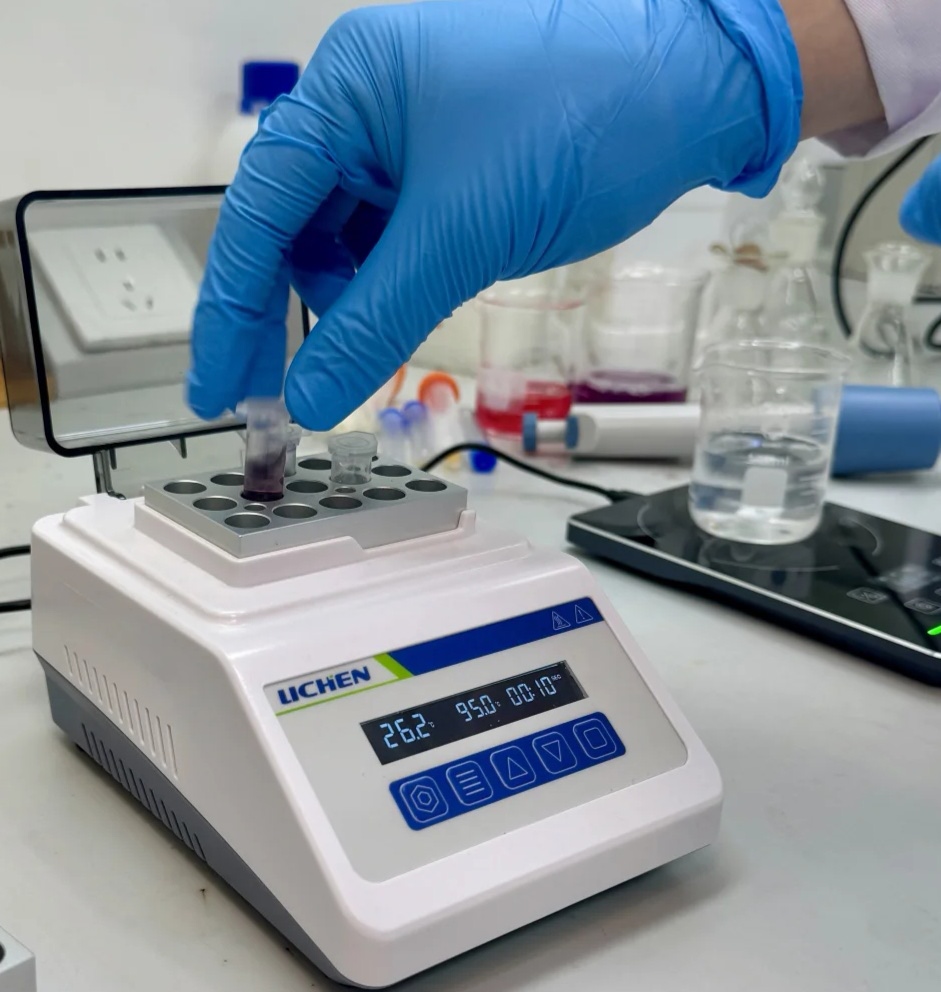
The medium might be water, oil, sand, or a metal-block style bath depending on the job. The core idea stays the same: the bath medium is what touches the flask. That matters because a round-bottom flask does not make broad, stable contact with a flat hot plate on its own. A bath gives it a more continuous heating surface and a more forgiving temperature environment.

This is why heating baths show up so often around reaction setups, especially when the flask is round-bottomed, the contents are volatile, or the operation depends on steady heating rather than brute force.
When a heating bath earns its place
There are plenty of cases where a bath is simply the more sensible choice.
Use a heating bath when you need
- gentler, more even heating
- a safer approach for volatile or flammable liquids
- stable reflux or distillation behavior
- controlled warming for recrystallization or constant-temperature work
- good thermal contact with a round-bottom flask or small tube
A bath does not fix
- a sealed system with no pressure relief
- bad condenser setup or wrong water direction
- poor clamp logic or side-loaded glass joints
- a flask that is overfilled or poorly stirred
- mismatched glassware chosen for the wrong job
The most common beginner mistake here is assuming that “bath” means “automatically safe.” It does not. A heating bath lowers some risks, especially compared with open flame around flammable solvents, but it does not cancel pressure problems, blocked vapor paths, or unstable glassware support. If a volatile liquid has no way to vent or condense properly, the real problem is the setup logic, not the fact that the flask is sitting in a bath.
Where it shows up most often
Reflux and distillation are the obvious cases. These operations depend on steady heating, not wild temperature swings. A bath helps the flask warm more evenly and makes it easier to avoid aggressive boiling. In beginner work, it also gives a cleaner margin of control when the user is still learning how vapor behavior, condenser return, and flask fill level fit together.
Heating baths also make sense in smaller-scale measurement work. A Thiele tube is really a specialized bath for controlled heating. That matters in melting-point and microscale boiling-point work because the whole point is delicate temperature control, not fast heating. Near the expected melting range, the heating rate should slow down so the sample has time to respond and the observed range means something.
Recrystallization is another good example. A water bath is often more forgiving than direct heating when the real goal is simply to warm the solvent enough to dissolve the sample without turning a small flask into an overheated, jumpy system. The same logic applies to routine constant-temperature reactions: if temperature stability matters, the bath medium and the thermometer placement matter at least as much as the hot plate setting.
Water bath, oil bath, sand bath: how to choose
Most people first learn this as a temperature question, but that is only part of it. The better question is what kind of control the operation needs, and what failure mode you are trying to avoid.
| Bath type | Best fit | What it does well | Where people get into trouble |
|---|---|---|---|
| Water bath | Below about 100 °C; gentle warming; safer heating around volatile systems | Simple, forgiving, easy to control, hard to overshoot badly | Letting the bath run low, forgetting evaporation, treating it as “safe enough to ignore” |
| Oil bath | When the job needs temperatures above the range of water | Uniform heating over a wider temperature range | Overheating the oil, getting water into hot oil, slippery flasks, messy cleanup, fire risk |
| Sand bath | Higher-temperature work when a liquid bath is not ideal | Useful when splashing from a liquid bath would be a problem | Slower heat transfer, less even temperature, easier to think the setup is gentler than it really is |
| Metal / block-style bath | Tubes, small vessels, repeatable setpoints | Good control for matched vessel sizes | Using it as if it were a universal substitute for every flask shape |
For many routine beginner operations, the water bath is the right first thought. Once the required temperature is clearly above what water can give you, you move into oil-bath territory and the risk picture changes with it. That is the point where “works” is no longer enough; you also have to think about hot oil handling, condenser hose security, and how easily a wet flask wall can turn into a splatter problem.
The oil-bath mistake that matters most
Water in a hot oil bath is not a small annoyance. It can cause violent splattering. In real bench work, that usually means keeping the outside of the flask dry, paying attention to condenser hose leaks, and not lowering a wet vessel into hot oil just because the inside of the flask is ready.
What beginners usually misjudge
A round-bottom flask is not a hot-plate vessel
A flat hot plate is good at heating flat-bottom containers. A round-bottom flask touches that surface poorly and sits poorly. Even if it seems to warm a little, the contact is unstable and the heating is usually not what you want. For round-bottom flasks, the real choice is typically between a bath and a mantle, not between a bath and bare contact with the plate.
Bath temperature is not the same as flask temperature
A hot plate dial does not tell you the bath temperature, and the bath temperature does not guarantee the liquid inside the flask is at the same value. If temperature matters, monitor the bath medium directly, and when reaction temperature really matters, monitor the flask contents as well rather than guessing from the outside.
More immersion is not always better
The flask should sit in the bath medium, but it should not sit on the bottom of the bath vessel. That recreates the same local hot-spot problem the bath was supposed to soften. In many cases the bath level should cover the part of the flask that actually needs heating and sit around, or a little above, the liquid level in the flask.
The bath itself may need stirring
People often remember to stir the reaction mixture and forget the bath. When the operation depends on a reasonably uniform bath temperature, stirring the bath medium can make the whole setup behave more predictably.
Heating bath versus heating mantle
A bath and a mantle are not competitors in every case. They solve slightly different problems.
A mantle is purpose-built for a round-bottom flask. It is efficient, compact, and often the cleanest choice for routine reflux or distillation once the flask size is well matched. A bath is more flexible. It can heat shapes that do not belong in a mantle, and it provides a visible, buffered heat-transfer layer that many beginners find easier to reason through.
If the main concern is broad compatibility and gentle, even heating, the bath often wins. If the main concern is efficient heating of one correctly sized round-bottom flask, a mantle may be the better tool.
Bench habits that prevent the usual failures
- Choose the bath medium for the real temperature range, not the one you hope the reaction will stay in.
- Keep the flask off the bottom of the bath vessel.
- Watch the bath level, especially in a long water-bath run.
- Keep flask exteriors and hose connections dry before using hot oil.
- Use a thermometer or probe in the bath medium when temperature control matters.
- Do not pour volatile liquid beside a still-hot heater just because the transfer will be quick.
- Remember that a bath is part of a whole setup: condenser path, venting, fill level, and support still decide whether the operation is sound.
A good first judgment
If the flask is round-bottomed, the liquid is volatile, or the operation depends on controlled heating rather than fast heating, a bath is often the more thoughtful option.
Related pages
Continue with the wider setup logic rather than treating heating as a stand-alone step.
FAQ
What is the difference between a water bath and an oil bath?
A water bath is the better default when the job stays below about 100 °C and you want gentle, forgiving heating. An oil bath is used when the operation needs a higher temperature range, but it brings a different risk profile: burns, splattering if water gets in, and more serious consequences if the bath is overheated.
Can I put a round-bottom flask directly on a hot plate?
Usually no. A round-bottom flask does not make stable, broad contact with a flat plate, so the heating is poor and the setup is physically awkward. In practice, a correctly sized heating mantle or an appropriate bath is the more sensible choice.
Why is water in a hot oil bath such a problem?
Because it can flash into violent splattering. The usual route is not dramatic bench negligence but ordinary setup drift: a wet flask exterior, a leaking condenser hose, or condensation ending up where it should not. That is why oil-bath work demands more attention to dryness and hose security than beginners often expect.
Where should the thermometer or temperature probe go in a heating bath?
Put it in the bath medium, not just somewhere near the setup. If bath temperature matters, the probe should actually read the bath. If reaction temperature matters, the mixture itself may need separate monitoring, because bath temperature and flask contents are not automatically the same thing.
Why should heating be slowed down near the melting point in a Thiele tube?
Because the goal is an accurate melting range, not a fast number. If you heat too quickly near the expected melting range, the sample and thermometer do not stay in good step and the observed range shifts upward or broadens. Slowing the rate near the expected range gives a more trustworthy reading.