Heating tape is easy to underestimate because it usually sits on the side of a setup rather than underneath the main flask. In the right place, though, it can make the difference between a vapor path that stays open and one that turns into the first cold spot in the system.
Its job is not to provide the main heat for a reaction vessel. A heating mantle or an appropriate heating bath does that. Heating tape earns its place when a fractionating column, transfer line, vacuum adapter, or other narrow glass section is losing heat fast enough that vapor starts condensing before it should.
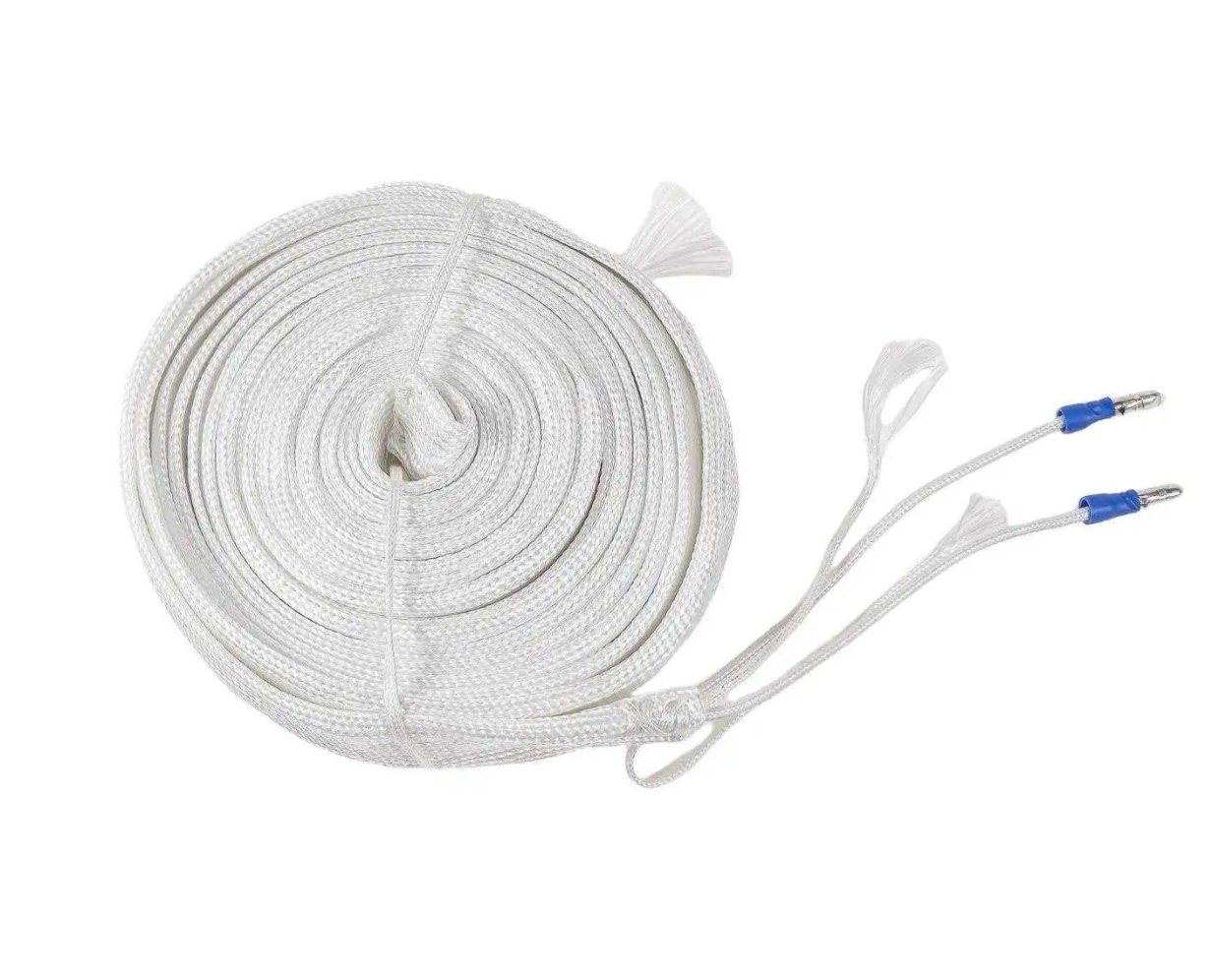
What heating tape is really doing
At the bench, the question is usually not whether a setup can be made hotter. The real question is where heat needs to stay. If vapor leaves the boiling flask and then meets a cooler stretch of glass before reaching the condenser or receiver, that stretch becomes the first place where material drops out. Sometimes that only lowers efficiency. Sometimes it shifts reflux to the wrong location. Sometimes it leaves liquid hanging in an adapter or lets a high-melting product crystallize where it can choke the path completely.
That is where heating tape makes sense. It wraps around a narrow section of glassware and adds controlled heat exactly where passive heat loss is becoming the bottleneck. In practice, the point is not “more heat everywhere.” The point is “do not let this section become the first cold surface in the system.”
Most laboratory heating tapes are flexible resistive heaters built around a woven or insulated strip. Treated properly, they are a useful local heat source. Treated like an improvised general-purpose heater, they become a hot-spot and electrical-risk problem instead.
Where heating tape earns its place
Fractionating columns
A fractionating column depends on a useful internal temperature gradient. If room-temperature air strips too much heat from the outside, vapor can condense too early, internal reflux forms in the wrong place, and separation suffers. Heating tape is one way to reduce that external heat loss when a bare column is behaving like a cold trap instead of a separation device.
Vacuum take-off paths and transfer sections
Vacuum distillation often makes path heat loss more obvious, not less. Lower pressure helps material boil earlier, but the vapor can also cool and collapse quickly in a long adapter, transfer line, or receiving path. Heating tape is useful when the path itself is what keeps slowing the setup down.
High-boiling or easily solidifying products
If material tends to condense or solidify before it reaches the intended receiver, path heating may matter more than pushing the boiler harder. Raising the main heat can make the boil harsher without fixing the place where the loss actually happens.
Persistent local cold spots
Sometimes the whole line is fine except for one bend, one sidearm, or one narrow connection that keeps loading up with condensate. Heating tape is especially valuable when the problem is local and repeatable rather than system-wide.
Insulation first, active heating when needed
One of the most useful judgment calls here is knowing when simple insulation is enough. On many routine fractional distillations, the first move is not active heating of the column. It is reducing unnecessary heat loss. If the column only needs to stop bleeding heat into the room, passive insulation may be the cleaner solution.
Heating tape becomes more useful when insulation alone still leaves a section acting like a cold spot, or when a path needs to stay above the condensation or solidification point of the material moving through it. That is an important distinction. A wrapped column or adapter should not be treated as a default sign of sophistication. It should be there because the setup actually needs it.
What heating tape does not replace
Heating tape is a very useful tool, but it solves a narrower problem than many beginners expect. It does not replace a flask heater. It does not make a poor condenser setup good. It does not fix wrong water direction, a wildly overfilled boiling flask, unstable support, or a path that is blocked for some other reason.
| Tool | Best bench job | What it is not for |
|---|---|---|
| Heating tape | Keeping a column, adapter, line, or other narrow section warm enough to avoid premature condensation | Primary heating of a round-bottom flask |
| Heating mantle | Flame-free heating of a round-bottom flask during reflux or many routine heated reactions | Actively warming a long narrow vapor path |
| Heating bath | Buffered, more even heating when gentler or more controlled heat transfer matters | A practical way to warm one isolated column section or transfer line |
| Passive insulation | Reducing ambient heat loss without active heating | Holding a stubborn cold spot above a needed path temperature when insulation alone is not enough |
How to use it without creating new problems
Heating tape should be run as a controlled heater, not treated like an on/off strip. In many teaching and research labs that means using a variac or another suitable controller. For longer or more temperature-sensitive work, a real temperature-controlled system is a safer choice than manual guesswork alone.
Start low. Let the setup respond. Watch the section you are actually trying to keep warm. If the wrapped glass is already hot enough to do its job, driving it much harder rarely improves the apparatus. It only increases the chance of hot spots, stressed glass, overheated residues, or a flammable spill meeting a surface that is hotter than you intended.
Wrap evenly and keep good contact with the surface. Do not overlap the tape, kink it, pinch it, or leave part of it bunched into a loose hot roll. Those are classic ways to create local overheating and shorten heater life. The same logic applies to glass: if one area is forced into much harsher heating than the rest, you are moving closer to thermal-stress problems rather than away from them.
Keep the setup inspectable. If the wrapped section disappears under a messy layer of tape and foil and you can no longer tell where condensate is collecting, whether a joint is under stress, or whether a sidearm is loading up, the heating fix is starting to hide the apparatus logic instead of helping it.
Keep the heater dry and check it before use. Frayed braid, scorched insulation, exposed conductor, solvent contamination, and wet electrical parts are all reasons to stop and rethink before power goes on. Hot surfaces and flammable solvent do not need much help to become a bad combination. The broader rules in heat-safe organic lab work still apply here.
Common mistakes
Using tape to solve the wrong problem
If the condenser is wrong for the solvent, the water is flowing the wrong way, or the boil is much too aggressive, heating the line will not fix the real fault. It only changes where the symptom appears.
Trying to replace the main heater
Heating tape is not a substitute for a mantle or a bath under a boiling flask. Using it that way pushes it outside its natural job and usually gives worse control.
Over-wrapping and over-driving
If the goal is to stop one section from going cold, wrapping half the apparatus and driving it hard is usually not thoughtful setup design. It is a sign that the operator has stopped asking where the real bottleneck is.
Ignoring the glass itself
A damaged adapter or thin stressed joint does not become safer just because the heat source is flexible. Local heating still has to respect the condition, thickness, and support of the glassware.
When to think about heating tape
It is worth considering when vapor has to travel through a section that clearly should stay warm, and that section keeps becoming the first place where condensation shows up. It is also worth considering when a product starts dropping out in a transfer path, when a fractionating column is losing too much heat to the room, or when a vacuum distillation setup feels sluggish because the path beyond the boiling flask keeps cooling down too early.
If you are still working out broader heater choice, flask support, and setup stability, the more useful starting point is often the wider Mixing & Reaction Setup, the beginner path in Starting Organic Lab Work, or the symptom-first checks in Troubleshooting Organic Lab Work. Heating tape makes the most sense once the rest of the apparatus is already close to right.
FAQ
Why is vapor condensing before it reaches the condenser?
Because some earlier section of the apparatus has become the first cold surface in the system. Check the obvious causes first: weak boil, wrong condenser choice, wrong cooling-water direction, or too much ambient heat loss from a column or adapter. If the setup is otherwise sound and one path section still keeps dropping vapor too early, insulation or heating tape may be the right fix.
When is insulation enough, and when do I actually need heating tape?
Use passive insulation first when the job is mainly to reduce ordinary heat loss from a fractionating column or similar section. Move to heating tape when insulation alone is still not enough, or when the path needs to stay above a condensation or solidification temperature rather than merely lose heat more slowly.
Can heating tape replace a heating mantle?
No. They do different jobs. A heating mantle is for heating a round-bottom flask from below. Heating tape is for warming a line, column, adapter, or other narrow section that should not become a cold spot during the run.
Should laboratory heating tape be plugged straight into the wall?
It is better treated as a controlled heater, not a plug-and-forget strip. Many labs run heating tape through a variac or a dedicated controller, and for longer or hotter runs, temperature-controlled systems are safer than relying only on manual power adjustment.
Can heating tape overlap when wrapped around glassware?
No. Avoid overlap, kinks, pinches, and loose rolled sections. Those create hot spots, increase damage risk, and make the heater behave less predictably. A smooth, even wrap with good surface contact is the safer habit.