Magnetic stirring is one of the most routine things in the lab, which is exactly why beginners often underestimate it. When it is working well, it feels almost invisible: the liquid moves, the solids stay suspended, the addition goes in, and the flask behaves. When it stops working well, the problem usually shows up as a dancing stir bar, dead solids on the bottom, uneven heating, or a reaction that looks simple on paper but refuses to run cleanly at the bench.
That is the real value of understanding magnetic stirring. It is not just a convenience feature on a hot plate stirrer. It is a mixing method with a clear operating range, a clear failure mode, and a clear point where it should be replaced by something stronger.
What magnetic stirring is really good at
Magnetic stirring is the default choice when the reaction is small to moderate in scale, the liquid can still move freely, and you want mixing without putting a rotating shaft through the vessel.
How magnetic stirring works
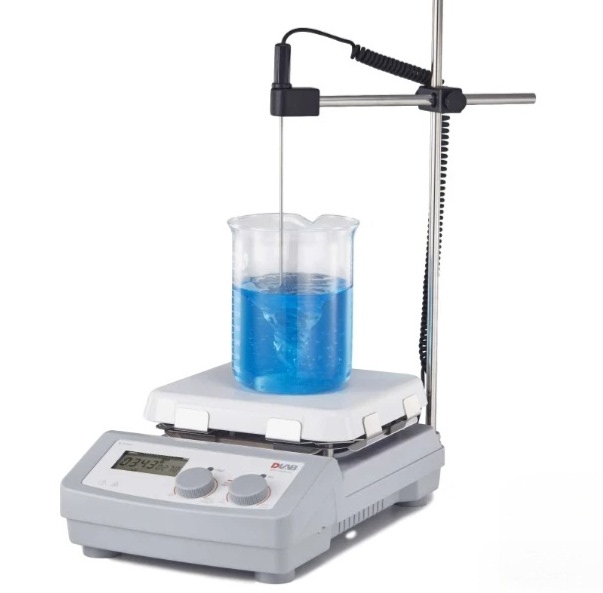
A magnetic stirring setup has two parts. The stirrer itself contains a rotating magnetic field. Inside the vessel, a stir bar follows that field and turns with it. That gives you agitation without any direct mechanical shaft passing through the flask wall or stopper.
That matters more than it sounds. Once there is no shaft entering the vessel, the setup becomes simpler to seal, easier to use under a condenser, and easier to adapt to ordinary closed or semi-closed lab work. That is one reason magnetic stirring is so common in reaction setups, especially for routine synthesis, dropwise additions, reflux, and small inert-atmosphere work.
The stir bar itself usually contains a magnetic core with a chemically resistant outer coating. In routine organic lab work that coating is most often PTFE. PTFE is chosen because it resists most laboratory solvents and reagents well, but it is not a universal material. Under strongly atypical conditions—especially molten alkali metals or highly reactive fluorinating agents—it should not be treated as inert by default.
The stir bar matters more than people think
Beginners often focus on the stirrer plate and ignore the bar, but the bar is where the geometry problem actually lives. Shape, size, and vessel fit all matter.
For flat-bottom vessels, a straight cylindrical bar is often the natural choice. Many of these use a central pivot ring, which helps the bar ride more smoothly on a flat base and reduces dragging. For round-bottom flasks, oval or egg-shaped bars are often better because they tolerate curved geometry more naturally and are less likely to fight the contour of the glass.
Size matters too. A bar that is too small may barely move the liquid. A bar that is too long may strike the wall, wobble badly, or become easier to throw out of lock once the system speeds up. In practice, the question is not “what is the biggest bar that fits,” but “what bar stays coupled and actually moves the liquid in this vessel.”
Magnetic stirring works well when
- the liquid is still mobile rather than thick or pasty
- the vessel is small to moderate in size
- the setup benefits from good sealing or a condenser above the vessel
- you need long, quiet, low-maintenance agitation
- the solids load is modest enough that the bar can still stay coupled
Magnetic stirring starts to struggle when
- the mixture becomes highly viscous
- heavy solids settle under the bar
- the volume grows past what the plate can drive reliably
- the job needs high shear rather than simple circulation
- the bar keeps decoupling even after sensible adjustment
Why it is often the first choice
Magnetic stirring is usually the easiest way to keep a reaction moving without making the setup more complicated than it needs to be. There is no shaft seal to assemble, no overhead motor to align, and no rotating metal rod exposed above the vessel. That alone makes it attractive for ordinary bench synthesis.
It is especially useful when the vessel is under a condenser, when reagents are being added slowly, or when the setup needs to stay reasonably sealed. In those situations, the lack of a mechanical shaft is not just convenient. It removes a common source of awkward assembly and leakage.
It also fits naturally with a hot plate stirrer. That lets heating and stirring happen in one compact platform. But this is also where beginners can make a category mistake: a hot plate stirrer is still a flat platform heater. If the vessel is a round-bottom flask, the heating choice still has to be thought through separately.
Where magnetic stirring stops being enough
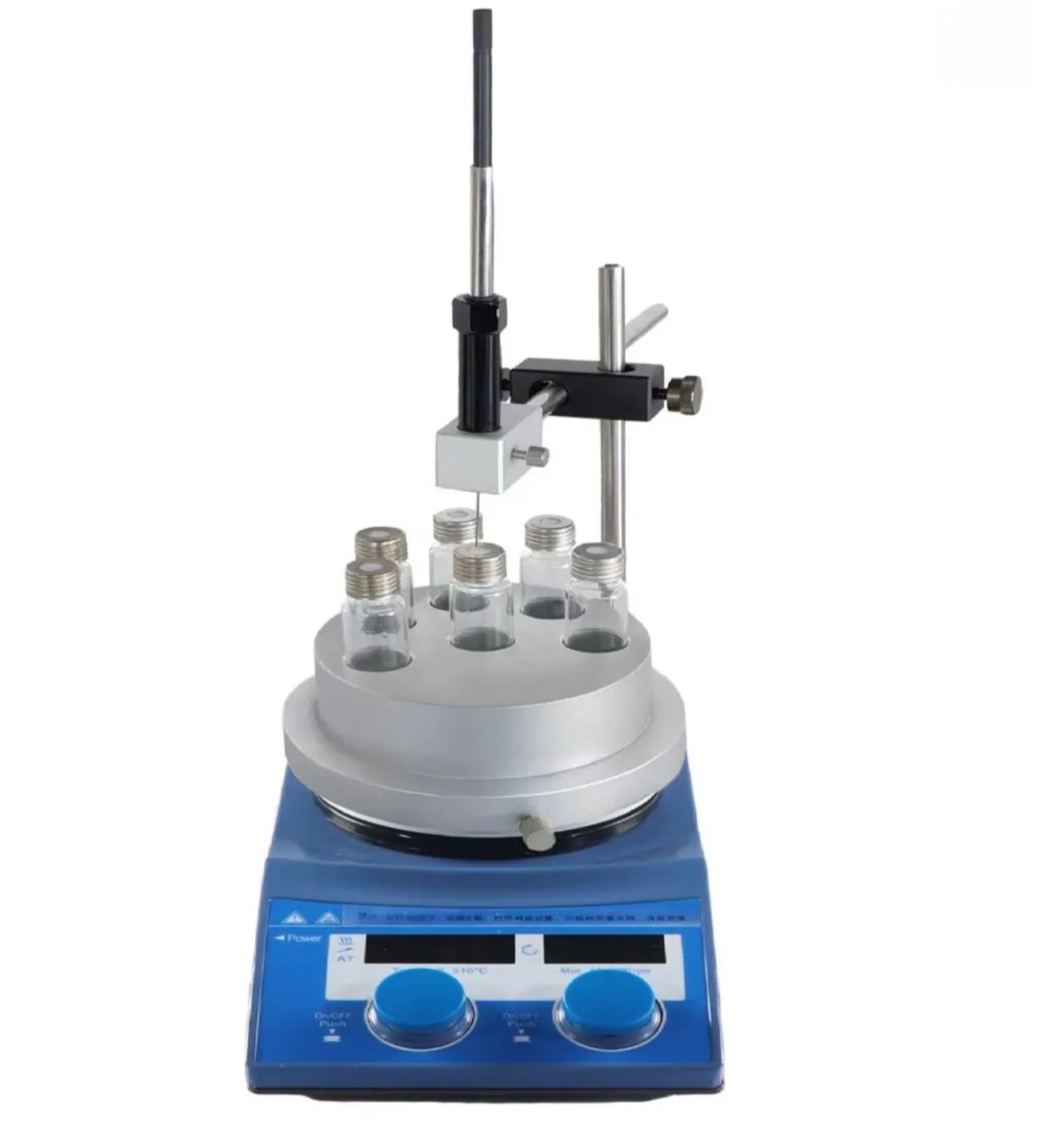
The cleanest boundary is torque. Magnetic stirring is a low-torque method. Once the mixture becomes thick, heavily suspended, or physically resistant, the magnetic field is no longer strong enough to keep the bar following the drive magnet reliably. That is when you start seeing decoupling, stalling, rattling, or a bar that spins in place without really mixing the bulk liquid.
This is the point where many people try to save the setup by turning the speed higher. That usually makes the problem worse. More speed is not more control. Once the bar is already near its coupling limit, a faster field can simply throw it out of lock sooner.
If the system is genuinely too viscous, too slurry-heavy, or too large, the practical answer is usually to switch to a mechanical or overhead stirrer rather than to keep forcing magnetic stirring to do a job it is not built for.
The failure mode beginners meet first: decoupling
When a stir bar decouples, it stops rotating in step with the drive magnet. At the bench this shows up as bouncing, chattering, skating sideways, or suddenly sitting still while the liquid stops moving properly. In everyday lab language people often call this “throwing the bar” or say the bar is “jumping.”
Several things can cause it:
- the speed was ramped up too fast
- the vessel is off-center on the plate
- the bar shape is wrong for the vessel bottom
- the mixture has become too viscous
- solids have built up under the bar
- the magnetic gap is too large because of vessel geometry or extra distance from the drive magnet
What to do when the stir bar starts jumping
Do not keep increasing the speed. Drop the speed back to zero, let the bar settle, recenter the vessel, and restart slowly. If the same problem returns, assume the setup is overloaded or mismatched and check the vessel shape, solids load, viscosity, and bar choice before continuing.
If this keeps happening, the bench question is no longer just “what speed should I use?” It becomes “is magnetic stirring still the right mixing method for this system?” That is often the point where the real fix is a different bar, a different vessel, a different solids loading, or a move to overhead stirring.
Heating changes the decision
Magnetic stirring becomes trickier the moment heating is added. A hot plate stirrer is convenient, but convenience does not remove heater boundaries. A flat-bottom flask or beaker can sit directly on the plate. A round-bottom flask usually should not. If a round-bottom flask needs heating while being magnetically stirred, it often belongs in a bath or in a heating mantle, not directly on the plate.
Heating also changes liquid behavior. Viscosity may fall as the system warms, which can make stirring easier. But solids may precipitate during the run, gas may evolve, and bumping or uneven boiling can quickly make a previously quiet stir bar unstable. In real bench work, the setup has to be watched as a whole, not as “stirring” and “heating” as separate checkboxes.
Material notes that are actually worth remembering
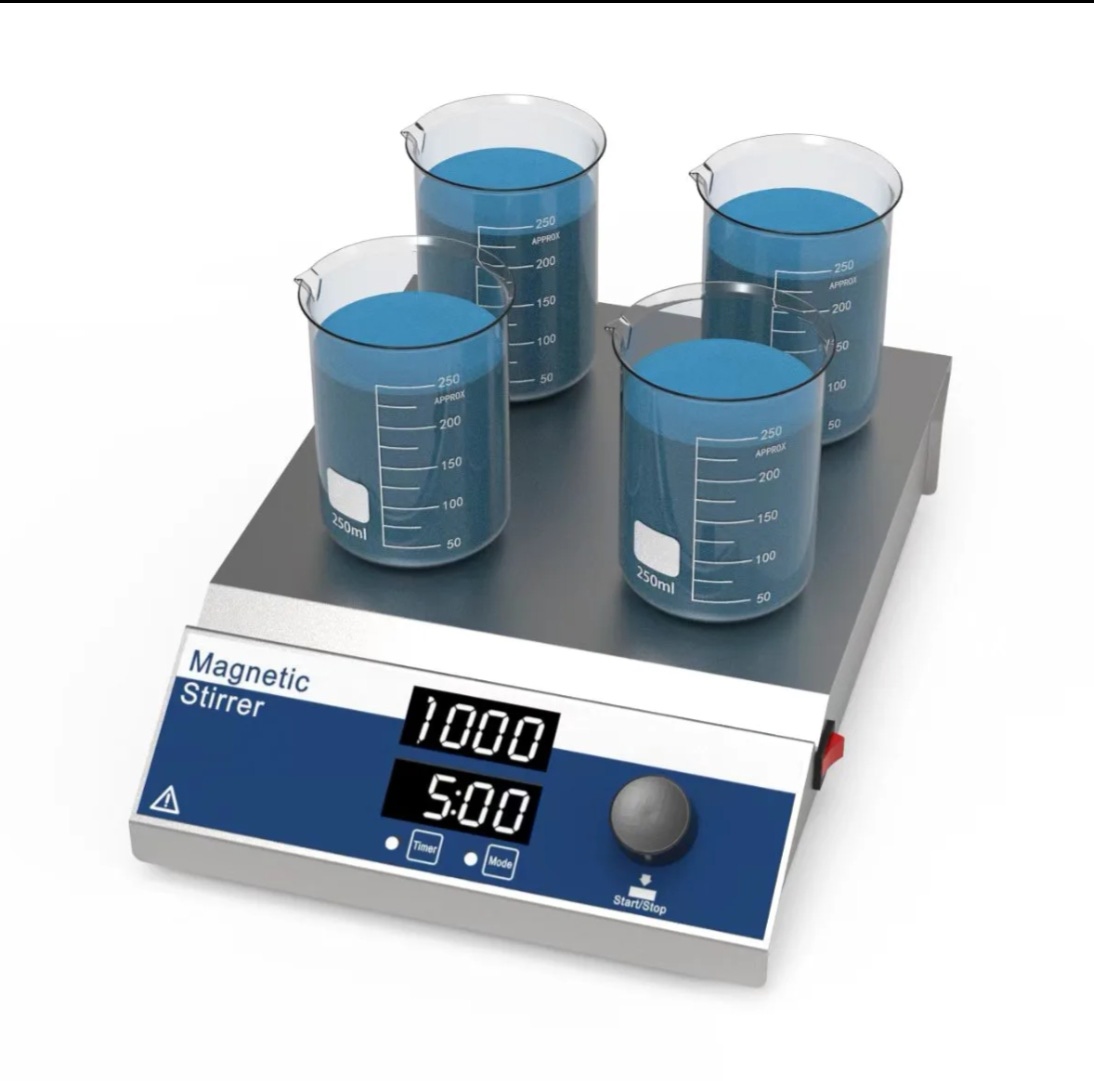
PTFE-coated stir bars are standard for a reason: they are broadly chemically resistant and easy to clean. For normal organic solvents, aqueous work, and most routine synthesis conditions, they are the obvious default. But “chemically resistant” is not the same thing as “immune to everything.” Molten sodium or potassium, and highly reactive fluorinating conditions, fall outside the ordinary assumptions behind a PTFE stir bar.
The vessel material matters too. In routine teaching and synthesis work, the glassware used with magnetic stirring is commonly borosilicate glass. ISO 3585 defines the properties of borosilicate glass 3.3, which is one reason this material is the normal glass baseline for heated laboratory vessels rather than ordinary consumer glass.
Technical note on standards
If the setup includes heating as well as stirring, the hot plate stirrer is not just a mixer with a warm top. IEC 61010-2-010 is the safety standard for laboratory equipment used for the heating of materials. That matters because a heated magnetic stirrer should be understood first as laboratory electrical heating equipment, not just as a spinning bench accessory.
Magnetic stirring versus overhead stirring
| Method | Best fit | Main strength | Main limit |
|---|---|---|---|
| Magnetic stirring | Small to moderate volumes, low to medium viscosity, sealed or condenser-topped setups | Simple, compact, low contamination risk, easy to combine with heating | Low torque; limited by viscosity, solids load, and bar coupling |
| Overhead / mechanical stirring | Higher viscosity systems, heavier slurries, larger volumes | Much stronger torque and better handling of difficult mixtures | Bulkier setup, shaft entry, more assembly and sealing issues |
For beginners, the practical decision is usually simple: if the liquid still moves cleanly and the bar stays coupled, magnetic stirring is usually the easier choice. If the bar repeatedly fails, the bottom stays packed with solids, or the mixture has clearly moved into slurry or paste territory, it is time to stop treating magnetic stirring as mandatory.
Good operating habits
- Start low and ramp up gradually rather than jumping straight to high speed.
- Center the vessel on the stir plate.
- Choose the bar for the vessel bottom, not just for the volume.
- Watch what happens at the bottom of the vessel, not just the surface vortex.
- Do not assume the bar is still doing useful work just because it is moving.
- When heating a round-bottom flask, rethink the heating method before blaming the stirrer.
- Recover stir bars with a retriever rather than fishing in waste with your fingers or tweezers.
A good first judgment
If the system is still fluid enough to move, the vessel geometry suits a stir bar, and the setup benefits from easy sealing or simple heating-plus-mixing, magnetic stirring is usually the right first choice. If the bar keeps losing lock after sensible adjustment, the setup is telling you something.
Related pages
Use the surrounding setup pages when stirring is only one part of a bigger bench decision.
FAQ
What is magnetic stirring best used for?
Magnetic stirring is best for small to moderate volumes of low- to medium-viscosity liquid, especially when the setup benefits from simple sealing, a condenser above the vessel, or combined heating and stirring on one bench platform.
Why does my stir bar keep decoupling?
The usual causes are excessive speed, poor centering, the wrong bar shape for the vessel, high viscosity, solids packed under the bar, or too much distance between the drive magnet and the stir bar. Reducing the speed and restarting slowly is the first check, not increasing the speed.
When should I switch from magnetic stirring to overhead stirring?
Switch when the mixture becomes too viscous, slurry-heavy, or large for the bar to stay reliably coupled. Repeated decoupling after sensible adjustment is usually a sign that magnetic stirring is no longer the right tool.
Which stir bar shape is better for a round-bottom flask?
Oval or egg-shaped bars are often more stable in round-bottom flasks because they tolerate curved geometry better. Straight cylindrical bars are often more natural in flat-bottom vessels, especially when a pivot ring helps reduce drag on the base.
Can I heat a round-bottom flask directly on a hot plate stirrer?
Usually not. A hot plate stirrer is built around flat contact with a flat-bottom vessel. If the reaction is in a round-bottom flask, magnetic stirring may still be fine, but the heating method often needs to change to a bath or a heating mantle.