Skip to content
  • Start here
  • About & Sponsors
  • Contact Us
  • Downloadables

Chemnorth

Home » Rotovap Troubleshooting

Rotovap Troubleshooting

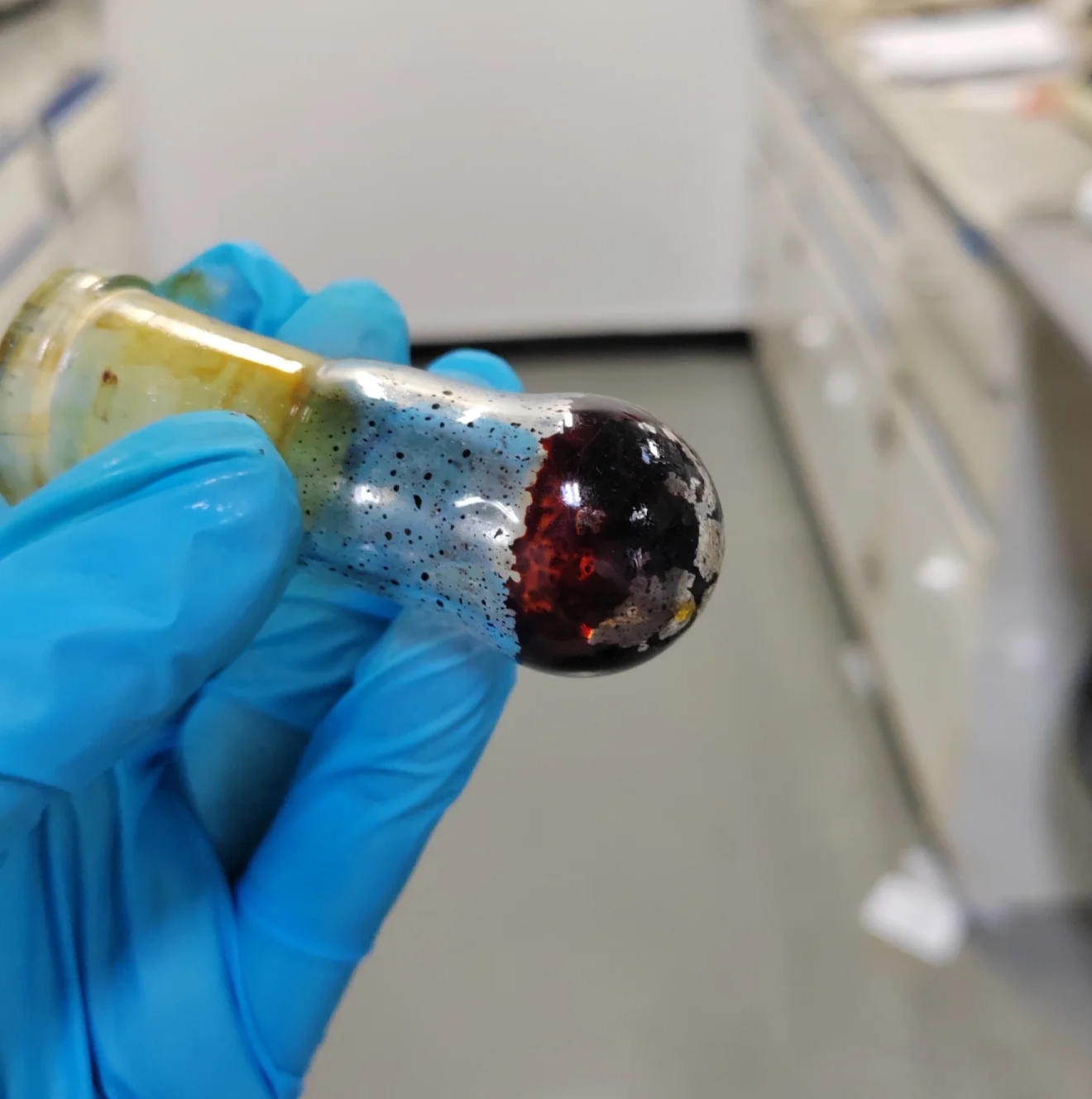
What a Charred Rotovap Flask Can Tell You Before You Wash It
March 17, 2026March 17, 2026 by user
Concentrated organic reaction residue in a round-bottom flask showing dark red thermal decomposition signs.

A scorched flask is a “black box” recorder of a failed experiment. From kinetic battle royales to the micro-hell of heat transfer, we diagnose why products “turn to the dark side” and how to prevent it.

Categories Lab Safety & Environment Tags Laboy Glass, Mass Transfer, Organic Synthesis, Pear-shaped Flask, Rotovap Troubleshooting, Thermal Decomposition Leave a comment

Quick Start

  • First Lab Basics
  • Reflux Setup
  • Slow Filtration
  • Ground Glass Joints

Useful Downloads

  • Checklist
    First Organic Lab Session Checklist
  • Checklist
    Reflux Setup Checklist
  • Quick Reference
    Ground Glass Joint Size Guide

Get Lab Guides

Organic lab guides, troubleshooting notes, and useful downloads.

Latest Post

  • Concentrated organic reaction residue in a round-bottom flask showing dark red thermal decomposition signs.
    What a Charred Rotovap Flask Can Tell You Before You Wash ItMarch 17, 2026
  • Why Boiling Chips Stop Working After Cooling and How to Reheat a Flask SafelyMarch 13, 2026
  • Why “Clean” Solvent Still FailsMarch 11, 2026
  • Beyond the 95% Wall: Mastering Azeotropic Distillation for Ultimate PurityMarch 11, 2026
  • Laboy Glass Vacuum Trap With 35/20 Ball Joint
    The “Cold Trap” of Vacuum Distillation: Why Lower Pressure Might Be Killing Your EfficiencyMarch 7, 2026
  • Laboy Glass Anti-Climb Adapter with Standard Taper Joint
    Conquering Suck-Back: Don’t Let the Last Three Seconds of “Instant Vacuum” Ruin Your SynthesisMarch 6, 2026
  • Why Your Temperature is Lying: The Role of PTFE Thermometer Adapters in Synthesis PrecisionMarch 5, 2026
  • Start here
  • About & Sponsors
  • Contact Us
  • Downloadables

© 2026 ChemNorth • Professional Chemistry Encyclopedia