
Most students walk into their first organic chemistry lab and see just glass everywhere. However, understanding the functional and safety differences between molded vs hand-blown lab glassware is essential for any researcher working with heat or vacuum.
Look closer, though, and there are actually two worlds of glass sharing the same bench space: mass-produced molded glass and technical hand-blown borosilicate glassware, each with a completely different purpose and safety profile.
TL;DR
- Beakers & cylinders → molded glass, cheap, great for everyday mixing at atmospheric pressure.
- Condensers, jointed flasks, adapters → hand-blown borosilicate, engineered for heat, cold, vacuum, and complex setups.
- Using molded glass under heat or vacuum is unsafe. Organic labs rely on hand-blown glass because it’s built for those stresses.
From “Just Glass” to Two Different Worlds
I’ll never forget the first time I walked into an organic chemistry lab. Most students just see “glass everywhere.” But after years of working with it, I see something very different: two distinct worlds sharing the same bench space.
On one side, you have the familiar faces from general chemistry—beakers and graduated cylinders. They’re the reliable, everyday soldiers.
On the other side lies the real magic: long condensers, three-neck round-bottom flasks, distillation heads, vacuum adapters—pieces with standardized joints that click together like scientific Lego.
Here’s the secret most students don’t learn until later:
Those complex pieces aren’t stamped out of molds. They’re hand-blown—born from flame, skill, and careful annealing.
If you remember only three points from this article:
- Molded glass is perfect for gentle, everyday work.
- Hand-blown borosilicate is designed for heat, cold, vacuum, and modular systems.
- Using the wrong glass under stress can cause sudden breakage, solvent sprays, or dangerous implosions.
Molded vs. Hand-Blown Comparison
| Feature | Molded Glass | Hand-Blown Glass |
|---|---|---|
| Typical Pieces | Beakers, Cylinders, Storage Bottles | Condensers, Multi-neck Flasks, Adapters |
| Thermal Shock | Poor Performance | Excellent (Borosilicate 3.3) |
| Vacuum Safety | Unsafe / Risk of Implosion | Engineered & Kiln-Annealed |
Comparing Molded vs Hand-Blown Lab Glassware
Think of lab glassware not as different “types,” but as different crafts. When analyzing molded vs hand-blown lab glassware, we are comparing mass production with technical precision.
Molded Glass: The Mass-Produced Workhorse
Molded glass is made by pouring molten glass into a metal mold—like baking a cake in a pan.
Common pieces: Beakers, Graduated cylinders, Erlenmeyer flasks, Petri dishes, Simple storage bottles.
Strengths: Very inexpensive, durable for everyday mixing, easy to stock in large numbers.
Weaknesses: Walls may be slightly uneven; strength depends on perfect annealing; cannot form precise standard taper joints; poor performance under vacuum.
Hand-Blown Glass: The Artisanal Athlete

This is where the craft begins. A glassblower starts with a simple borosilicate tube, heating it in a flame to shape it into hand-blown lab glassware. They finish with standardized joints (14/20, 19/22, 24/40).
Why it matters: Complex shapes are easy; engineered strength with controlled wall thickness; proper kiln annealing to remove internal stress.
Yes, hand-blown glass costs more. But you’re paying for precision, safety, and reliability under extreme conditions.
What Organic Labs Actually Do to Glass
Students see “a container.” Experienced chemists see a component in a high-stress system.
1. Thermal Shock
Going from an ice bath to a 200 °C oil bath can shatter poorly annealed glass. Hand-blown borosilicate expands evenly and can survive these transitions far better.
2. The Crush of Vacuum
Vacuum doesn’t “pull” glass apart—it crushes it inward.

My golden rule: If I don’t know its history, it never touches my vacuum line. Unknown glass is a silent liability.
A Quick Safety Checklist
Before starting your experiment, ask:
- Heat or extreme cold? → Use hand-blown borosilicate.
- Vacuum or pressure? → Hand-blown only. Never risk “mystery glass.”
When in doubt, ask yourself: Would I stand in front of it during vacuum or heating? If not, it doesn’t belong in your hood.
Choosing Your Glass Allies: A Practical Brand Guide
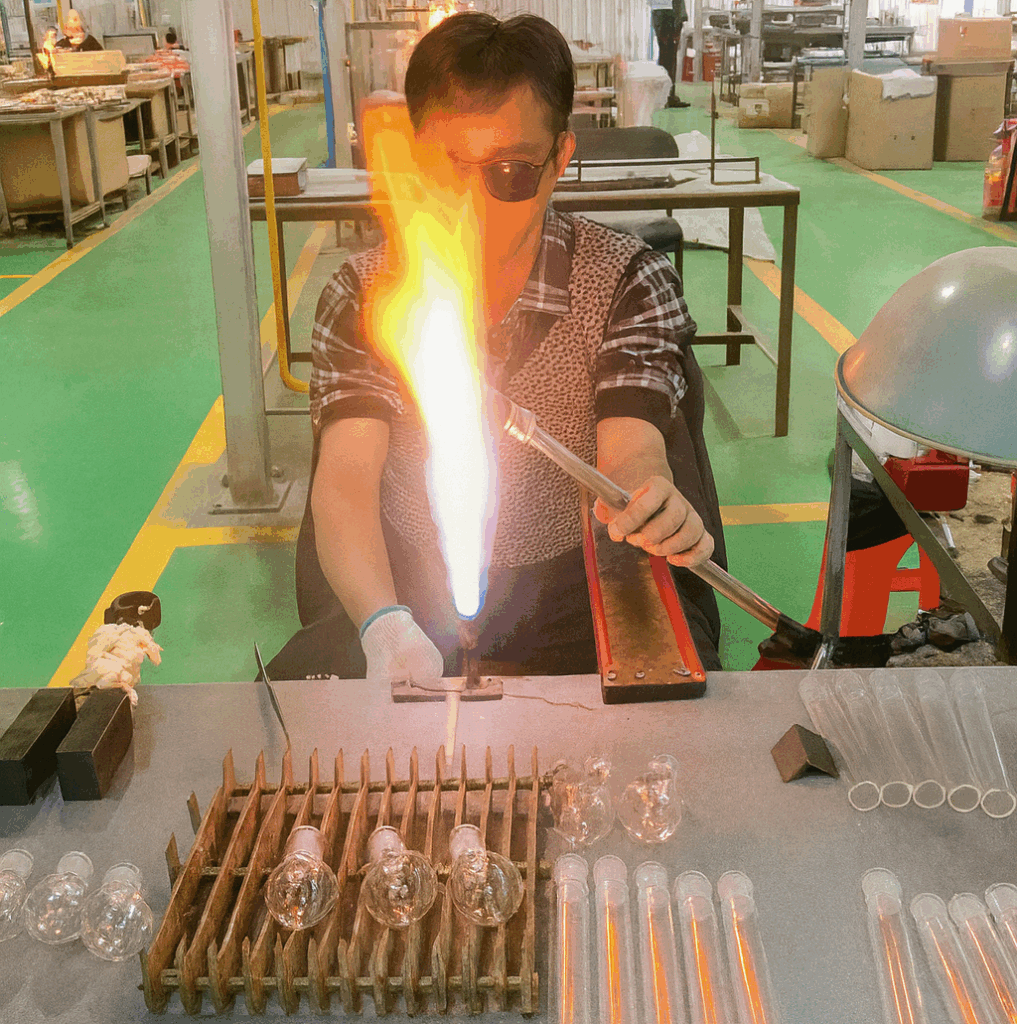
From the assemblies I’ve used worldwide, the landscape of hand-blown glass breaks down into three clear tiers:
🏆 The Gold Standard
Brands like Chemglass and Wilmad-LabGlass set the benchmark with tight dimensional consistency. This craftsmanship earns its price.
💡 The Smart Value Tier
This is where Laboy Glass fills a niche. They offer true hand-blown borosilicate 3.3 and proper joints, allowing departments to equip benches affordably.
The Bottom Line
Choosing between molded vs hand-blown lab glassware isn’t about looks; it’s about being engineered for the realities of synthetic work—heat, vacuum, and safety. Glassware isn’t just a container; it’s a partner.