A flat-bottom flask looks simple, but its shape changes several things at the bench: how the vessel sits, how a stir bar behaves, how easy the liquid level is to observe, and how safely the flask can be handled during non-vacuum work. It is not a better version of a round-bottom flask. It is a different tool, useful when stability and observation matter more than heating uniformity, reflux performance, or vacuum compatibility.
Fast answer: Use a flat-bottom flask for stable bench standing, temporary liquid holding, solvent transfer, gentle magnetic stirring, observation, and some non-vacuum crystallization or mixing steps. Do not use an ordinary flat-bottom flask as a vacuum flask, pressure vessel, rotary evaporation flask, or default reaction flask for heating, reflux, or distillation.
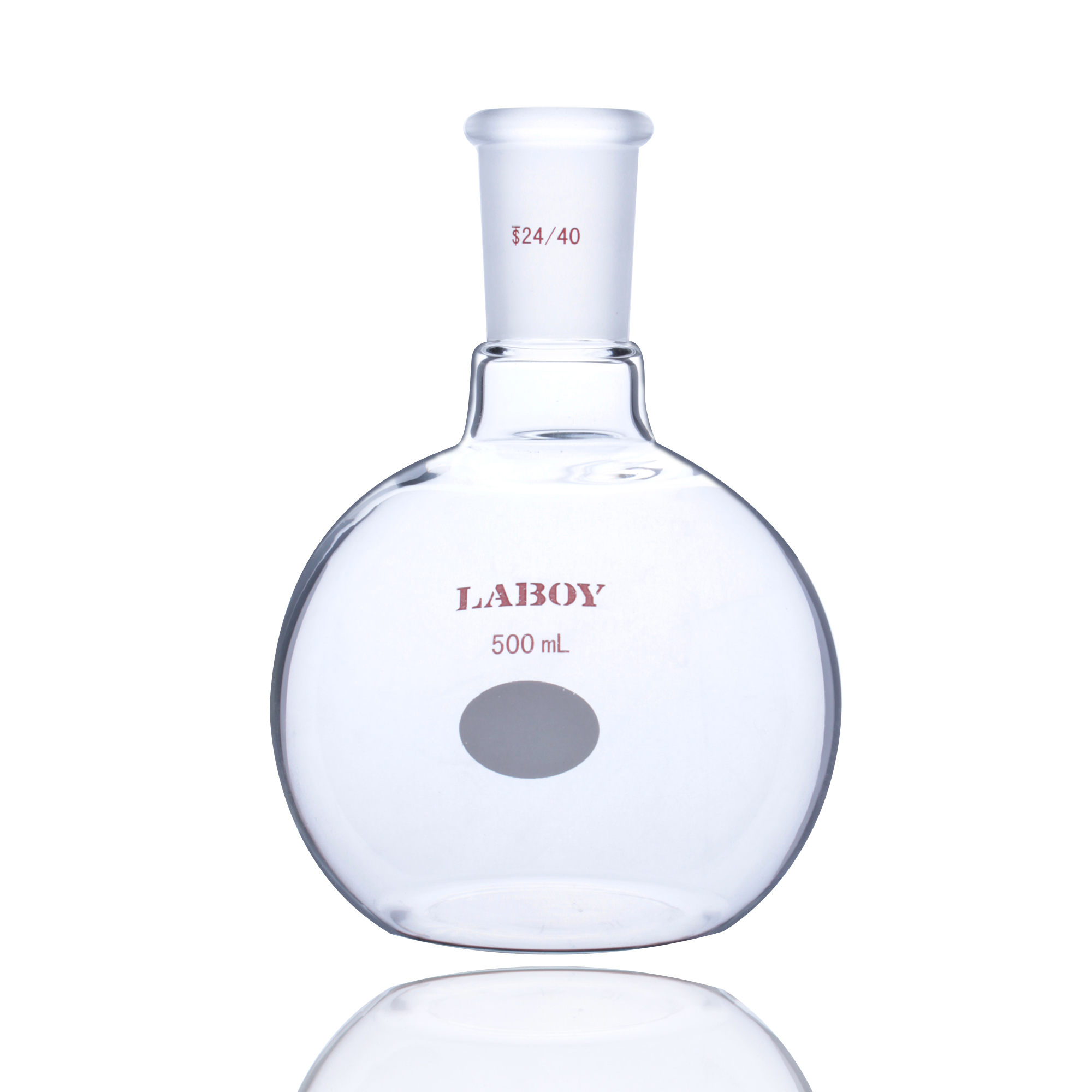
What the flat bottom actually changes
The first advantage is not mysterious chemistry. It is mechanical stability. A flat-bottom flask can stand on the bench without a support ring, cork ring, or clamp. That makes it convenient when you are holding a liquid temporarily, preparing a solution, observing two layers, allowing a mixture to cool, or transferring material between vessels.
The second advantage is stirring behavior. On a flat base, a magnetic stir bar often has a more stable contact surface than it does in the curved bottom of a round-bottom flask. That can make gentle stirring easier to control, especially when the operation is not meant to be heated strongly or run under vacuum.
These are useful advantages, but they should not be exaggerated. A flat-bottom flask does not automatically make extraction faster, crystallization cleaner, or yield higher. Those outcomes depend on the solvent system, phase ratio, temperature, mixing intensity, emulsion behavior, concentration, impurity profile, and the actual separation method used afterward.
| Bench situation | Where a flat-bottom flask helps | Where another vessel is usually better |
|---|---|---|
| Temporary holding or transfer | Stands securely on the bench and is easy to handle during non-vacuum liquid work. | Use a graduated cylinder, volumetric flask, or transfer pipette when accurate measurement is the main goal. |
| Gentle magnetic stirring | The flat base can help a stir bar rotate more steadily during simple solution mixing. | Use a round-bottom flask when the mixture will be heated, refluxed, or connected to a reaction setup. |
| Liquid-liquid extraction workup | May be useful for premixing or observing phases before the actual separation step. | Use a separatory funnel for controlled draining and clean phase separation. |
| Crystallization or cooling | Can be convenient for standing, slow cooling, and visual monitoring. | Use the vessel specified by the procedure when crystal habit, seeding, filtration, or thermal control is critical. |
| Vacuum or pressure | Ordinary flat-bottom flasks should not be used for this purpose. | Use glassware specifically designed and rated for vacuum or pressure work. |
Extraction: useful for mixing, not a replacement for a separatory funnel
In liquid-liquid extraction, the important bench question is not simply “Which flask is faster?” A good extraction depends on contact between phases, enough mixing to renew the interface, enough time for transfer, and a clean way to separate the layers afterward.
A flat-bottom flask can be helpful before separation when you need a stable vessel for gentle stirring, premixing, or observing how two phases behave. It may be easier to watch the interface, see whether an emulsion is forming, or keep the vessel standing safely while preparing for the next step.
But the final separation step still belongs in a separation and purification workflow, usually with a separatory funnel when two immiscible liquid layers need to be drained cleanly. A flat-bottom flask does not give you a stopcock, controlled layer removal, or the same practical visibility of the lower interface during draining.
Bench judgment
A flat-bottom flask can help during the mixing or observation part of a workup. It should not be described as a substitute for the vessel that actually performs the phase separation.
Crystallization: helpful for standing and observation, not a guarantee of better crystals
During crystallization, a flat-bottom or Erlenmeyer-style vessel can be convenient because it stands securely, is easy to observe, and can sit undisturbed during cooling. For some mixtures, the broad standing surface also makes it easier to see whether material is collecting evenly or clumping in one region.
Still, flask shape is only one small part of crystallization control. Crystal size and purity are usually governed more by solvent choice, concentration, cooling rate, seeding, impurity profile, scratching, disturbance, and how close the system is to supersaturation. A flat bottom may make the operation easier to manage, but it does not automatically produce cleaner crystals.
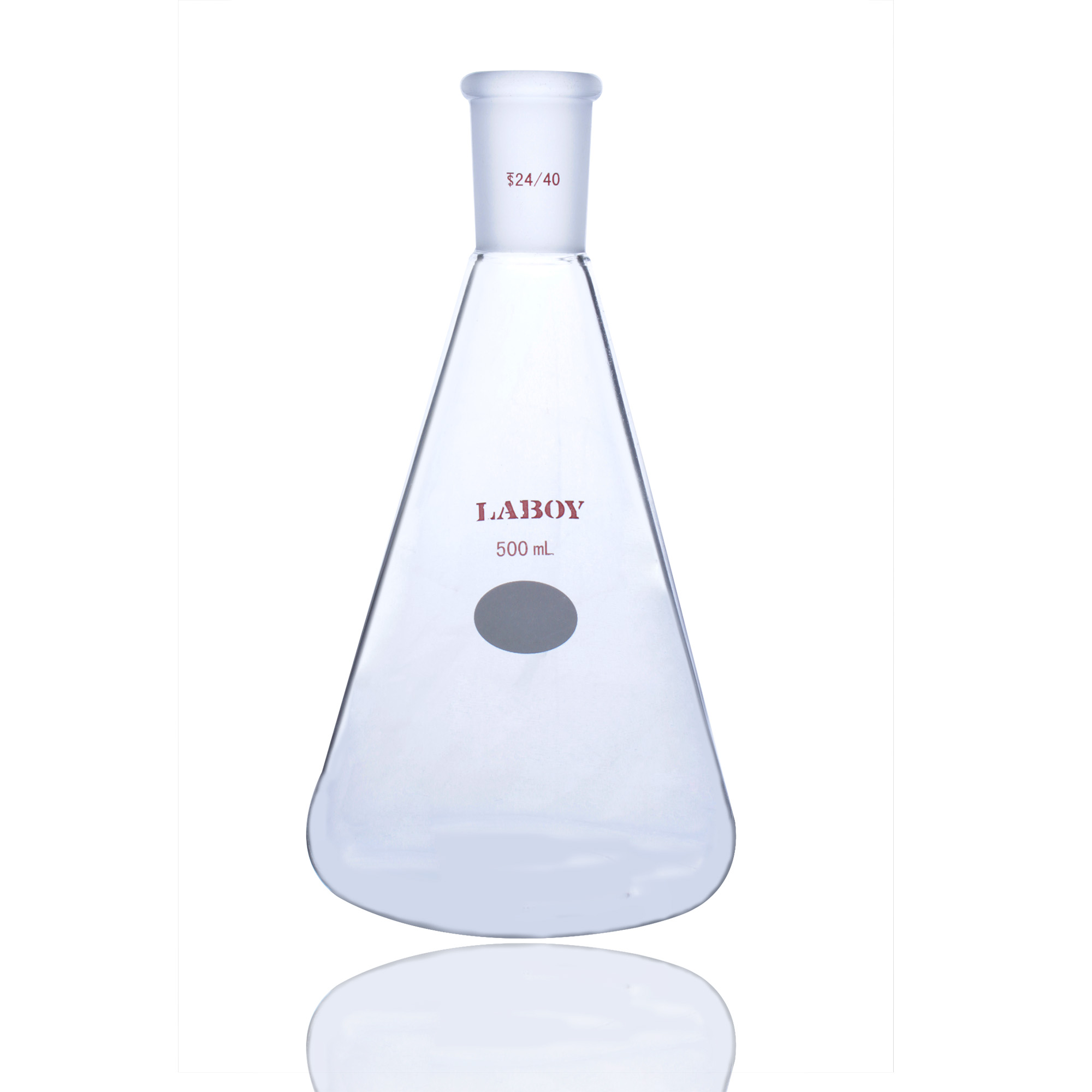
Where a round-bottom flask is still the better choice
A round-bottom flask remains the standard vessel for many reaction setups because its shape distributes heat and mechanical stress more evenly. That matters when the flask is heated, connected to a condenser, placed in an oil bath or heating mantle, used for reflux, or connected to vacuum-rated apparatus.
For reflux, distillation, rotary evaporation, and many air-sensitive or vacuum-connected setups, the round-bottom shape is not a historical accident. It is part of the safety and performance logic of the apparatus. A flat-bottom flask should not be chosen just because it can stand on the bench.
If you are comparing flask choices for a reaction setup, start from the operation first: heating, cooling, stirring, pressure condition, connection needs, and workup method. Then choose the vessel. Shape should follow the workflow, not the other way around.
Safety boundary: do not use ordinary flat-bottom flasks under vacuum or pressure
Important safety point: Ordinary flat-bottom flasks are not vacuum flasks or pressure vessels.
Flat glass surfaces do not distribute pressure in the same way as round vacuum glassware. Unless the manufacturer specifically rates the item for vacuum or pressure service, keep flat-bottom flasks for non-vacuum, non-pressure bench work.
This is especially important when a flask is large, scratched, chipped, thermally stressed, or clamped in a way that creates point stress. If the operation involves vacuum filtration, reduced pressure, pressure buildup, sealed heating, or connection to a vacuum line, use the correct rated vessel instead.
How to use a flat-bottom flask well
- Use it for stable non-vacuum bench work. It is well suited for standing, holding, transferring, observing, and gentle mixing.
- Keep stirring moderate. A stable stir bar is useful, but aggressive vortexing can still splash, entrain air, or create emulsions in two-phase systems.
- Do not force it into reaction roles. For reflux, distillation, oil-bath heating, rotary evaporation, or vacuum-connected work, choose the proper round-bottom or rated vessel.
- Watch the glass condition. Avoid using chipped, scratched, star-cracked, or thermally shocked glassware, especially with large liquid volumes.
- Transfer to the right separation vessel. If the next step is clean liquid-liquid separation, move the mixture to a separatory funnel or the procedure-specified vessel.
Bottom line
A flat-bottom flask is valuable because it is stable, visible, and easy to handle during ordinary bench work. It can make some mixing, holding, cooling, and observation steps smoother. But it should not be oversold as a high-performance extraction or crystallization tool, and it should never be treated as a vacuum or pressure vessel unless it is specifically designed and rated for that purpose.
The best use of a flat-bottom flask is simple: choose it when the bench operation benefits from a stable standing vessel. Choose something else when the chemistry requires heating geometry, controlled draining, vacuum resistance, pressure rating, or a full reaction setup.
FAQ
Is a flat-bottom flask better than a round-bottom flask?
No. It is better for some bench tasks and worse for others. A flat-bottom flask is convenient for stable standing, holding, observation, and gentle non-vacuum mixing. A round-bottom flask is usually better for heating, reflux, distillation, rotary evaporation, and many reaction setups.
Can I use a flat-bottom flask for extraction?
You can use it for some premixing or observation steps, but it should not replace a separatory funnel when the task is to drain and separate immiscible layers cleanly.
Does a flat-bottom flask improve crystallization?
It can make standing, cooling, and observation easier, but it does not guarantee better crystals. Crystallization depends strongly on solvent choice, concentration, cooling rate, seeding, impurities, and disturbance.
Can a flat-bottom flask be used under vacuum?
Ordinary flat-bottom flasks should not be used under vacuum or pressure. Use only glassware specifically designed and rated for those conditions.
When should I choose a flat-bottom flask?
Choose it when the vessel needs to stand securely on the bench and the operation is non-vacuum, non-pressure, and not mainly a heated reaction setup.