Separation & Purification
Understand how common separation and purification workflows in the organic lab are truly constructed. Explore the apparatus logic behind distillation, extraction, filtration, chromatography, recrystallization, solvent removal, drying, and purity checks.
This is a guide to method reasoning, comparative decision-making, and equipment selection—not a simple supplier catalog.
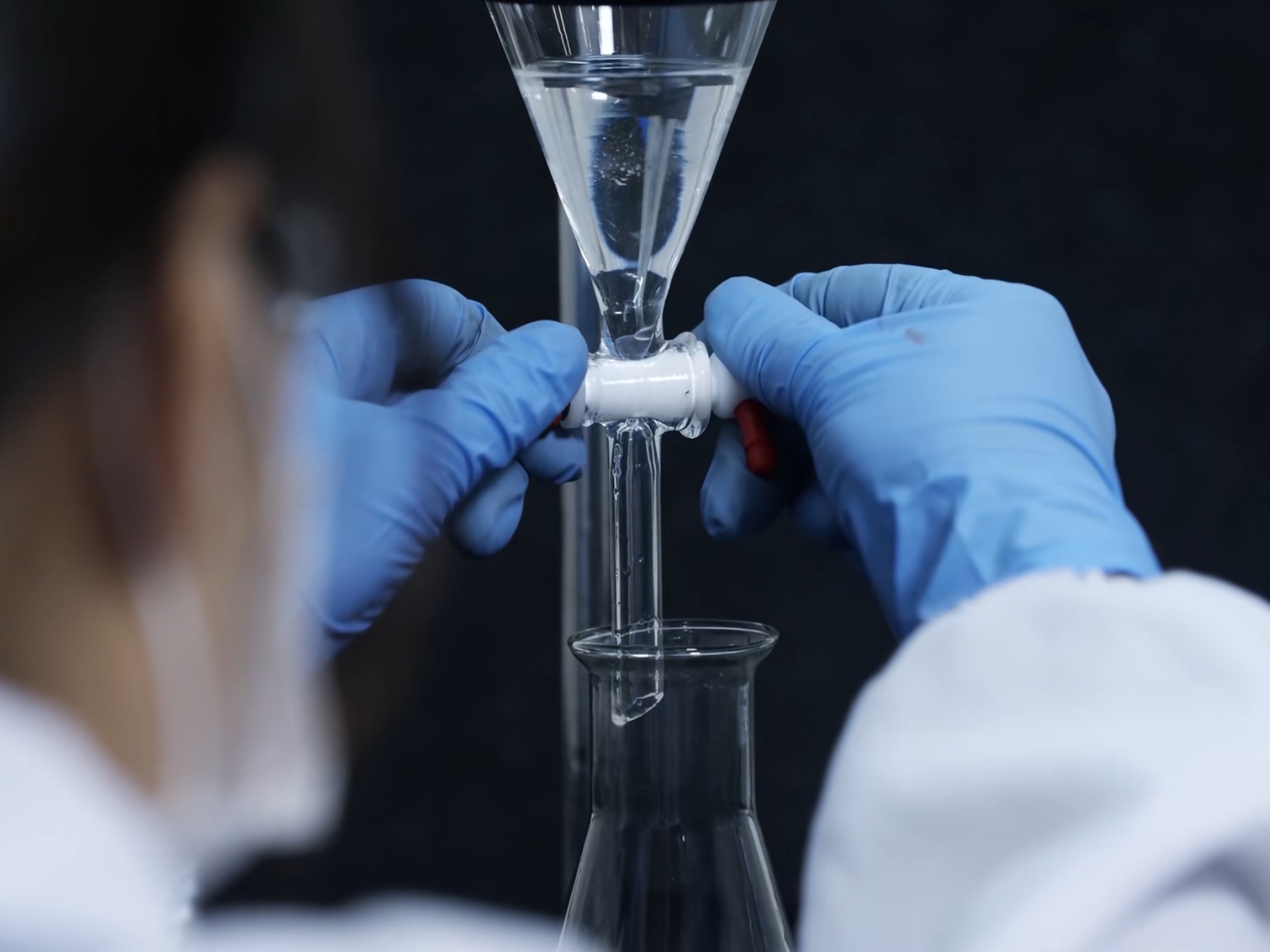
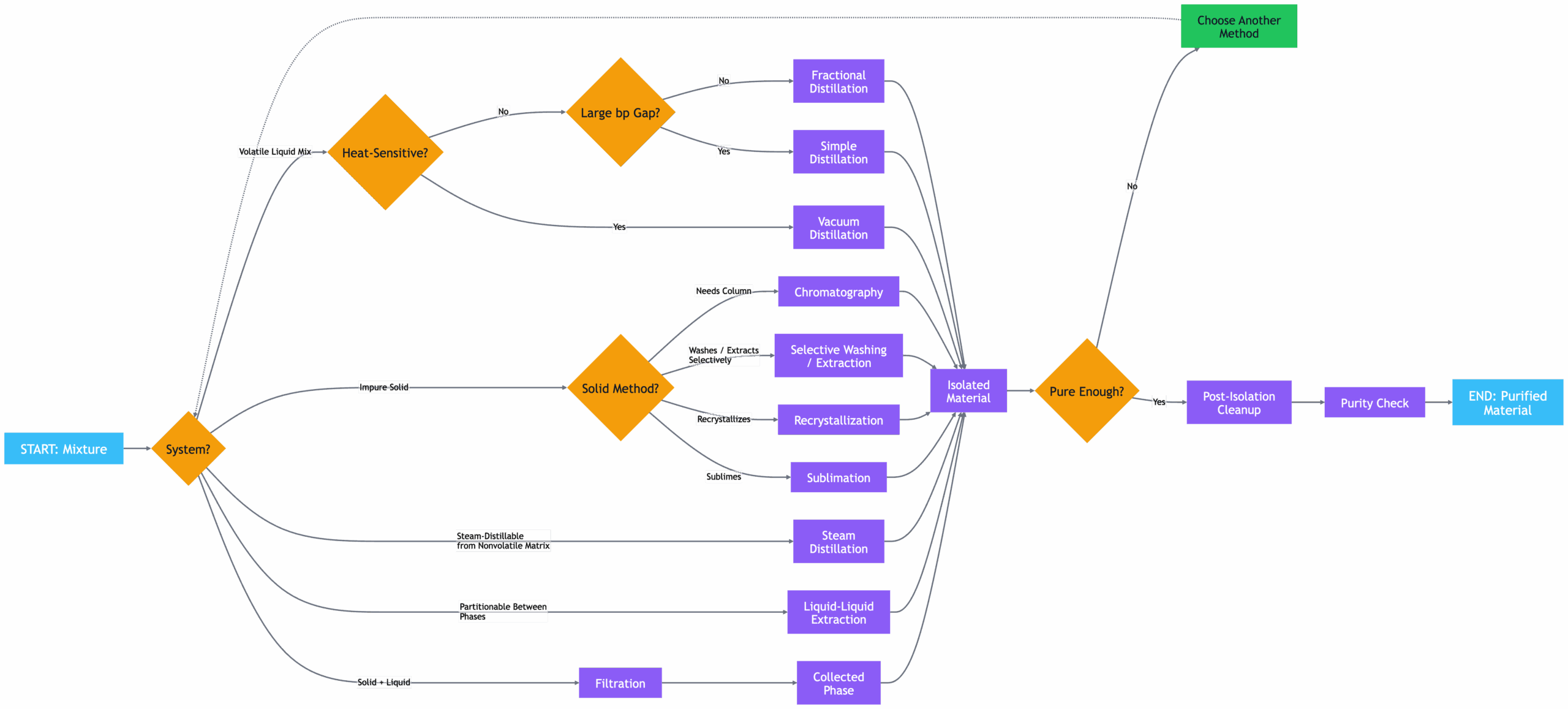
How Separation Workflows Are Organized
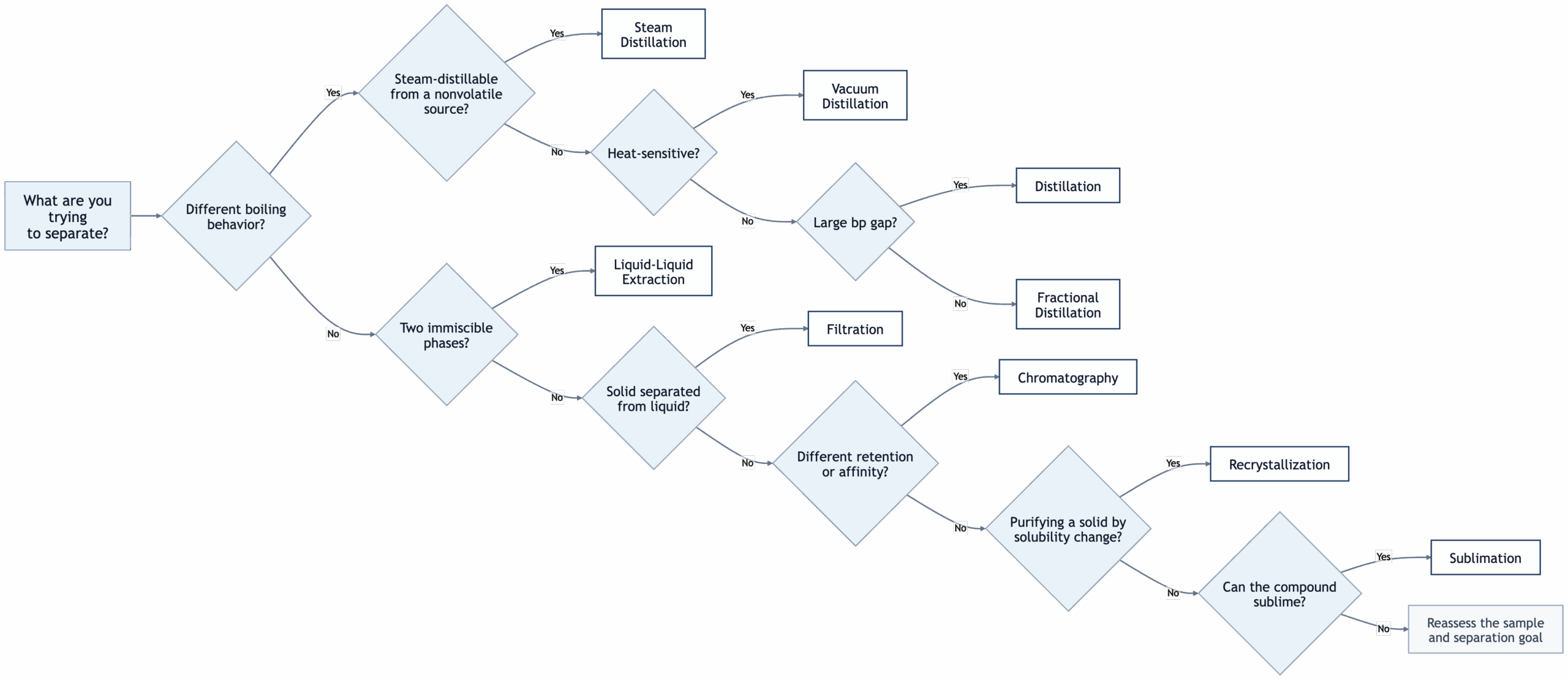
Phase / Solid Handling Separation
Filtration, Liquid–Liquid Extraction, Solid–Liquid Extraction
Core Directory by Method Family
Select a methodology to explore specific apparatus logic, comparisons, and setups.
1. Distillation & Fractional Distillation
Compare boiling vessels, vapor-path components, columns, condensers, and receivers as one connected separation system.
2. Vacuum Distillation
See how reduced pressure changes boiling behavior, component choice, and system stability.
3. Steam Distillation
Understand how steam generation, delivery, and receiving logic differ from ordinary distillation.
4. Filtration
Choose filtration hardware by what should be retained, what should pass, and how much loss the sample can tolerate.
5. Liquid–Liquid Extraction
Compare extraction tools by phase behavior, venting control, drainage, and recovery.
6. Solid–Liquid Extraction
See when repeated solvent contact matters more than simple soaking or one-pass washing.
7. Chromatography
Understand how chromatography choices change separation mechanism, control, scale, and recovery.
8. Recrystallization
Learn how vessel choice, cooling control, crystal isolation, and drying affect whether recrystallization actually succeeds.
9. Sublimation
Compare atmospheric and vacuum sublimation by volatility, temperature control, and deposition behavior.
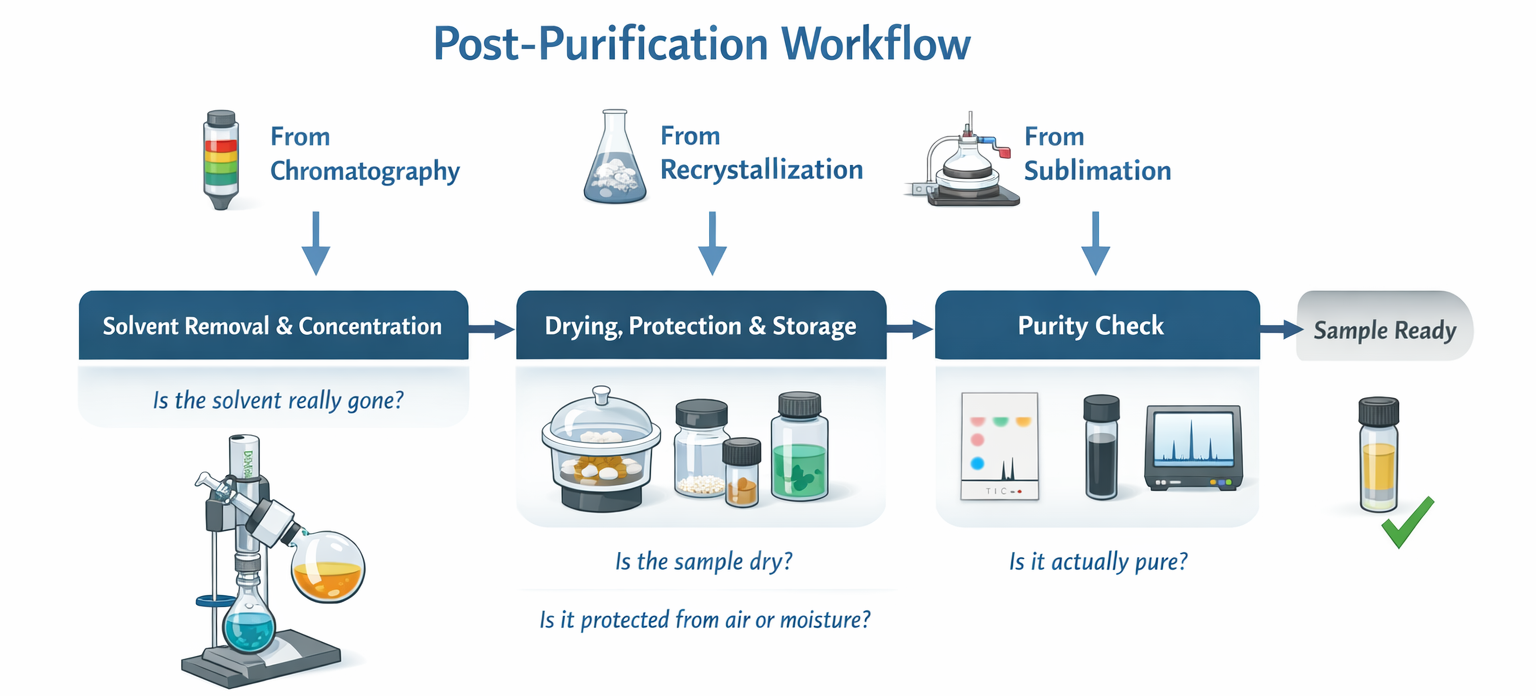
10. Solvent Removal & Concentration
Match the concentration method to sample scale, heat sensitivity, bumping risk, and solvent load.
11. Drying & Protection
Separate the ideas of drying, storage protection, and moisture exclusion before treating a sample as finished.
12. Purity Check Tools
Understand what quick bench checks can tell you, and when stronger instrumental confirmation is needed.
Selection & Decision Logic
Before picking apparatus, review these reasoning principles to avoid common misjudgments.
Choosing the Separation Method
Core principles for matching the physical state and target.
Boiling, Vapor, and Condensation Logic
Thermal reasoning and path selection.
Vacuum Logic and Leak Risk
How to approach reduced pressure systems safely.
Phase Separation and Washing Logic
Differentiating extraction from simple washing.
Filtration Speed vs Retention Logic
Balancing throughput with clarity and yield.
Concentration, Drying, and Product Loss Logic
Avoiding losses in the final workflow stages.
Purity Check Logic
When to trust bench tools vs instrumental analysis.
Related Learning Paths
Starting Organic Lab Work
For beginners mapping out their first lab stations and basic glassware concepts.
Stage 2Understanding Core Setups
When moving from isolated tools to connected, functional reaction and separation systems.
Stage 3Moving Into Air-Sensitive & Vacuum Work
For advanced workflows requiring atmosphere control and reduced pressure.
Troubleshooting
Symptom-first diagnostics for common separation setup failures.