Liebig vs Allihn vs Graham Condensers
These three condensers all cool vapor back into liquid, but they do not solve the same setup problem in the same way. The useful difference is not just cooling power. It is also how vapor moves through the condenser, how the condensed liquid moves afterward, and whether that path fits reflux or distillation.
Fast answer: A Liebig condenser is the straight-path default and is commonly used in distillation. An Allihn condenser is usually the more natural choice for ordinary reflux. A Graham condenser is not simply a “better condenser” just because it has more internal surface area.
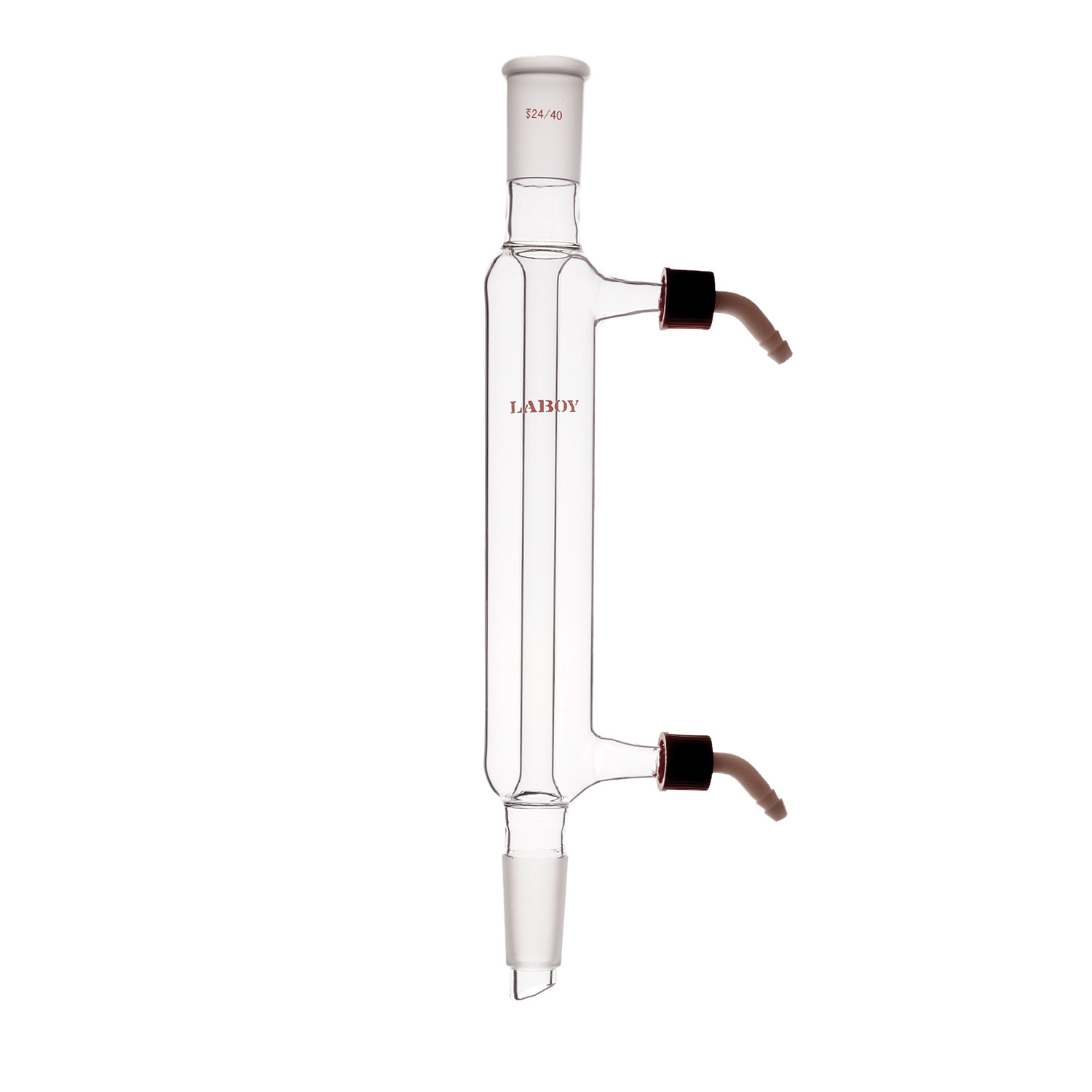
Liebig
Straightforward vapor path and directed condensation make it the usual starting point for simple distillation.
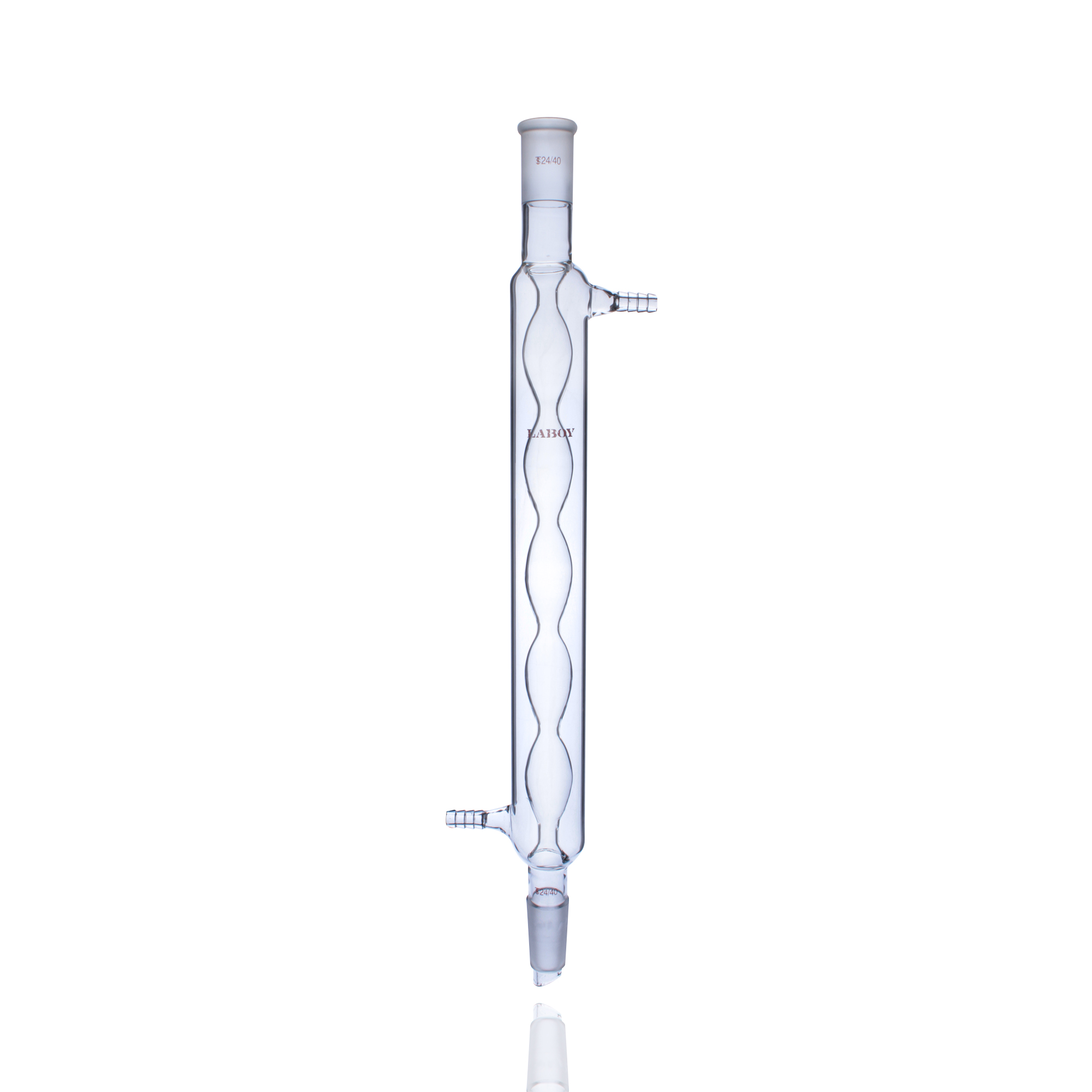
Allihn
The bulb structure supports repeated condensation and smooth liquid return in ordinary reflux work.
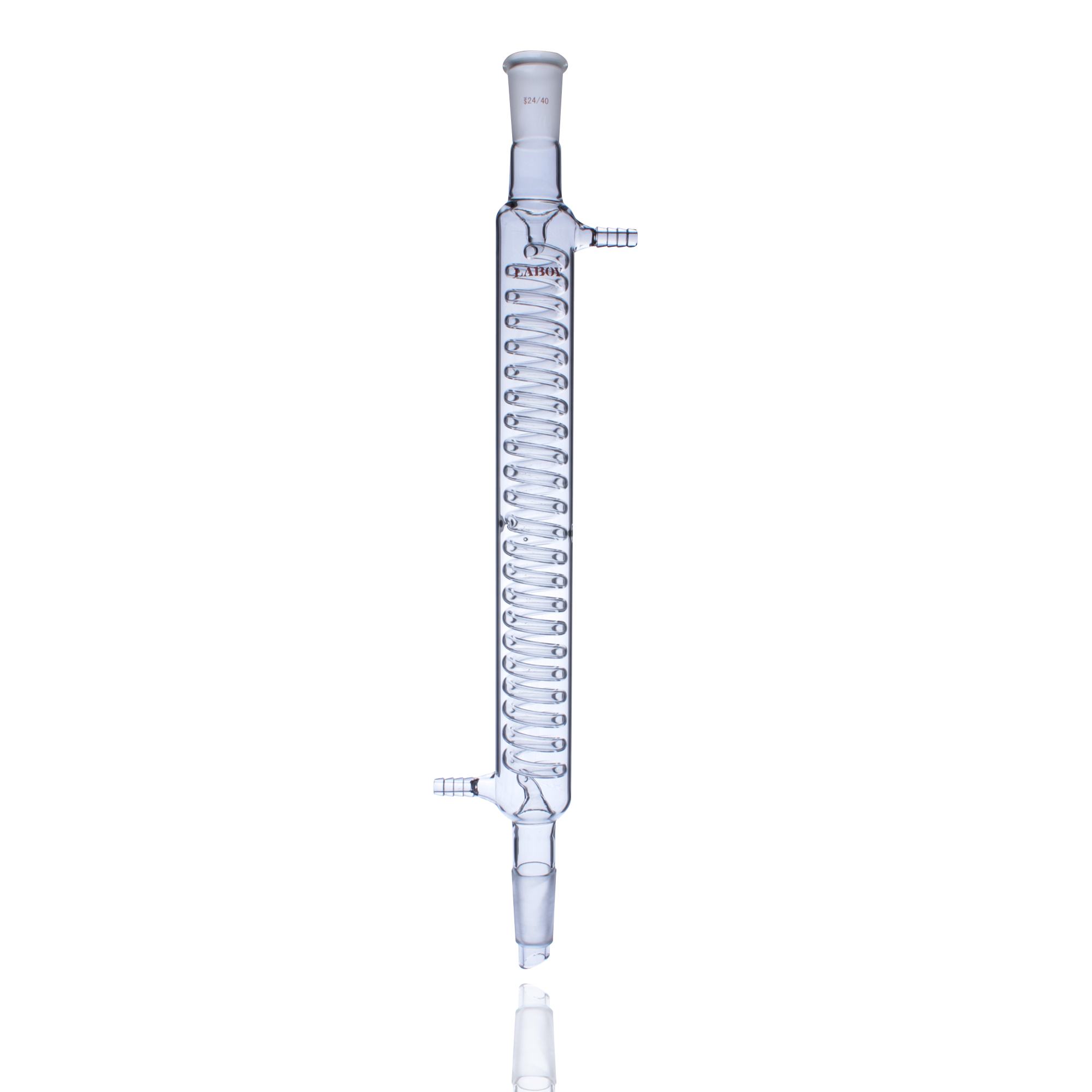
Graham
More surface area does not automatically mean a better choice for routine reflux or distillation.
These condensers do the same job, but not in the same way
A condenser always sits inside a larger working system. Vapor rises or moves forward from the hot flask, enters the condenser, loses heat, and becomes liquid again. But after that point, the liquid still has to go somewhere. In a reflux setup, it needs to fall cleanly back into the same flask. In a distillation setup, it needs to move onward into the receiver. Those are not the same tasks, so the most useful condenser is not always the one with the most aggressive cooling geometry.
This is why condenser choice is often misread by beginners. They look at cooling surface alone and assume that “stronger condensation” must mean “better in every situation.” In practice, condenser performance is not only about how effectively heat is removed. It is also about how condensed liquid and moving vapor share the same space. That is why a design that looks more efficient on paper can still behave awkwardly in a real reflux or distillation path.
Liebig condenser
A Liebig condenser is the straight-path standard. It has a straight inner tube surrounded by a water jacket. In teaching labs, it is commonly installed horizontally in simple distillation, where the job is to condense vapor and guide the liquid product forward into a receiver. The geometry is easy to read, easy to clamp, and easy to troubleshoot.
That simple geometry is the main reason the Liebig condenser remains useful. It gives vapor a clear path, and it gives condensed liquid a clear direction out of the condenser. For distillation, that straightforward path is a feature, not a limitation. A beginner often underrates the Liebig because it looks less elaborate than other designs. In practice, a simple, readable condenser is often the right starting choice when you want directed condensation rather than a return loop.
That does not mean a Liebig condenser is useless for reflux. It can work when the vapor load is relatively light and the setup is not especially demanding. But it is not usually the most forgiving default for ordinary reflux.
Allihn condenser
An Allihn condenser is often the better fit for ordinary reflux because it is built around the return step, not just the cooling step. Its bulb sections increase internal surface area, but the more useful practical point is that they also support repeated condensation and return within a vertical reflux path. In a reflux setup, you are not trying to deliver condensed liquid to a separate receiver. You are trying to keep the solvent cycling: boil, rise, condense, fall back, repeat. The Allihn’s shape suits that job well.
That is why Allihn condensers appear so often in teaching-lab reflux procedures. In a good reflux setup, the goal is a slow, steady return of condensed vapor to the flask. The point is not maximum violence at the boil. The point is stable circulation.
The Allihn condenser does have an important boundary that beginners often miss: it should be used vertically. If it is used in the wrong orientation, condensate can become trapped in the bulbs, and the setup becomes less readable and less reliable.
Graham condenser
A Graham condenser is the one beginners most often overread. It looks like a high-performance upgrade because its inner tube is coiled, giving more surface area than a straight condenser. That extra surface area is real, but it does not automatically make the Graham condenser the best choice for routine reflux or distillation.
A Graham condenser has a narrow, coiled internal path. That can increase cooling, but it can also complicate how liquid and vapor share the passage. In a setup where condensate needs to return cleanly against rising vapor, that is not automatically an advantage. In ordinary student-lab work, Graham condensers are often more specialized than they first appear.
Orientation matters here too. A Graham condenser is usually used vertically. That detail is not decorative. Its geometry is tied to how it is meant to work.
The real difference: return vs transfer
The most useful way to compare these three condensers is not by asking which one is “best.” The better question is: best for what path?
In reflux, condensed liquid must fall back into the original flask in a steady, readable way. That favors a condenser that handles repeated condensation without making the return path awkward. In ordinary student-lab reflux, that usually points toward Allihn rather than Graham.
In distillation, condensed liquid should move forward to the receiver rather than cycling back. That is one reason the straightforward path of a Liebig condenser remains so common.
This is also why a “more powerful” condenser can still be the wrong condenser. If it increases hold-up, promotes flooding, or complicates the liquid path, it may solve one problem while creating another. A beginner often notices only whether vapor is being cooled. A more experienced reader asks whether the whole path still makes sense.
What to notice at the bench: do not just ask whether vapor is cooling. Ask where the liquid needs to go next. In reflux, it needs to return cleanly. In distillation, it needs to move forward cleanly.
How to choose between them
Start with the setup goal.
If you are doing simple distillation, a Liebig condenser is usually the most natural starting choice. It gives you a clear, directed condensation path and matches the horizontal arrangement most beginners learn first.
If you are doing ordinary reflux, an Allihn condenser is often the better starting choice because the setup depends on stable condensation and return, not just forward transfer.
If you are considering a Graham condenser, do not choose it just because it looks more efficient. Ask whether the geometry helps the actual flow path in your setup, or whether it may create hold-up and flooding. For routine student-lab reflux and distillation, the safer assumption is that Graham is more specialized than it first appears.
Condenser choice should also be read together with how hard the setup is being driven. A condenser that works well in a gentle student-lab setup may become a poor fit if the vapor load becomes too high, the heating is too aggressive, or the liquid path becomes less stable than it first appeared.
Comparison at a glance
| Condenser | Typical starting use | Main path advantage | Main limitation | Common beginner mistake |
|---|---|---|---|---|
| Liebig | Simple distillation | Straightforward vapor and liquid path; easy directed condensation | Not the most forgiving default for ordinary reflux at higher vapor load | Assuming it is too basic to be useful |
| Allihn | Ordinary reflux | Good repeated condensation with a return-friendly vertical path | Must be used vertically; not automatically the first choice for every distillation setup | Treating “more bulbs” as automatically better for everything |
| Graham | More specialized light-load condensation | Large cooling area in a compact form | Can create a more awkward path and is not a general upgrade for reflux or distillation | Choosing it only because it looks stronger |
The point of this table is not to turn condenser choice into a rigid rule. It is to give you a better first judgment. A good first judgment matters because many condenser problems start with the wrong mental model rather than a broken piece of glassware.
Common beginner mistakes
- Choosing by surface area alone. More cooling area sounds better, but it is not the only variable that matters. The path for condensate and vapor matters too.
- Ignoring orientation. Liebig, Allihn, and Graham are not just visually different. Their geometry affects how they are supposed to be used.
- Separating condenser choice from setup behavior. A condenser is not “working” just because cold water is flowing. You still need to watch whether vapor is condensing where it should and whether liquid is returning or transferring cleanly.
- Forgetting that reflux still needs an open system. Adding a condenser does not make it safe to heat a sealed system.
Final takeaway
If you only remember one thing, remember this: do not choose a condenser by asking which one cools hardest. Choose it by asking what the condensed liquid needs to do next.
If the job is directed condensation into a receiver, start by thinking Liebig.
If the job is steady vapor condensation with smooth return into the same flask, start by thinking Allihn.
If you are tempted by Graham, slow down and make sure you are not mistaking extra surface area for a broader application range.