Why These Two Condensers Are Often Confused
The Graham condenser and the coiled condenser are easy to confuse because both use a spiral-shaped coil and both are designed for strong cooling. But they are not the same piece of glassware. The key difference is simple and structural: the coolant path and the vapor path are reversed.
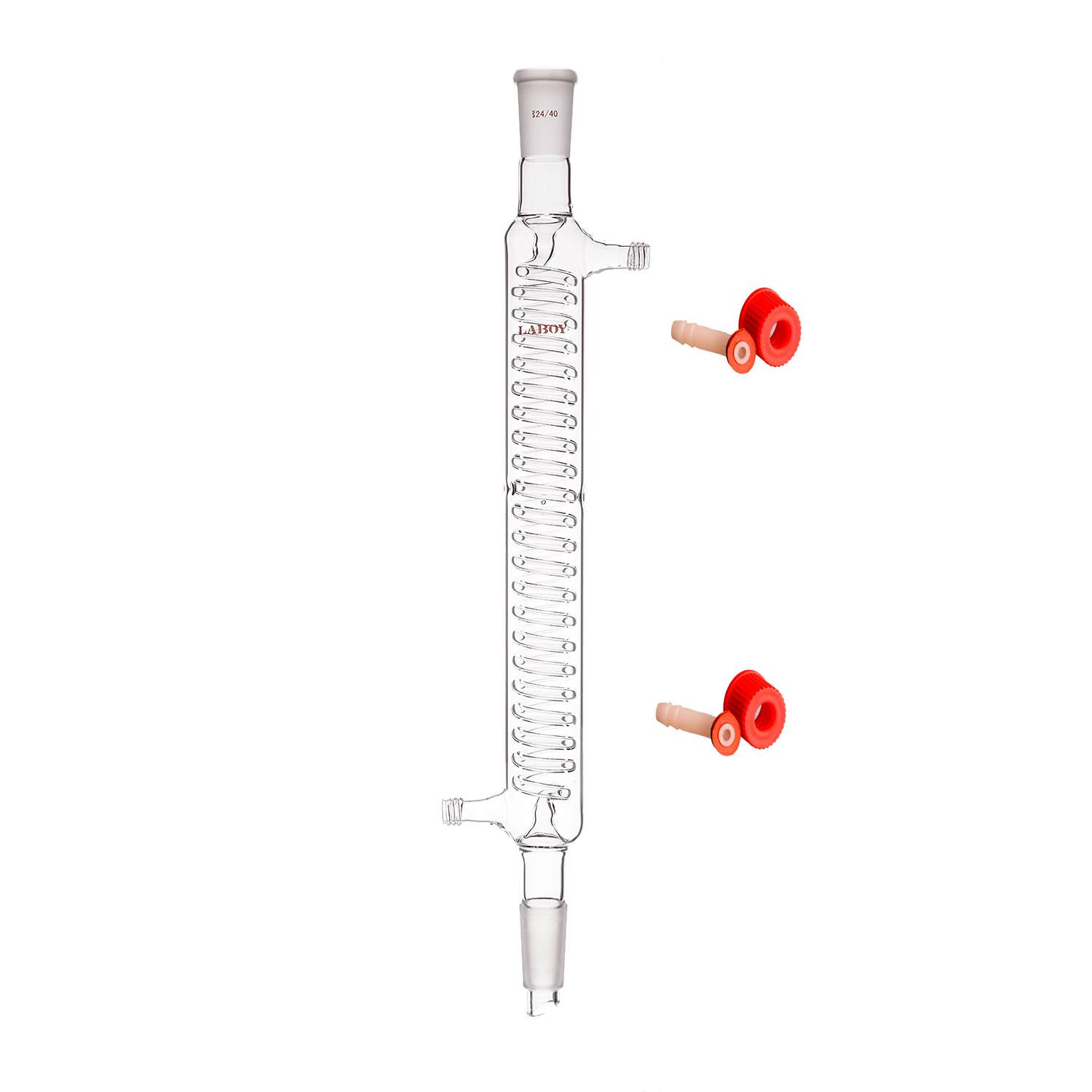
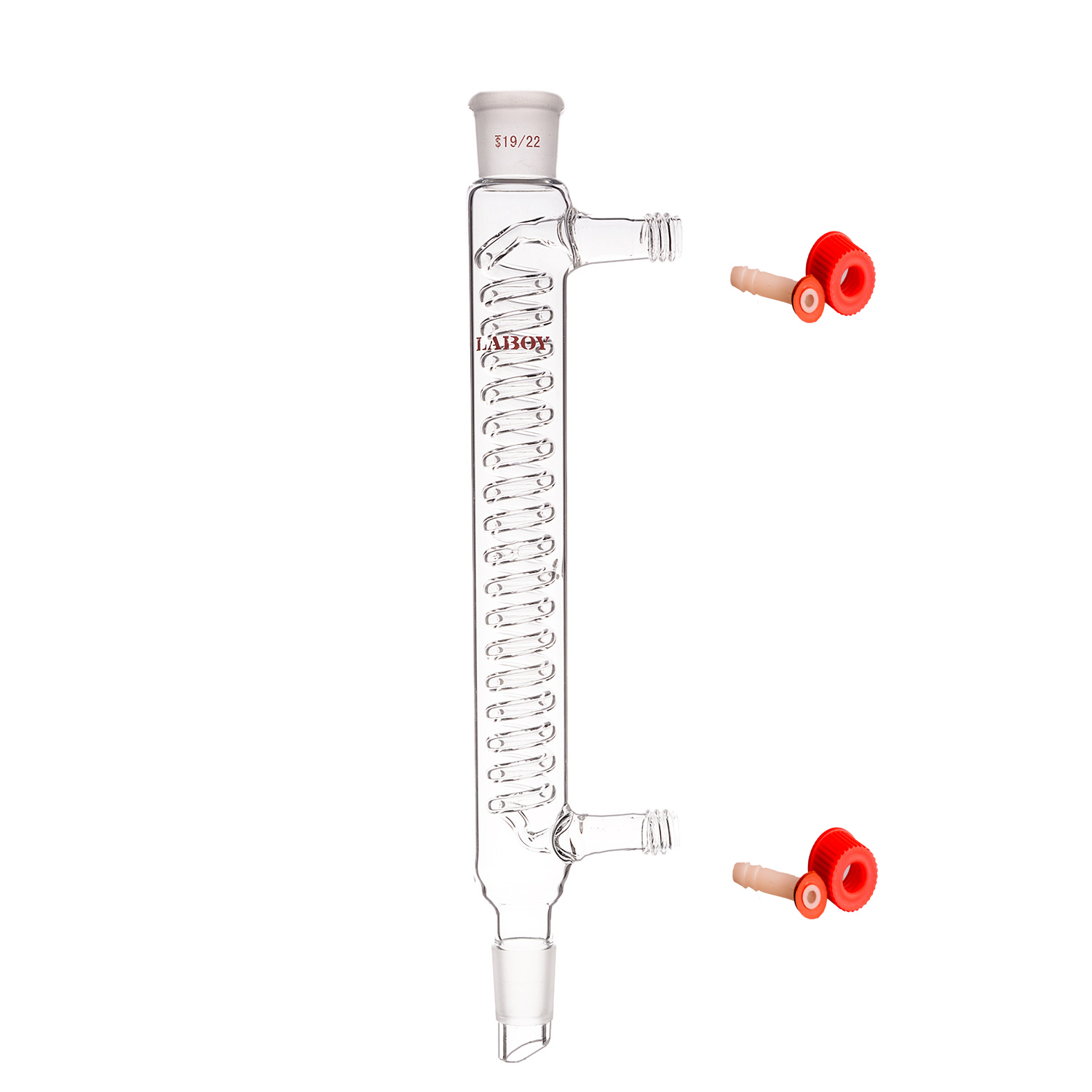
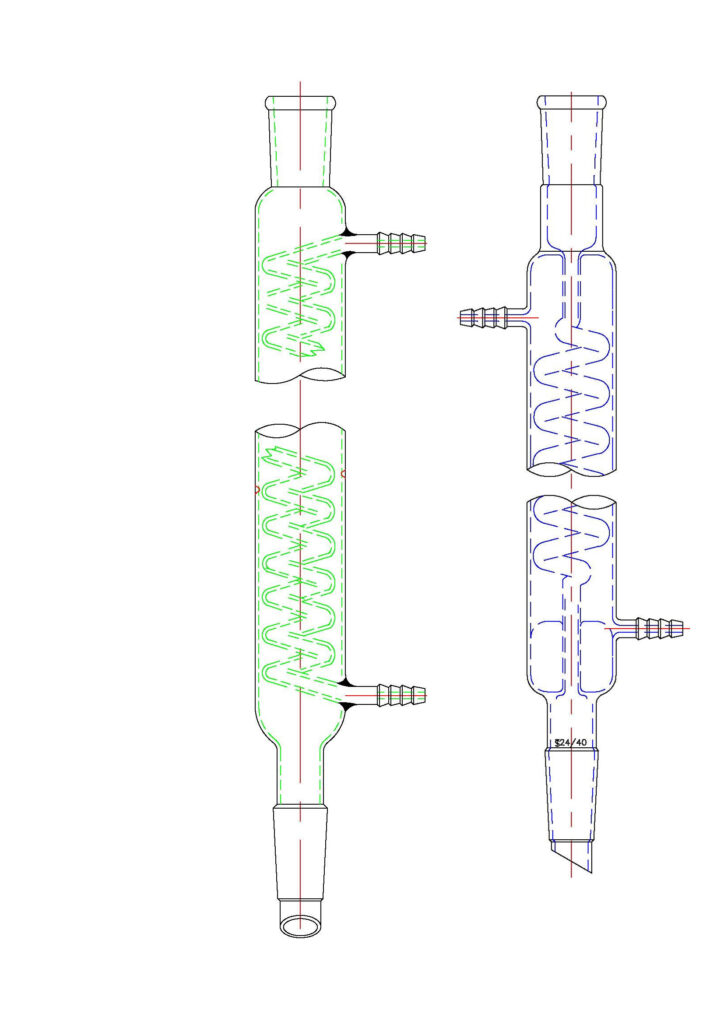
That reversal matters because it affects more than naming. It changes where vapor condenses, how liquid returns, how likely the condenser is to develop flow problems, and which setup each design suits best.
The Basic Structural Difference
In a Graham condenser, vapor passes through the inner spiral tube, while cooling water flows through the outer jacket.
In a coiled condenser, cooling water passes through the inner spiral tube, while vapor condenses in the outer surrounding space.
This means the Graham condenser forces vapor and condensate to share a long, relatively confined spiral path. The coiled condenser does not. That single design difference helps explain why the coiled condenser can avoid some of the flow conflicts that make the Graham condenser more sensitive in reflux or other setups where liquid return matters.
Fast answer: a Graham condenser cools vapor inside the spiral. A coiled condenser cools with the spiral. That is why they may look similar but behave differently in practice.
How That Difference Affects Use
A Graham condenser is often valued for its strong cooling efficiency. The inner spiral path gives vapor a long contact route against a cooled surface, which makes it useful in downward distillation, vacuum evaporation, and other setups where strong condensation is genuinely needed.
But that same design also creates one of its main practical limits: vapor and condensate can end up competing in the same spiral path. In reflux, this can increase the risk of liquid hold-up and flooding, especially if the condenser is not kept strictly vertical or if the return becomes unstable.
A coiled condenser changes that flow logic. Because the coolant is inside the spiral and the vapor condenses in the surrounding outer space, the condenser avoids some of the Graham-style internal flow conflicts. That does not mean it is automatically the right choice in every setup, but it does mean the two designs should not be treated as interchangeable.
Side-by-Side Comparison
| Feature | Graham Condenser | Coiled Condenser |
|---|---|---|
| Coolant path | Outer jacket | Inner spiral coil |
| Vapor path | Inner spiral tube | Outer surrounding space |
| Main strength | Strong cooling along a long spiral vapor path | Strong cooling with fewer Graham-style internal flow conflicts |
| Main limitation | More sensitive to flooding and liquid hold-up in some uses | More specialized and less often treated as a basic teaching-lab default |
| Commonly associated with | Downward distillation, vacuum evaporation, strong condensation needs | High-efficiency cooling where the reversed arrangement is advantageous |
Which One Should You Choose?
Choose a Graham condenser when the setup benefits from strong condensation and when you understand the practical limits that come with its spiral vapor path.
Choose a coiled condenser when the reversed flow arrangement better suits the job and when avoiding some of the Graham condenser’s internal flow problems is part of the goal.
The important point is not that one is universally better. It is that they solve the cooling problem in different ways. Once you understand where the coolant goes and where the vapor goes, the rest of the comparison becomes much easier to judge.
Final Take
The Graham condenser and the coiled condenser may look similar, but they are not interchangeable. Their reversed flow arrangements lead to different cooling paths, different liquid-return behavior, and different practical strengths at the bench.
If your main question is simply “which one cools better,” you are already asking too narrow a question. The more useful question is: which flow arrangement fits the task better?