The “Cold Trap” of Vacuum Distillation: Why Lower Pressure Might Be Killing Your Efficiency

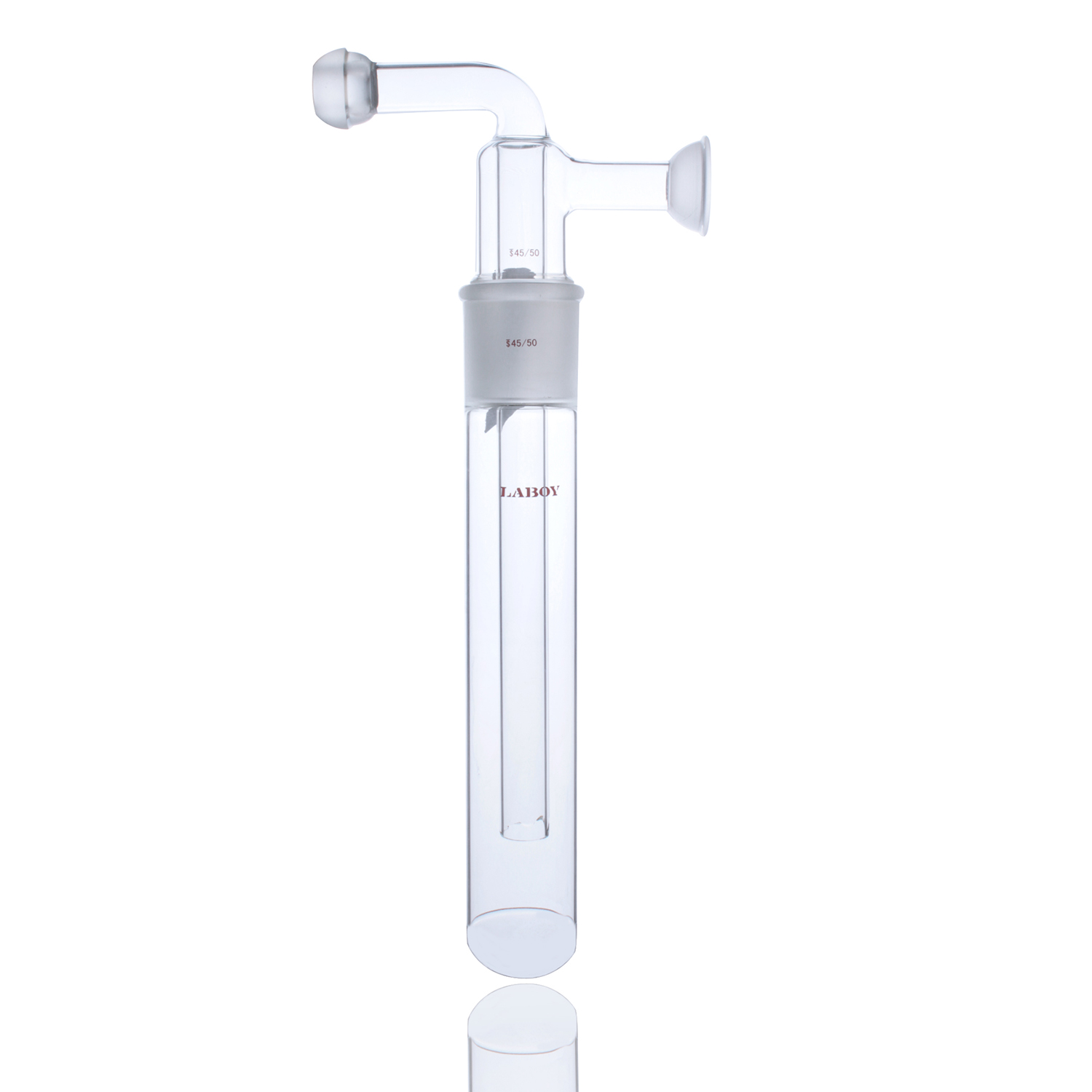
Laboy Glass Vacuum Trap With 35/20 Ball Joint

Lowering the boiling point is only half the battle. If your vacuum is high but your yield is zero, you’ve fallen into the “Thermal Flux Trap.” We break down the thermodynamics of phase change and how to calibrate your heat-to-cool ratio.

Conquering Suck-Back: Don’t Let the Last Three Seconds of “Instant Vacuum” Ruin Your Synthesis

Laboy Glass Anti-Climb Adapter with Standard Taper Joint

Suck-back can ruin weeks of organic synthesis in seconds. This guide explores the physics of pressure voids and provides a “Hardware Firewall” strategy—using safety traps and anti-splash adapters—to ensure your results stay in the flask.

Why Your Temperature is Lying: The Role of PTFE Thermometer Adapters in Synthesis Precision

In the world of organic synthesis, temperature is the ultimate “dead line.” A reading of 80°C might yield beautiful crystals, while 85°C delivers a flask of scorched black tar. We’ve all been there—staring at the thermometer, following the literature to the letter, yet the reaction still crashes. Often, the culprit isn’t your chemistry, but a … Read more

The Physics of the “Dancing” Stir Bar: Solving Mixing Failures in Heterogeneous Synthesis

Stir bar decoupling is more than a mechanical glitch—it’s a failure of mass transfer that ruins yields. In this technical deep dive, we move beyond the “standard” round bottom flask to explore why flat-bottomed geometry is essential for solid-heavy reactions. From the physics of point contact to the advantages of crosshead stirrers, learn how to stabilize your synthesis and protect your glassware from thermal stress.

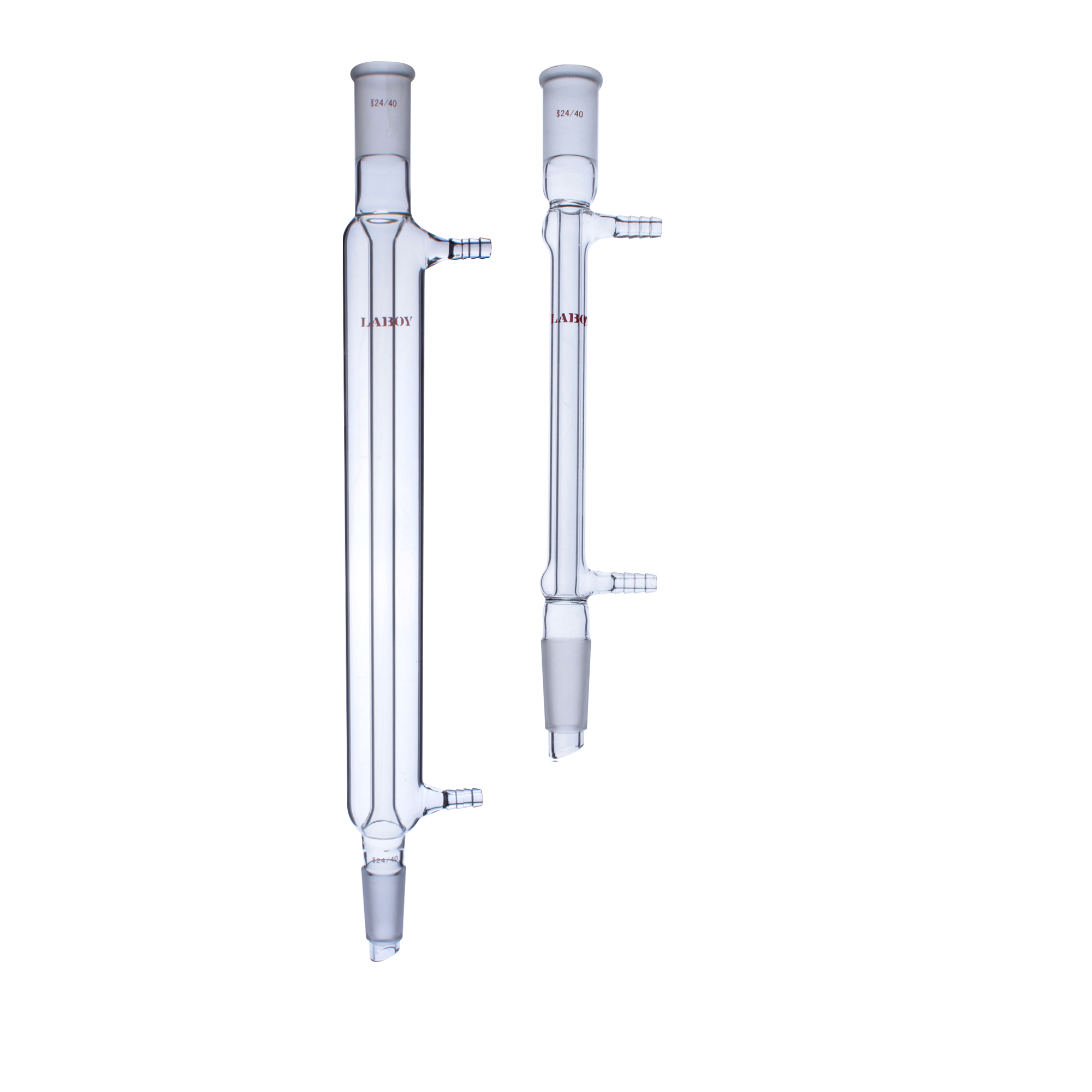
Laboratory Condenser Selection: Don’t Let It Become the “Bottleneck” of Your Experiment

Comparison of Liebig and West laboratory glass condensers showing the difference in jacket width.

Is your reaction vapor “stuck” or are you losing precious solvent? 20-year master glassblower Zoe W explains why your condenser might be the hidden bottleneck in your lab and how to pick the perfect one for your chemistry.

How to set up laboratory glassware with standard taper joints?

Mastering the assembly of standard taper joints is an essential lab skill. This guide explores the ‘Bottom-Up’ construction rule, the nuances of using vacuum grease, and critical safety techniques to prevent glass stress and ‘frozen’ joints, ensuring a secure and leak-free reaction setup.

The Ultimate Guide to Ground Glass Joints: Sealing, Maintenance, and Emergency Rescue

Chemist applying vacuum grease to a standard taper ground glass joint using the streak method

A comprehensive guide to maintaining laboratory glassware. Learn the pros and cons of vacuum grease vs. PTFE sleeves, proper cleaning techniques, and emergency procedures for safely unsticking seized ground glass joints.

The Physics of Glassware: Why Shape and Joints Matter in Chemistry

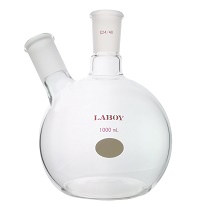
Laboy Glass 2-neck Flat Bottom Boiling Flask with Dual Standard Taper Outer Joints

It’s not just about aesthetics—it’s about survival under pressure. We dive into the physics behind flask shapes, the “2-neck vs. 3-neck” debate, and why the geometry of your glassware is your first line of defense in vacuum safety.